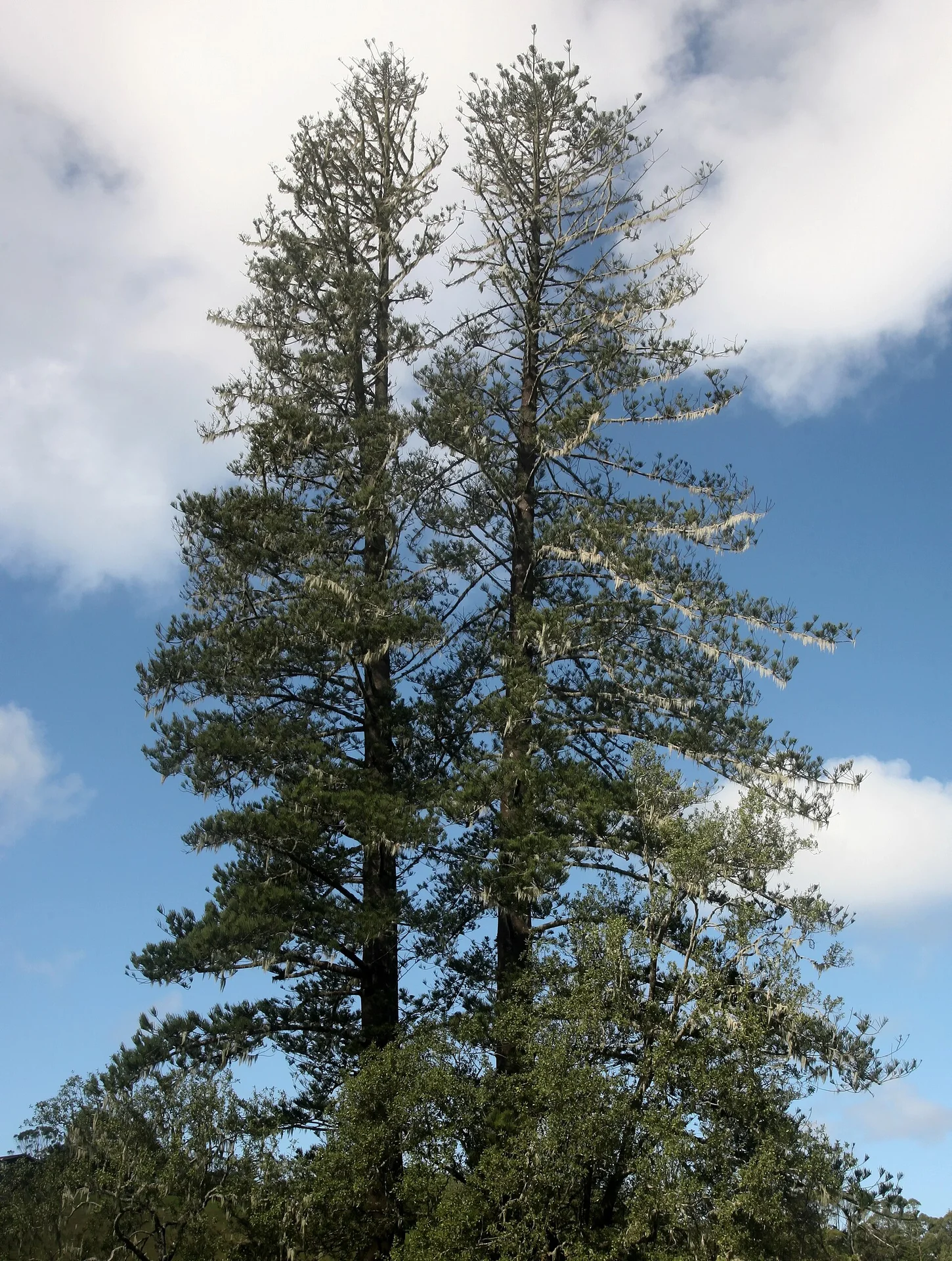
Norfolk Island pine
Bunya pine
Paraná pine
Hoop pine
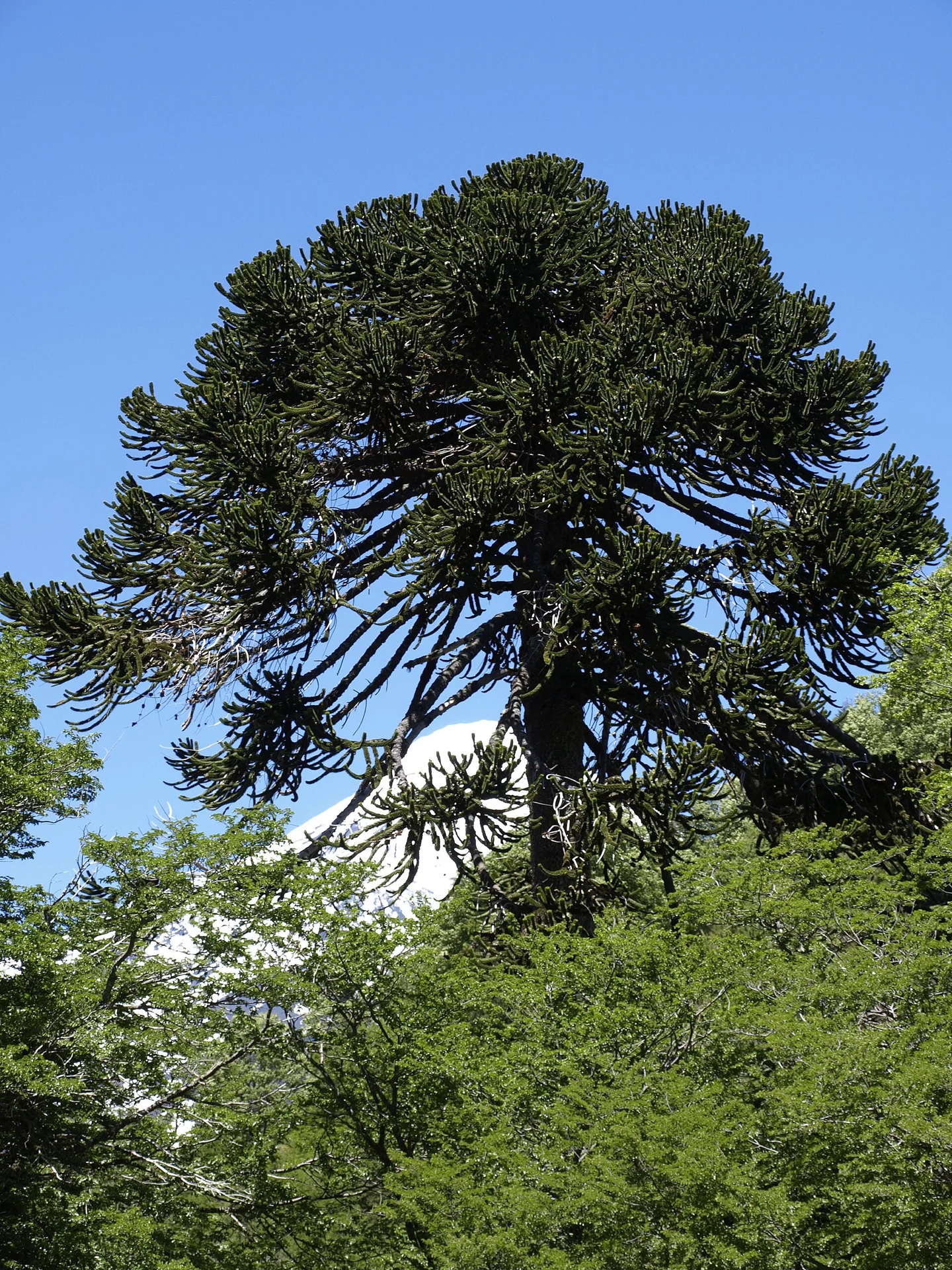
Pehuén
#76A3E3
#5F6A3C
#262B18
#1A242F
#434D23
Plant palette
Araucaria: Ancient Evergreen Coniferous Trees
Towering above ancient landscapes, these living fossils stand as silent witnesses to the Mesozoic era, when dinosaurs still roamed the Earth. The Araucaria genus encompasses some of the most visually striking and symmetrically perfect evergreen conifers found across the Southern Hemisphere.
While their native range is now fragmented across continents like South America and Australia, these majestic trees continue to thrive in specialized ecological niches. They are highly valued globally for their distinct architectural beauty, quality timber, and the culturally significant, edible seeds they produce.
Taxonomy
∟царствоPlantae
∟divisionTracheophytes(Vascular Plants)
∟subdivisionSpermatophytes(Seed plants)
∟superclassGymnospermae(Gymnosperms)
∟divisionPinophyta(Conifers)
∟subclassCupressidae
∟orderAraucariales(Southern pines and monkey-puzzles)
Members of this ancient genus are characteristically large, towering trees, often reaching staggering heights between 30 and 80 meters. They typically possess a massive, erect central stem that frequently sheds its lower branches as the tree matures.
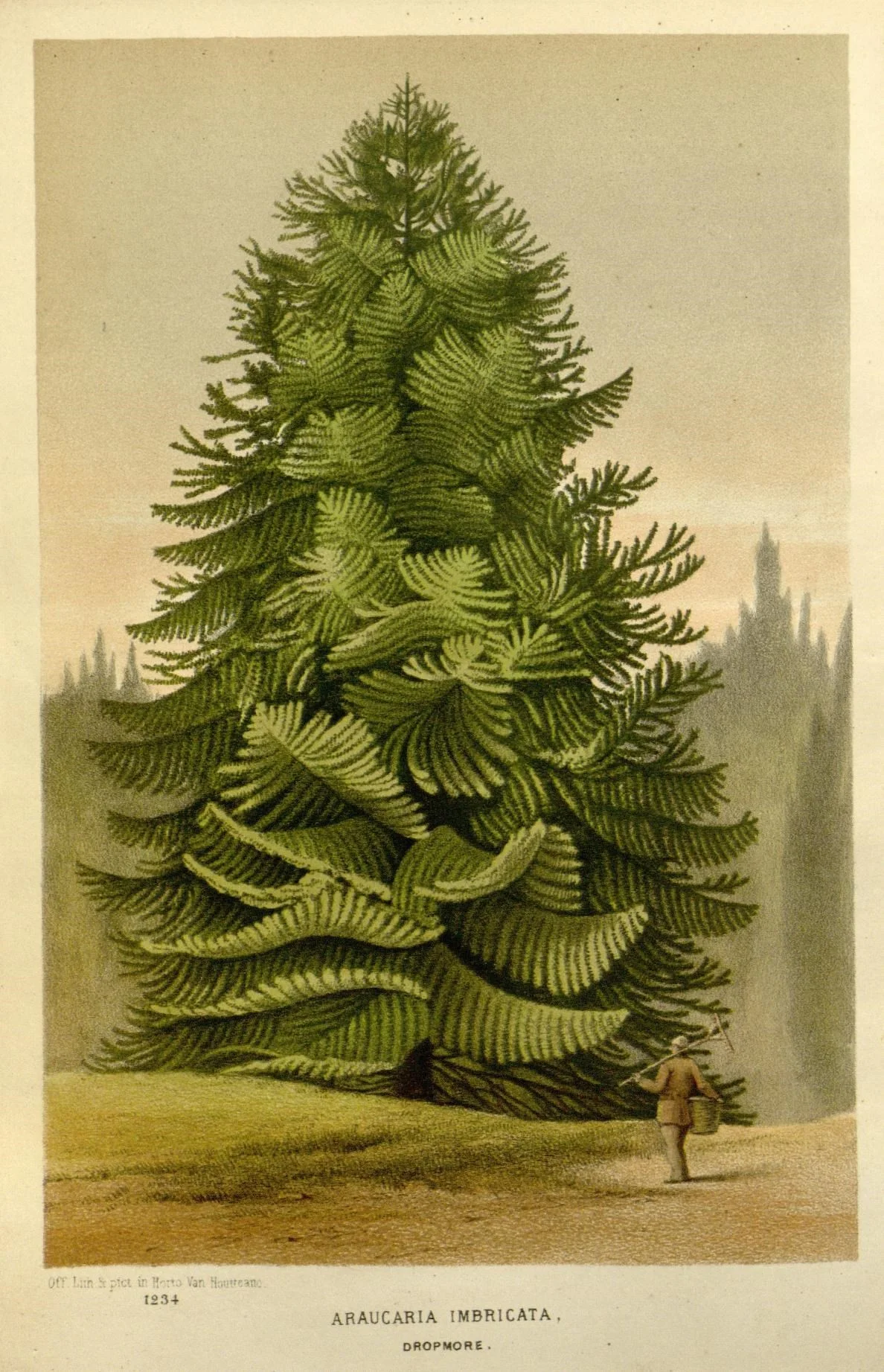
The distinctive branching pattern is a hallmark of the group, with branches growing in regular, horizontal whorls. This growth habit creates a striking, symmetrical canopy that can appear either umbrella-like or sharply conical.
Foliage varies significantly among species, generally falling into two main types based on their evolutionary lineage.
Broad-leaved species: Featuring flat, leathery, and sharply pointed scale-like leaves that overlap tightly along the stems.
Narrow-leaved species: Possessing needle-like or awl-shaped foliage that only slightly overlaps.
These primitive conifers are predominantly dioecious, meaning the male and female reproductive cones are usually borne on separate trees. The female seed cones are large, woody, and globose, while the male pollen cones are notably smaller and cylindrical.
Applications
Several species within this genus hold immense economic, cultural, and historical value for native populations. The timber harvested from these trees is highly prized for construction and carpentry due to its impressive strength and straight grain.
The nutritional value of their seeds cannot be overstated, serving as a traditional staple food source for indigenous groups.
The Mapuche people of South America rely heavily on the massive seeds of the monkey puzzle tree, which they consider sacred.
Indigenous Australians historically gathered the large seeds of the bunya pine during significant seasonal festivals.
Furthermore, many species, notably the Norfolk Island pine, are extensively cultivated internationally as striking ornamental specimens in parks, large gardens, and commercial landscapes.
Interesting facts
The evolutionary history and unique characteristics of these ancient conifers have fascinated scientists and nature enthusiasts for centuries. Their fragmented distribution is a direct result of continental drift, reflecting the ancient supercontinent of Gondwana.
Here are some of the most remarkable historical and ecological facts about the genus.
Darwin's Discovery: During his historic voyage on the HMS Beagle in 1835, Charles Darwin documented a fossilized forest containing over 52 upright trees of this genus in Argentina.
Dinosaur Diets: Paleontologists suggest that the exceptionally long necks of sauropod dinosaurs may have evolved specifically to browse the high, nutrient-dense foliage of these towering trees.
Endemic Diversity: The highest concentration of species is found on the small island of New Caledonia, where 14 uniquely adapted endemic species thrive in toxic, metal-rich soils.
In addition to their scientific importance, these trees serve as vital cultural symbols, with the Pehuén tree even acting as the namesake for the Pehuenche people of the Andes.