Araucaria montana: Mountain Araucaria of New Caledonia
Rising majestically from the ultramafic soils of New Caledonia, the silhouette of Araucaria montana defines the rugged ridges and dense, humid forests of the island's high-altitude landscapes. This towering conifer, capable of reaching heights of 40 meters, is a testament to the ancient and unique flora isolated in the Pacific. The species is the most widely distributed of its genus on the island, found throughout Grande Terre and the smaller Île d'Art.
Despite its widespread local presence, the mountain araucaria faces significant survival challenges in its natural habitat. The fragmented populations are increasingly threatened by extensive open-pit mining activities and the associated infrastructure development. This delicate balance between a resilient, towering tree and its rapidly changing environment highlights the fragile nature of endemic island ecosystems.
Taxonomy
∟царствоPlantae
∟divisionTracheophytes(Vascular Plants)
∟subdivisionSpermatophytes(Seed plants)
∟superclassGymnospermae(Gymnosperms)
∟divisionPinophyta(Conifers)
∟subclassCupressidae
∟orderAraucariales(Southern pines and monkey-puzzles)
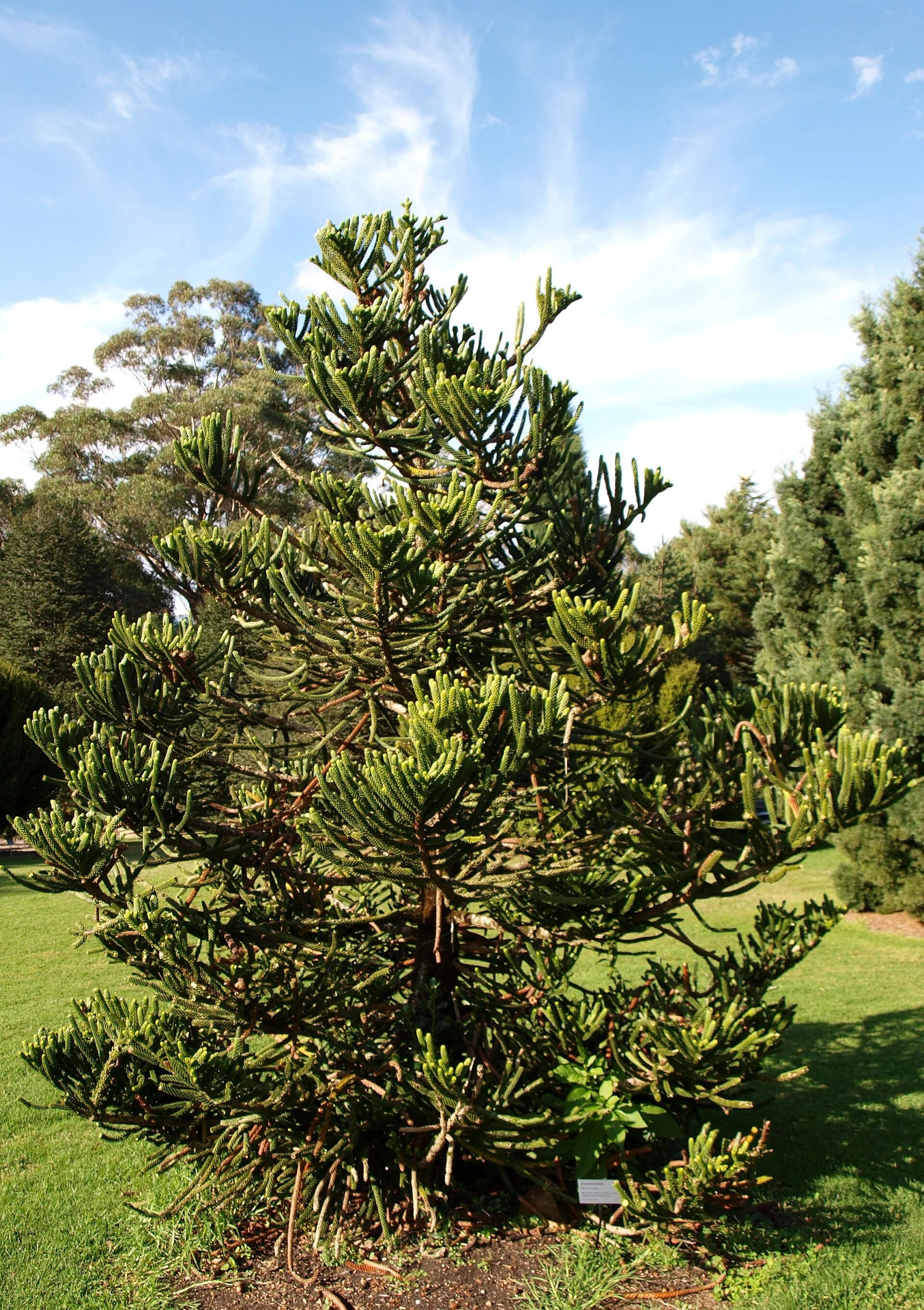
The physical structure of Araucaria montana is characterized by a columnar growth habit that can mature into a broad, loose crown with candelabra-like branches. Mature trees typically reach between 10 and 40 meters in height, with a robust trunk that can grow up to one meter in diameter. The bark is thick, dark brown to pale grey, and distinctly exfoliates in thin, horizontal strips or scales.
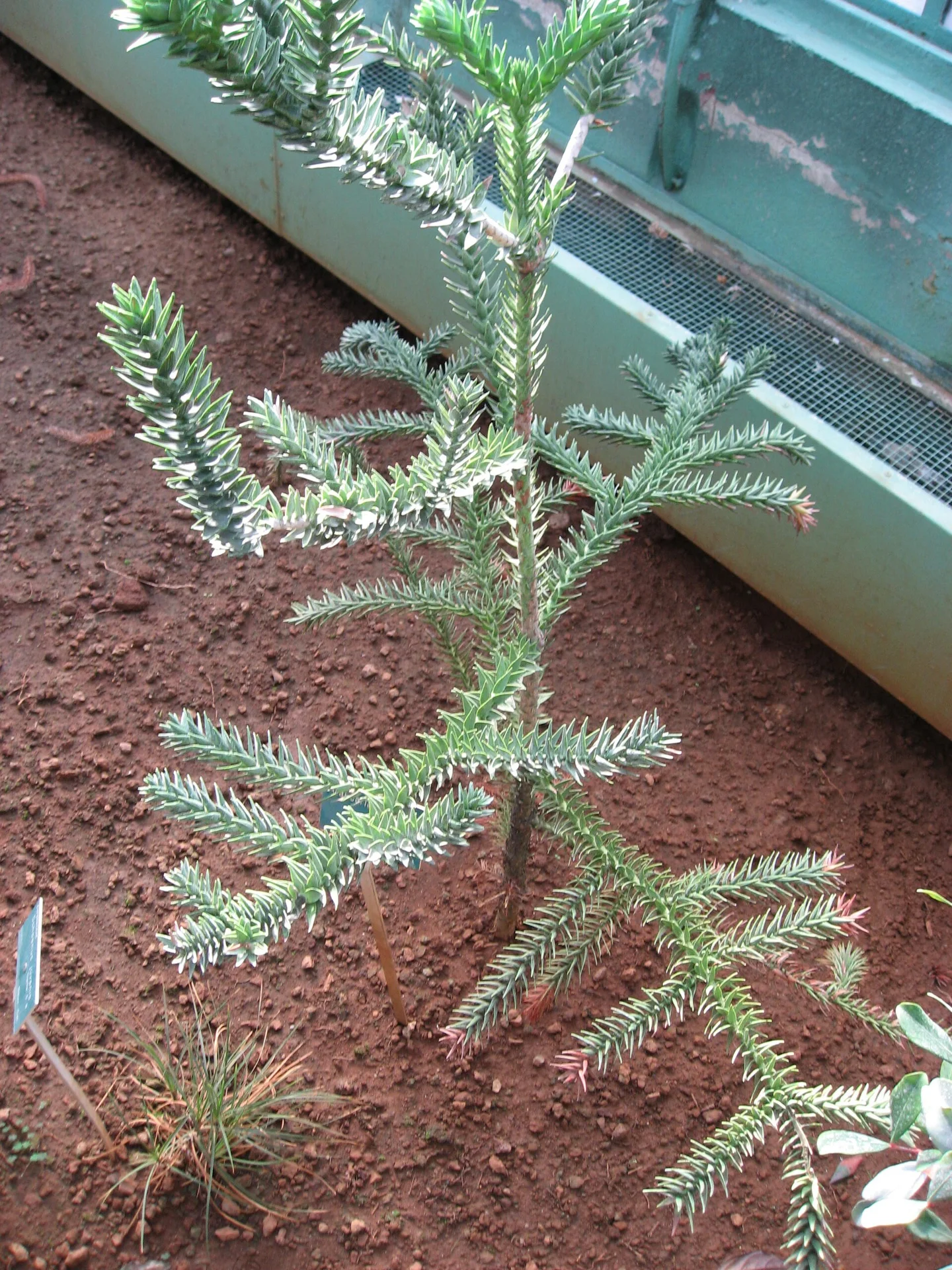
Foliage development exhibits noticeable dimorphism between the juvenile and adult stages of the tree. Juvenile leaves are scale-like and ovate-lanceolate, measuring about 10 millimeters in length with a distinctly curved apex. As the tree matures, the adult leaves become broader, measuring up to 25 millimeters long and 20 millimeters wide, featuring a prominent central vein and an incurved, acute or obtuse tip.
The reproductive structures of the tree are highly specialized and sexually dimorphic. The male cones are cylindrical, growing up to 13.5 centimeters long at the branch tips, and contain triangular microsporophylls with twelve pollen sacs. Female cones are more spherical, reaching up to 12 centimeters in length, and produce elongated seeds equipped with oval wings for efficient wind dispersal.
Interesting facts
The evolutionary history and ecological niche of Araucaria montana are filled with fascinating botanical details.
It is the most widely distributed native Araucaria species in New Caledonia, yet its overall population is still considered highly vulnerable.
The tree thrives almost exclusively on soils derived from ultramafic rocks, which are typically toxic to many other plant species due to high concentrations of heavy metals.
A recent population genetic study suggests that another less common local species, Araucaria laubenfelsii, might actually be genetically indistinct from the mountain araucaria.
The Latin specific epithet montana directly translates to "of the mountain," perfectly describing its preference for elevated plateaus and ridges between 200 and 1400 meters above sea level.