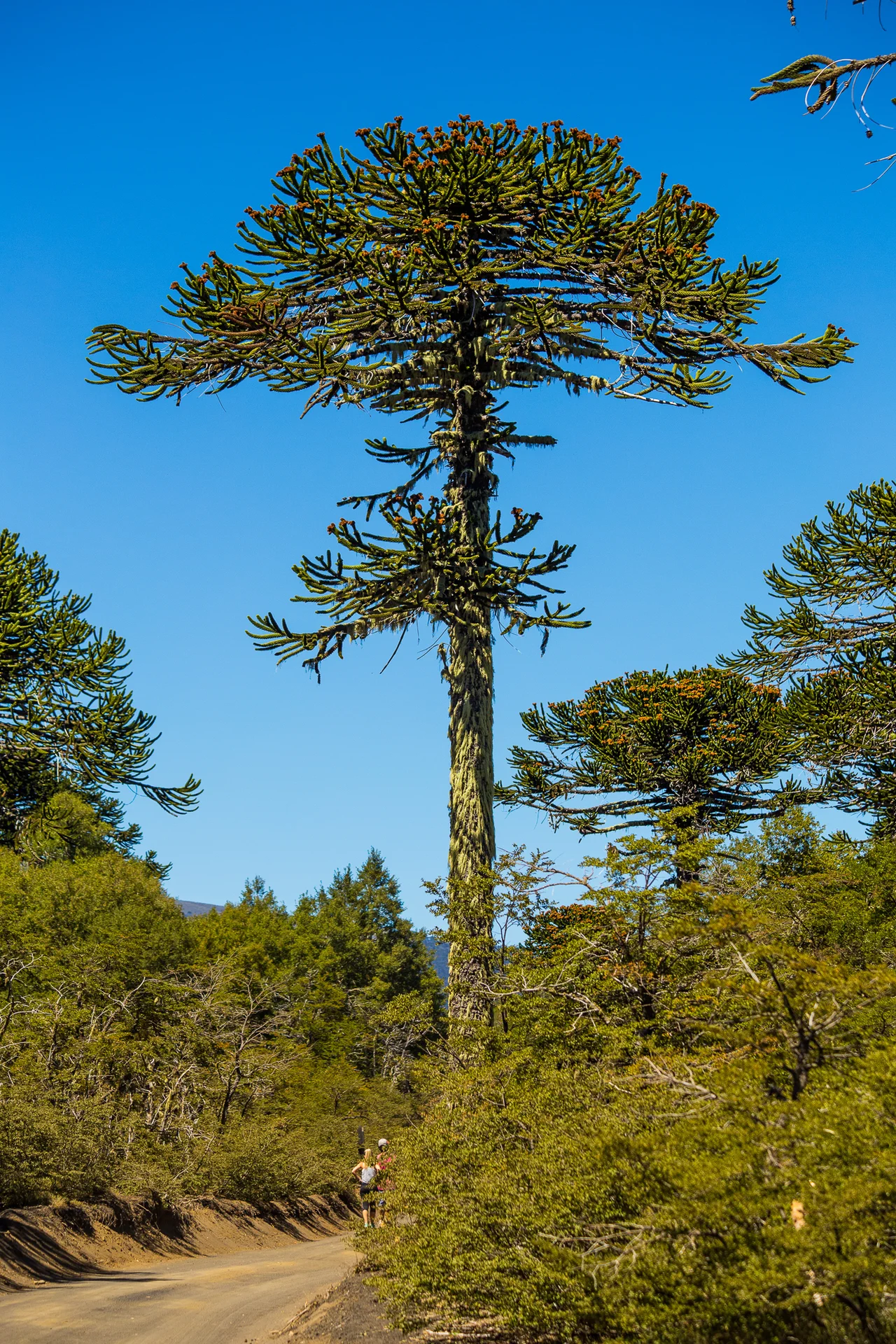
High on the volcanic slopes of the Andes, the ancient Araucaria araucana stands resilient against sweeping winds and heavy snows. Often referred to as the monkey puzzle tree, this remarkable evergreen has survived relatively unchanged since the time of the dinosaurs.
This towering conifer can reach heights of up to 40 meters, dominating the rugged landscapes of central Chile and western Argentina. Its highly symmetrical, umbrella-like crown forms a distinctive silhouette that characterizes the subantarctic forests of South America.
Taxonomy
∟царствоPlantae
∟divisionTracheophytes(Vascular Plants)
∟subdivisionSpermatophytes(Seed plants)
∟superclassGymnospermae(Gymnosperms)
∟divisionPinophyta(Conifers)
∟subclassCupressidae
∟orderAraucariales(Southern pines and monkey-puzzles)
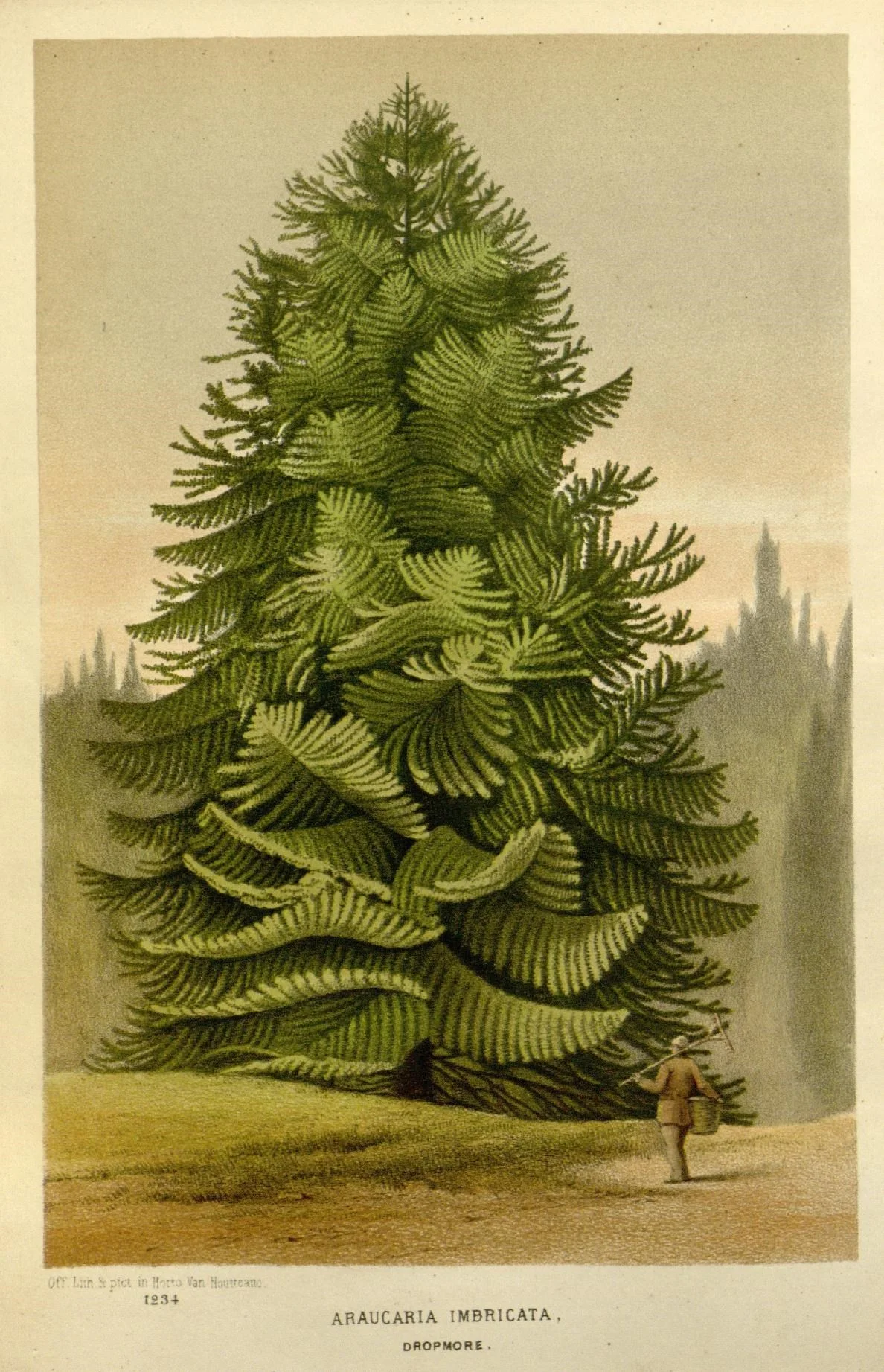
Botanical illustration
Фото: BioDivLibrary / Лицензия: Public Domain Mark
Morphology
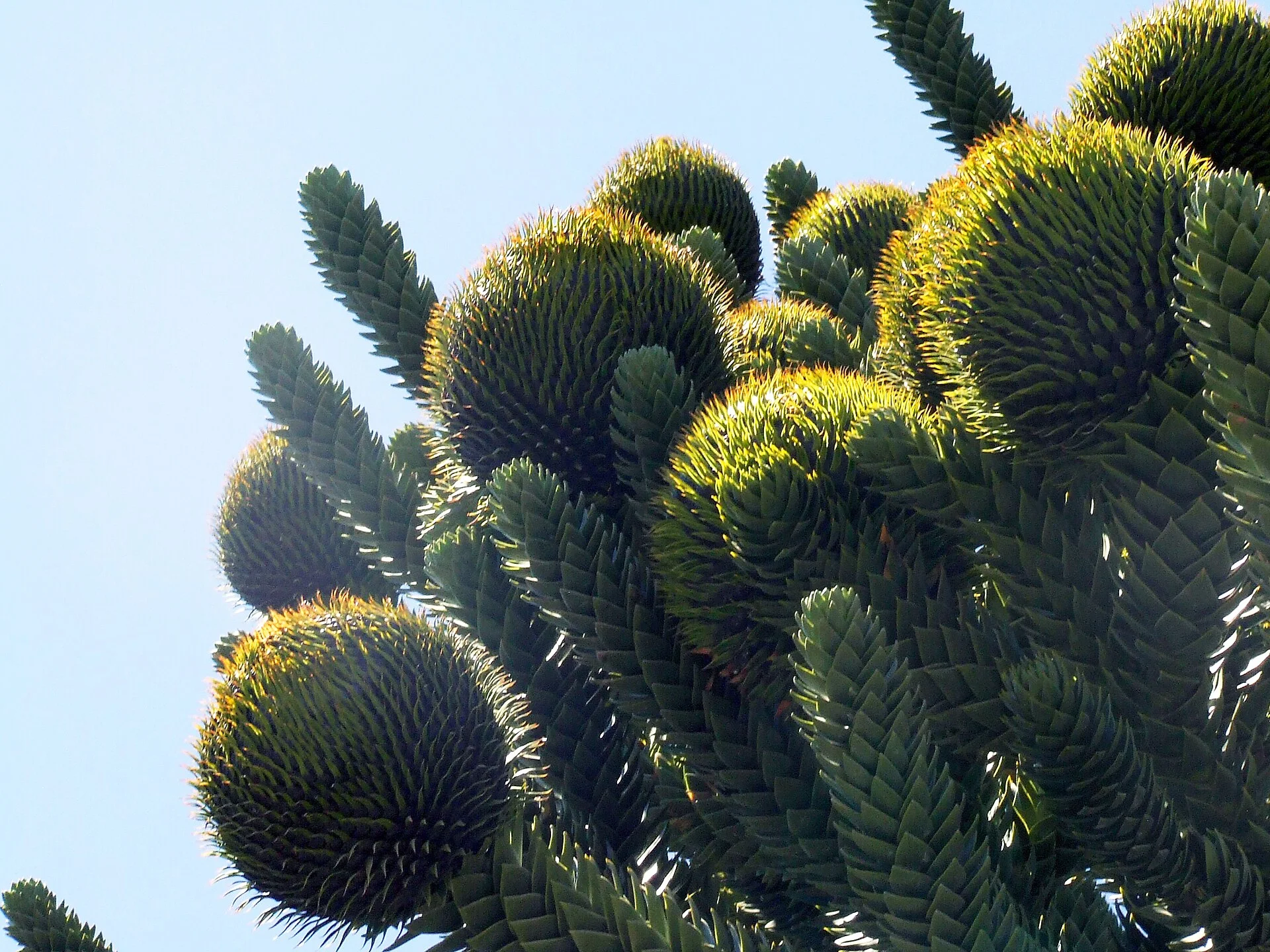
The morphology of the Araucaria araucana is uniquely adapted to harsh mountainous environments. The leaves are thick, tough, and scale-like, measuring 3 to 4 cm long and featuring incredibly sharp edges and tips. These triangular leaves remain alive and attached to the tree for up to 24 years, covering almost the entire structure except for the oldest branches.
This species is typically dioecious, meaning male and female cones grow on separate trees. The male pollen cones are elongated and cucumber-shaped, expanding up to 12 cm during pollen release. The female seed cones are massive, globose structures up to 20 cm in diameter, which mature over 18 months and hold around 200 large nut-like seeds.
The thick, dark grey bark can grow up to 15 cm thick, providing excellent protection against the intense heat of volcanic wildfires. As the tree matures, the lower branches are often shed, leaving a tall, straight trunk crowned by a striking canopy.
Flowering season
Pollen release occurs during the early summer months in the Southern Hemisphere.
Jan
Feb
Mar
Apr
May
Jun
Jul
Aug
Sep
Oct
Name
Dec
Applications
The seeds of the tree, locally known as piñones, are highly nutritious and have been a staple food source for indigenous peoples for centuries. These large seeds can be boiled or roasted, offering a flavor profile reminiscent of potatoes, almonds, and peanuts.
Historically, the exceptionally straight and durable timber was highly valued for construction, being used to build houses, bridges, and railway sleepers. Due to the tree's endangered status, commercial logging of wild populations is now strictly prohibited.
Today, the tree is widely cultivated as a highly sought-after ornamental plant in temperate oceanic climates around the world. Its highly unusual, reptilian appearance makes it a prized specimen for large parks and botanical gardens.
Interesting facts
The popular English name "monkey puzzle" originated in the 1850s in Cornwall, England, when a guest remarked that its prickly branches "would puzzle a monkey to climb."
The indigenous Pehuenche people derive their very name from the tree, as pehuén means Araucaria and che means people in the Mapudungun language.
Local communities revere the tree as a sacred gift from a deity, celebrating its seed harvest with traditional festivals.
The Araucaria araucana is considered a living fossil, with a genetic lineage that traces back to the Jurassic and Cretaceous periods.