Buried beneath volcanic ash 160 million years ago, the petrified remains of Araucaria mirabilis stand as silent sentinels of a lost Jurassic world. This extinct coniferous giant once dominated the lush, subtropical landscapes of Gondwana, in what is now the Patagonia region of Argentina.
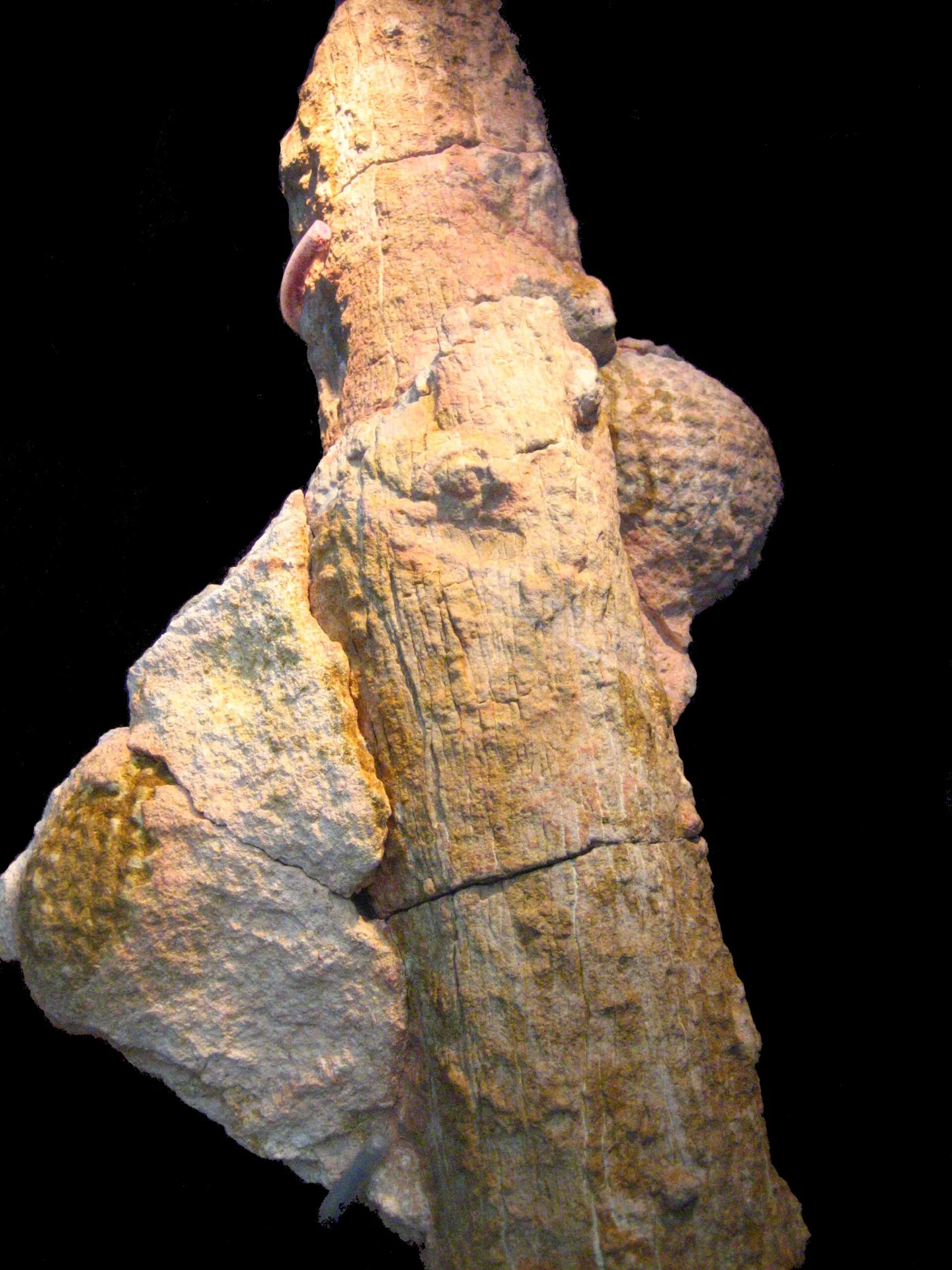
Reaching staggering heights of up to 100 meters with trunk diameters of 3.5 meters, this colossal tree was a prominent feature of the ancient Cerro Cuadrado Petrified Forest. The exceptional preservation of its fossilized wood and seed cones provides scientists with an unparalleled window into Mesozoic plant life.
Taxonomy
∟царствоPlantae
∟divisionTracheophytes(Vascular Plants)
∟subdivisionSpermatophytes(Seed plants)
∟superclassGymnospermae(Gymnosperms)
∟divisionPinophyta(Conifers)
∟subclassCupressidae
∟orderAraucariales(Southern pines and monkey-puzzles)
The vegetative and reproductive structures of Araucaria mirabilis are known in extraordinary detail due to silicification. The trees possessed towering, straight trunks that supported a massive canopy. Wood anatomy reveals distinct growth rings, indicating a seasonal, warm-temperate climate with periods of high precipitation.
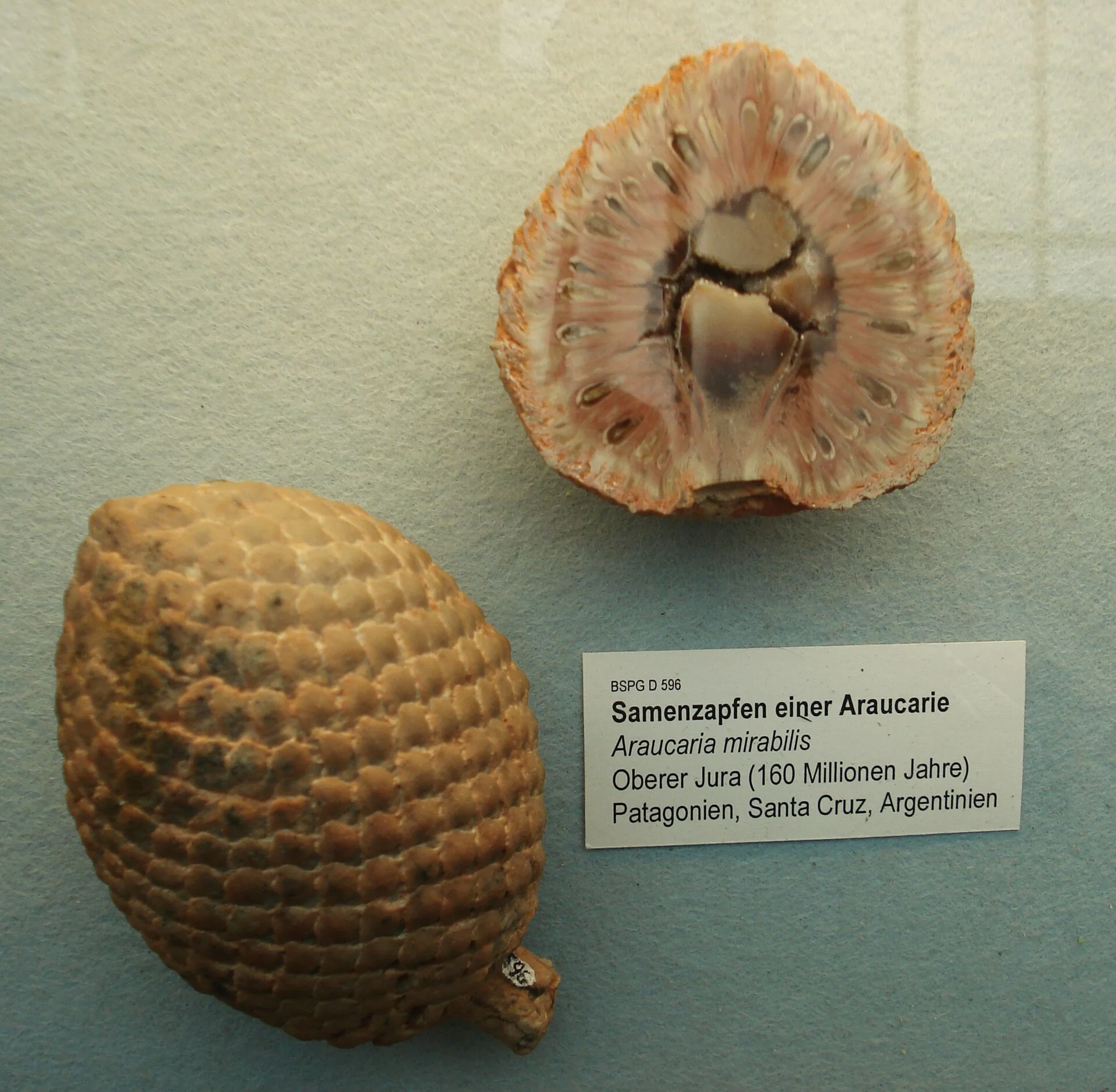
Its fossilized seed cones are spherical to ovoid, typically measuring 2.5 to 8 centimeters in length, with some reaching up to 10 centimeters in diameter. The cones feature a wide axis composed of a parenchymatous pith surrounded by fused vascular bundles.
The protective bracts had thick, woody wings tapering towards the base, arranging helically around the central axis. Inside the exceptionally preserved cones, paleobotanists have identified mature seeds measuring around 1 centimeter, often containing well-developed dicotyledonous embryos.
Interesting facts
The evolutionary history of Araucaria mirabilis is deeply intertwined with the dinosaurs that roamed its forests. Paleontologists hypothesize that the extremely long necks of Jurassic sauropods evolved specifically to browse the lofty foliage of these giant conifers.
Some of the most fascinating discoveries include:
Fossilized trunks show damage from ancient beetle larvae, identified as early ancestors of modern bark beetles, indicating a complex host-parasite relationship that existed millions of years ago.
The petrified cones are so perfectly preserved that early local farmers in Argentina collected them as decorative souvenirs, which eventually led botanist Anselmo Windhausen to scientifically describe the fossil forest in the early 20th century.
The remarkable preservation includes cellular-level details, revealing that the seeds had three distinct tissue layers and early-stage dicotyledonous embryos capable of dormancy.