Agathis (Kauri): Ancient Giants of the Southern Forests
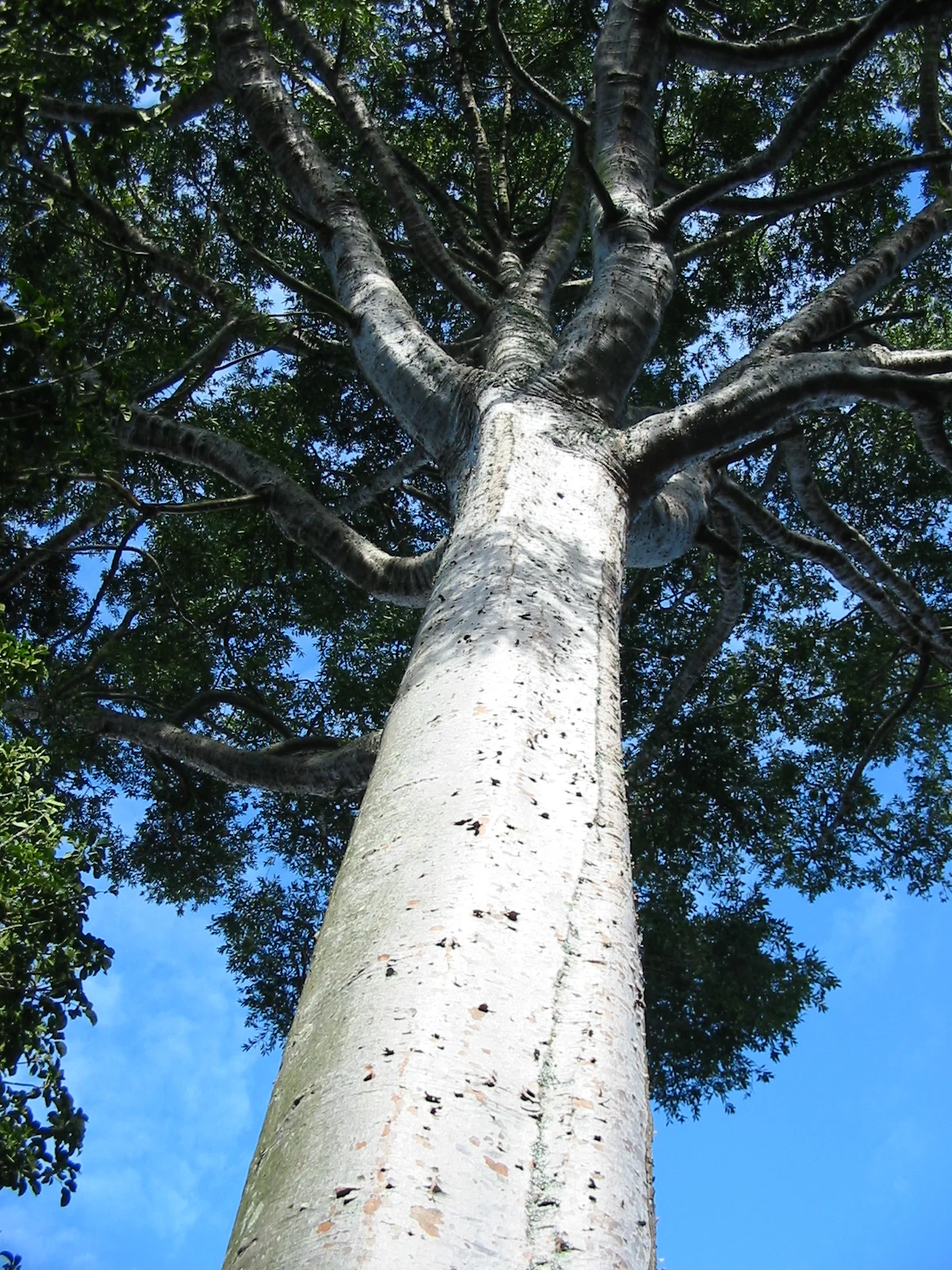
Towering like ancient sentinels above the dense rainforest canopies of Australasia and Southeast Asia, these monumental conifers have silently watched the world transform since the Jurassic period. The massive, straight trunks of Agathis rise majestically, often completely devoid of branches on their lower halves, before bursting into sprawling, irregular crowns.
Known widely as Kauri or Dammara, this remarkable genus of evergreen trees defies the typical needle-like appearance of most conifers by displaying thick, remarkably broad leaves. Their enduring presence in the Southern Hemisphere serves as a living testament to prehistoric times, offering a rare glimpse into the ancient botanical heritage of our planet.
Taxonomy
∟царствоPlantae
∟divisionTracheophytes(Vascular Plants)
∟subdivisionSpermatophytes(Seed plants)
∟superclassGymnospermae(Gymnosperms)
∟divisionPinophyta(Conifers)
∟subclassCupressidae
∟orderAraucariales(Southern pines and monkey-puzzles)
Botanical illustration
Фото: BioDivLibrary / Лицензия: Public Domain Mark
Morphology
The physical structure of Agathis changes dramatically as the trees mature from saplings into ancient forest giants. Young specimens typically exhibit a conical shape, but as they age, they develop their characteristic massive, columnar trunks and rounded crowns.
One of the most distinctive features of this genus is its foliage, which stands in stark contrast to typical coniferous needles. The bark is smooth and light gray to grayish-brown, peeling off in irregular flakes and leaving circular scars where lower branches have dropped.
Leaves: Adult leaves are opposite, elliptical to linear, incredibly thick, and leathery, with young foliage often displaying a striking coppery-red hue.
Trunk: The massive, straight boles can reach extraordinary diameters, historically yielding some of the largest timber volumes of any tree species.
Cones: Being monoecious, they produce cylindrical male pollen cones and separate, nearly spherical female seed cones that take two years to mature on short lateral branches.
Seeds: The mature female cones disintegrate to release small, ovate seeds equipped with unequal wings for wind dispersal.
Applications
The extraordinary strength-to-weight ratio, straight grain, and rot resistance of Agathis timber have made it highly prized throughout history. Indigenous peoples, particularly the Māori of New Zealand, traditionally utilized the resilient wood for constructing formidable canoes, carved weapons, and structural beams for meeting houses.
During the colonial era, Kauri timber became a cornerstone of the maritime industry, heavily harvested for shipbuilding, yacht hulls, and intricate wood paneling. The trees are also famous for producing valuable resins, such as Kauri copal and Manila copal (Damar gum), which were extensively used in varnishes, linoleum production, and traditional medicinal decoctions.
Interesting facts
The evolutionary lineage of Agathis is astonishingly ancient, with fossil records tracing their ancestors back over 60 million years to the Paleocene epoch, and related ancestors dating to the Jurassic period. They share a close genetic relationship with the extremely rare Wollemi pine, forming a sister clade to the older Araucaria genus.
In New Zealand, individual Kauri trees can live for over two thousand years, reaching staggering dimensions that make them the largest trees in the country by volume. These ancient behemoths hold deep cultural and spiritual significance, often revered as Lords of the Forest and symbolizing high-ranking lineage in indigenous traditions.
Giant Survivors: Tāne Mahuta, New Zealand's most famous Kauri, is over 51 meters tall with a girth of nearly 14 meters.
Fossilized Resin: Swamp Kauri wood and semi-fossilized Kauri gum have been excavated from ancient bogs, prized for their extraordinary beauty and historical value.
Specialized Pests: The seeds of some species serve as the exclusive food source for caterpillars of the primitive moth genus Agathiphaga.