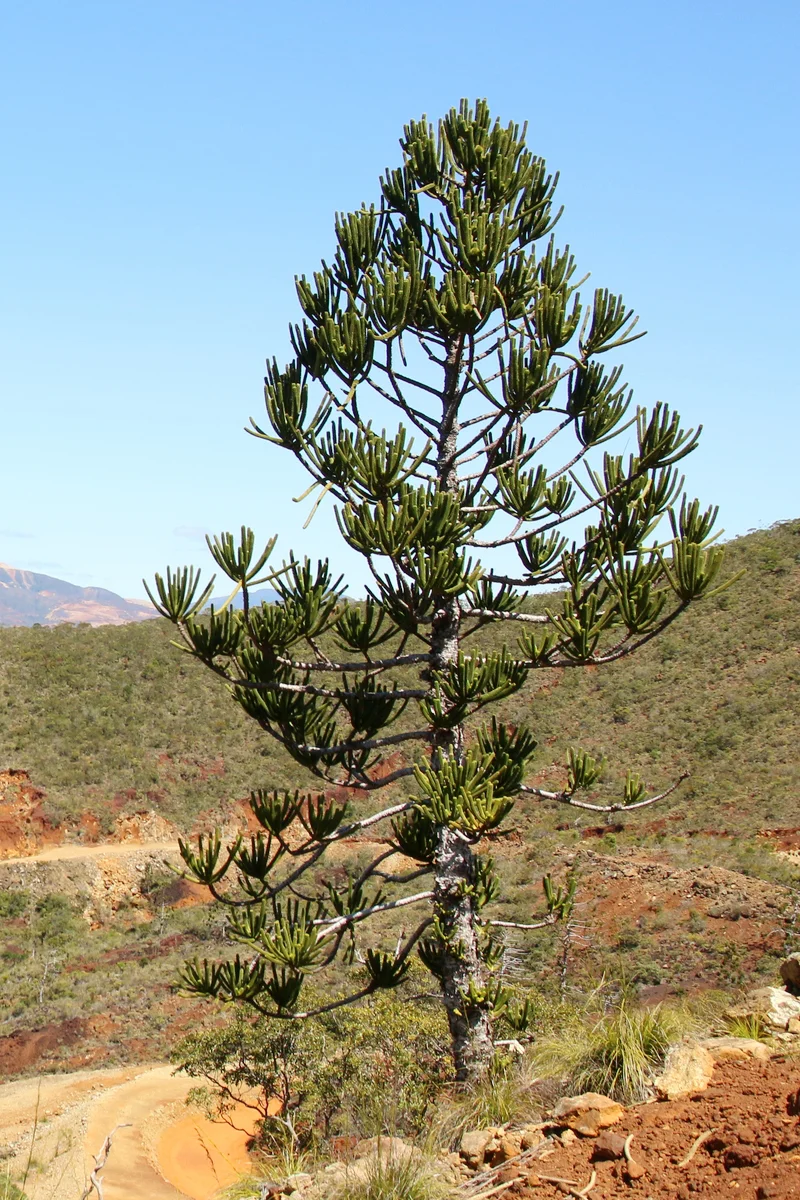
Endemic to the nickel-rich regions of Grande Terre in New Caledonia, Araucaria rulei thrives as a remarkable coniferous tree with a highly restricted natural range. It establishes itself on dry serpentine soils at altitudes up to 1000 meters, demonstrating an extraordinary evolutionary tolerance to harsh, metallic substrates.
Populations are severely fragmented and generally consist of scattered individuals rather than dense forests. The tree's striking symmetrical architecture has garnered extensive attention from botanists and conservationists alike.
Taxonomy
∟царствоPlantae
∟divisionTracheophytes(Vascular Plants)
∟subdivisionSpermatophytes(Seed plants)
∟superclassGymnospermae(Gymnosperms)
∟divisionPinophyta(Conifers)
∟subclassCupressidae
∟orderAraucariales(Southern pines and monkey-puzzles)
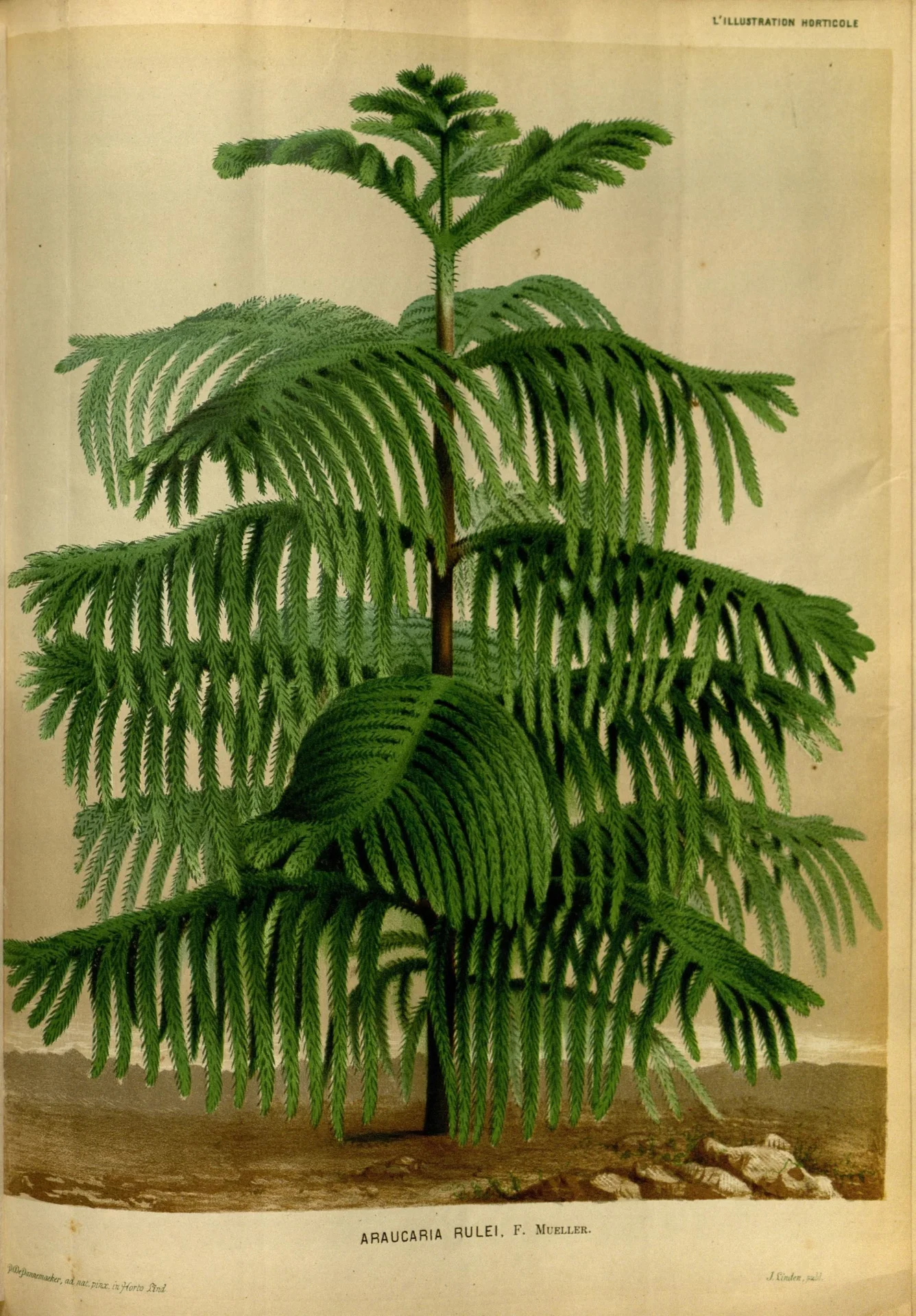
Botanical illustration
Фото: BioDivLibrary / Лицензия: Public Domain Mark
Morphology
Growing up to 30 meters tall, the tree develops a characteristic spider-like or chandelier-shaped crown. Its long, slender branches extend horizontally before abruptly turning upwards at the tips. The dark brown bark sheds continuously in thin scales or strips.
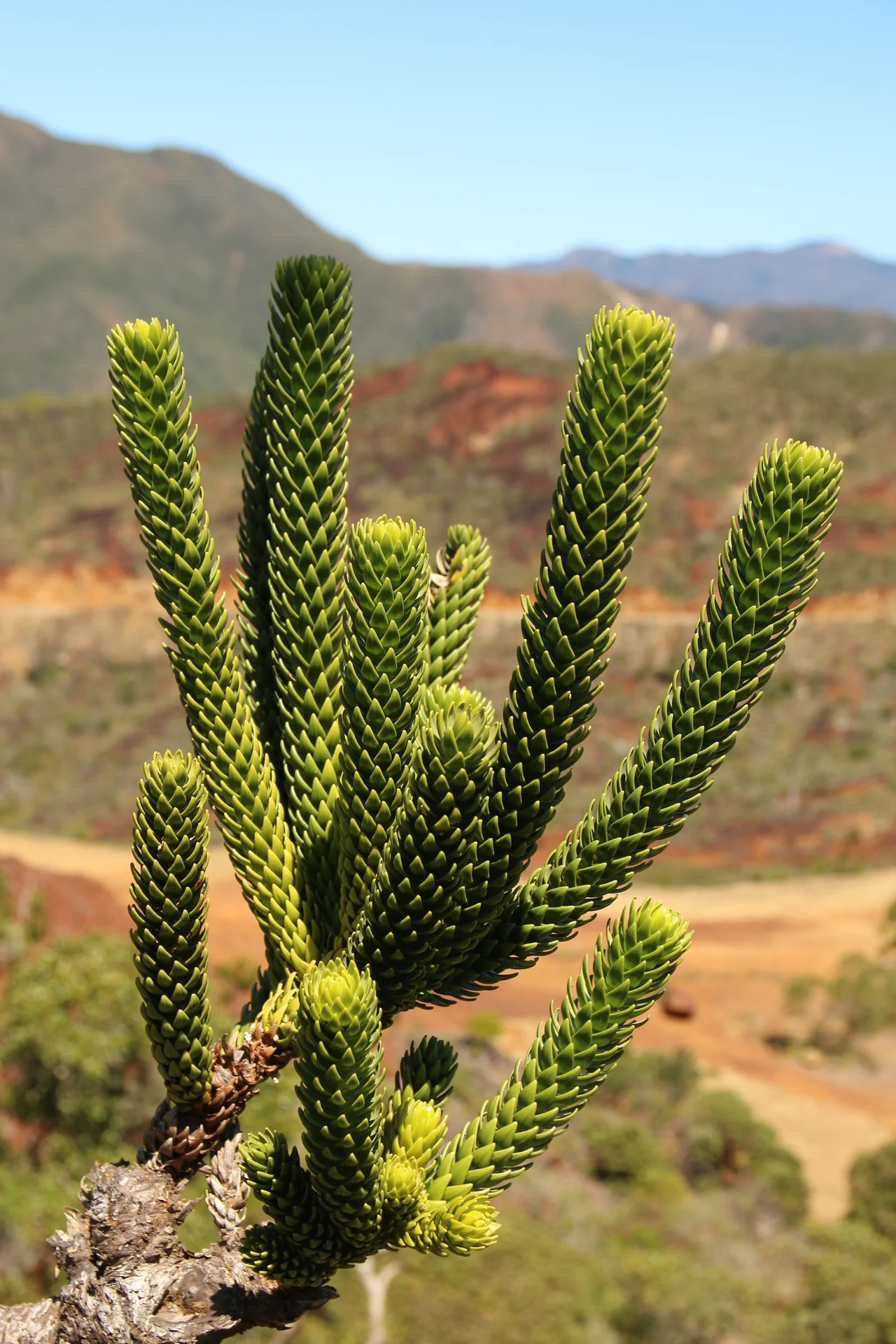
Adult leaves are scale-like, dark green, and tightly imbricate, measuring 2 to 2.5 centimeters long with a prominent midrib and an incurved apex. Cylindrical male cones measure about 13 centimeters long, while the rounded female cones take two to three years to mature their 3-centimeter winged seeds.
Applications
While primarily a wild species, its symmetrical dome-shaped growth habit has led to occasional use as an ornamental tree in Australia.
Due to its endangered status, wild harvesting is strictly prohibited, and cultivation is generally restricted to specialized botanical gardens and conservation programs.
Interesting facts
The species frequently grows in areas with some of the highest natural nickel concentrations on Earth.
Male and female cones develop on the same tree, but female cones typically occupy the upper branches to facilitate wind pollination from the lower male cones.