
Zippel's Amydrium
Amydrium zippelianum
A robust tropical climbing aroid from Central Malesia to New Guinea, prized by collectors for …
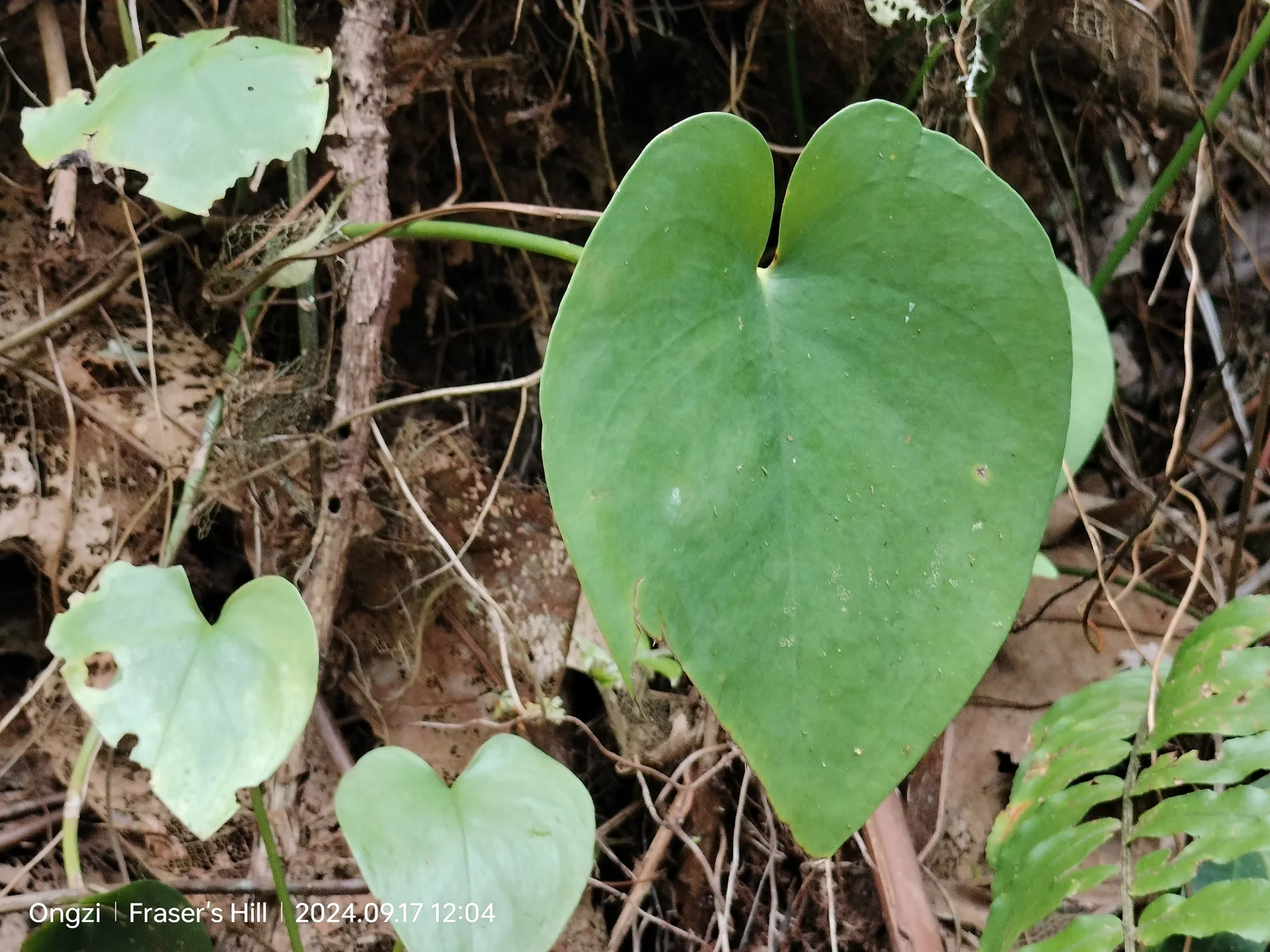
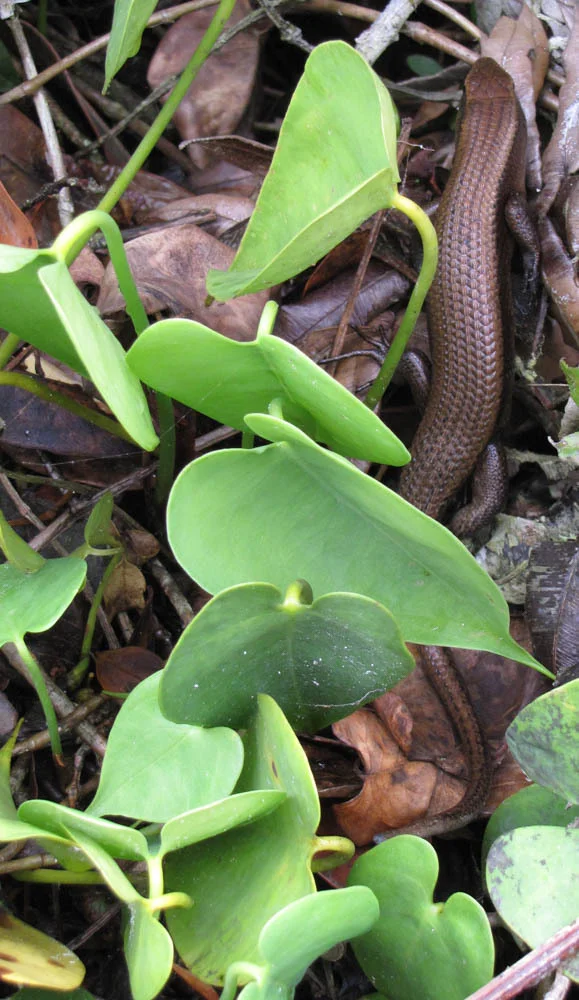
Amydrium humile is a modest, evergreen creeping and climbing vine that weaves across mossy limestone boulders, tree bases, and the shaded forest floor of humid tropical rainforests in Peninsular Malaysia and Sumatra. Its specific epithet, humile, translates from Latin as 'low-growing' or 'humble', a direct nod to its compact stature and habit of hugging the ground and lower trunks rather than ascending high into the forest canopy.
A member of the arum family (Araceae) and the tribe Monstereae, this species was first formally described in 1863 by the Austrian botanist Heinrich Wilhelm Schott, who made it the foundational type species for the genus Amydrium. In the late 19th and early 20th centuries, botanists temporarily reclassified it under the related genera Epipremnum and Rhaphidophora before modern revisions confirmed Schott's original placement.
Unlike its giant, fenestrated relatives in the same genus, Amydrium humile retains a refined, undivided leaf shape throughout its entire life cycle.
The plant produces slender, flexible, cylindrical stems that branch freely as they creep over humus-rich substrates or climb vertical surfaces. Along the nodes, it develops two distinct types of adventitious roots: short, clasping roots that anchor the stem tightly to bark or rock, and longer feeder roots that descend into pockets of decaying leaf litter.
The foliage is arranged alternately along the wiry stems, held aloft on slender petioles that feature a characteristic pulvinus (a flexible, joint-like swelling where the stalk meets the leaf blade).
When mature, the vine produces a compact floral structure typical of aroids, consisting of a fleshy spike (spadix) subtended by a modified bract (spathe).
While rarely encountered in mainstream garden centers, Amydrium humile is cultivated by specialized tropical plant collectors, botanical gardens, and terrarium enthusiasts.
Because of its slow, creeping habit and tolerance for deep shade and constant moisture, it is well suited as a living groundcover or rock-climber in large tropical vivariums, paludariums, and conservatory displays dedicated to Southeast Asian rainforest flora.
Most species in the genus Amydrium are famous for dramatic foliage pierced with Swiss-cheese holes and ragged pinnate lobes, yet Amydrium humile keeps its small heart-shaped blades completely solid from youth to maturity. This contrast is not an evolutionary oversight, but a finely tuned response to the microclimate of the lowest rainforest stratum.
Canopy-climbing aroids cut holes in their massive leaves to spill violent tropical wind gusts and allow cooling airflow to prevent overheating in bright sunbeams. Down on the sheltered forest floor and limestone outcrops of Sumatra and Malaysia, the air is still, heavy with moisture, and starved of light, where less than two percent of overhead sunlight filters through the trees.
Every detail of its miniature form is calibrated for economy, turning a dim, stagnant understory niche into a stable home without wasting energy on structural reinforcements it never needs.
Taxon Synonyms: Epipremnum humile, Rhaphidophora humilis
Amydrium zippelianum
A robust tropical climbing aroid from Central Malesia to New Guinea, prized by collectors for …

Picrasma
A genus of deciduous trees and shrubs known for their extremely bitter bark and medicinal …

Araucaria humboldtensis
A small, critically endangered coniferous tree native strictly to the high-altitude mountain peaks of southern …

Araucaria sect. Araucaria
Araucaria sect. Araucaria is a botanical section of evergreen conifers native to South America. It …