
Muku tree
Aphananthe aspera
Aphananthe aspera, commonly known as the muku tree or scabrous aphananthe, is a large deciduous …
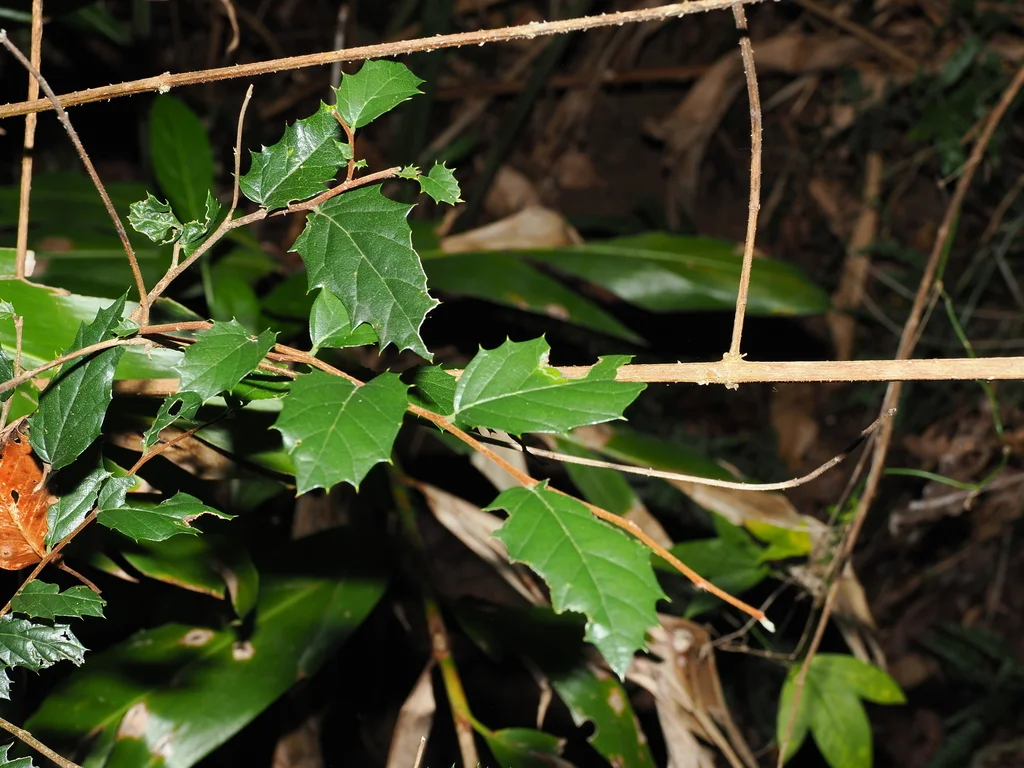
Towering up to 35 meters in height, Aphananthe philippinensis dominates the upper canopy of dry rainforests and riparian zones. Often found thriving along streams on moist alluvial soils, this robust tree develops a wide, irregular trunk that is distinctively buttressed at its base. The bark presents a patchy, brown appearance, shedding irregularly and revealing scattered pustules and bumps.
Originally described from specimens collected on the island of Luzon in the Philippines, the tree boasts a wide geographical footprint spanning across Australia, Papua New Guinea, and the Solomon Islands. Its common names, such as Rough-leaved Elm and axe-handle wood, hint at its notable physical textures and historical utility.
The foliage of Aphananthe philippinensis is highly distinctive, featuring hard, brittle leaves that feel like sandpaper to the touch. These lanceolate leaves measure between 4 to 6 centimeters in length and are armed with sharply toothed, prickly margins. The upper leaf surface displays a depressed midrib, which becomes prominently raised and paler on the underside.
Reproductive structures include small, separate male and female flowers appearing on the same plant. Male flowers cluster in compact cymes, while female flowers typically emerge solitarily on short stalks. Following pollination, the tree produces black, egg-shaped drupes approximately 6 millimeters long, each containing a slightly three-angled seed.
Spring
The hard, resilient timber of this species historically earned it the moniker axe-handle wood, as local populations utilized the wood for crafting durable tool handles. The rough, abrasive leaves were also occasionally employed as a natural substitute for sandpaper in traditional woodworking.
The generic name Aphananthe translates to 'insignificant flowers', perfectly describing its subtle, inconspicuous blooms. Despite its modest floral display, the tree acts as a crucial food source for the caterpillars of the common aeroplane and rounded six-line blue butterflies.
The dark, fleshy fruits attract a vibrant array of avian species, including the Australian king parrot, satin bowerbird, and rainbow lorikeet, making it a keystone species for local bird populations.
Taxon Synonyms: Aphananthe rectinervis, Taxotrophis rectinervis, Streblus rectinervis
Aphananthe aspera
Aphananthe aspera, commonly known as the muku tree or scabrous aphananthe, is a large deciduous …

Aphananthe cuspidata
A large evergreen tree species native to the forests of South and Southeast Asia, notable …

Aphananthe monoica
A medium-sized wild tree native to the humid tropical forests of Mesoamerica.

Picrasma
A genus of deciduous trees and shrubs known for their extremely bitter bark and medicinal …