Arracacia xanthorrhiza (arracacha): botany, uses and cultivation
Arracacia xanthorrhiza, widely known as arracacha or Peruvian parsnip, is a herbaceous perennial native to the mountain valleys of the Andes. Above ground, its lush, deeply divided foliage resembles giant parsley or celery, while underground it develops smooth, plump storage roots whose frequent golden-yellow flesh inspired the Greek specific epithet xanthorrhiza, meaning "yellow-rooted."
This ancient crop belongs to the family Apiaceae and stands out as the only umbellifer domesticated in South America. The species and its genus were formally described for science in 1825 by the English physician and botanist Edward Nathaniel Bancroft during his natural history studies in Jamaica.
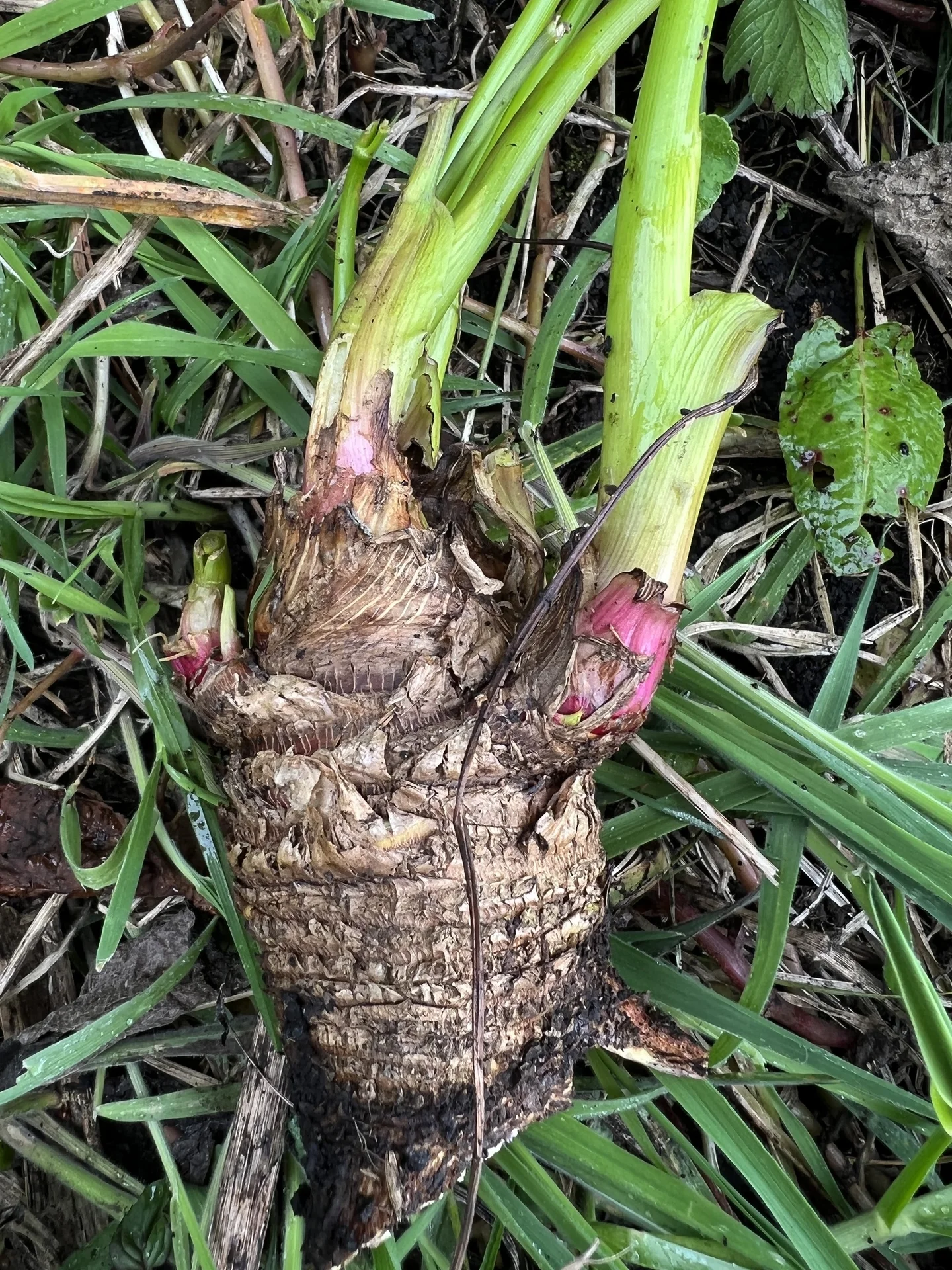
The subterranean system of Arracacia xanthorrhiza is organized around a thick, cylindrical central rootstock—often called the mother crown—that can measure several centimeters across. From the base of this stock, the plant radiates clusters of lateral storage tubers and fine absorbing rootlets.
Storage roots: Each spindle-shaped or carrot-like tuber grows up to 30 cm long and 3 to 8 cm thick, covered by a thin, smooth, off-white skin.
Internal tissues: Depending on the cultivar, the crisp interior flesh ranges from ivory-white to bright golden-yellow or deep purple, lacking a woody central core when harvested on time.
Cormels: From the upper shoulder of the central crown, the plant produces short, rosette-bearing offshoots—aerial root outgrowths known as cormels—which serve as the primary organs for vegetative propagation.
Foliage and stems
Rising from the basal cormels, the plant forms a dense leafy clump reaching 1.0 to 1.5 meters in height. The long, sheathing petioles—leaf stalks that clasp the stem base—are often flushed with reddish or purple pigments.
The leaf blades are pinnately compound—divided into feather-like arrangements of toothed leaflets—with a color spectrum shifting from dark emerald green to deep burgundy.
Inflorescences and flowers
When the plant transitions to its reproductive phase, it sends up hollow, branched generative stalks topped by compound umbels—umbrella-shaped flower clusters characteristic of the celery family. The individual flowers are tiny and actinomorphic, meaning they are radially symmetrical.
Floral structure: Each blossom carries five small petals tinged in yellow or purplish-brown and five stamens.
Pollination biology: The umbels bear both male and hermaphrodite flowers that exhibit intrafloral dichogamy—a timing mechanism where male and female organs mature at different stages to encourage cross-pollination by insects.
Care parameters
Light
Full sun to light dappled shade; thrives in bright mountain light and tolerates partial canopy cover in agroforestry systems.
Watering
Moderate, consistent moisture requiring 600 to 1,000 mm of annual rainfall; demands well-drained soil and does not tolerate waterlogging.
Temperature
Cool subtropical to temperate mountain conditions; optimal storage root swelling occurs at steady temperatures between 14 °C and 21 °C.
Humidity
Moderate mountain humidity with good air circulation around the dense foliage.
Toxicity
Non-toxic; cooked roots and blanched young stems are safe and nutritious for humans, though raw roots are indigestible.
Applications
Culinary traditions across the Americas
The starchy storage roots of Arracacia xanthorrhiza are a staple food across South America and parts of Central America and the Caribbean. Never eaten raw, the peeled and boiled tubers release essential oils that create a warm, savory aroma combining notes of celery, cabbage, and roasted chestnuts.
Soups and stews: In Colombia, the root is a foundational thickener for traditional Bogotano ajiaco and hearty regional sancochos, while in Venezuela (where it is called apio criollo) it enriches meat and poultry broths.
Purées and doughs: In Brazil, where the crop is famously known as mandioquinha or batata-baroa, cooks whip the golden roots into silky purées, roll them into delicate gnocchi and dumplings, or slice them into crisp fried chips.
Sweets and beverages: Andean kitchens grate the root with sugarcane syrup to prepare traditional confections like rallado de arracacha, or ferment the cooked mash into nourishing chicha and sweet cornmeal arepas.
Salads and Costa Rican picadillos: In Costa Rica, diced roots (locally called arracache) are seasoned into savory hashes, while blanched young stems are tossed fresh or lightly steamed into salads.
Dietetics and infant nutrition
Because the plant synthesizes exceptionally tiny starch granules, its carbohydrates break down with minimal digestive effort. Combined with four times the calcium content of ordinary potatoes and rich reserves of provitamin A carotenoids in yellow cultivars, arracacha purées and instant flours are widely prescribed for infants, elderly people, and convalescents.
Agricultural and livestock use
No part of the harvested plant goes to waste on traditional Andean farms. After the marketable lateral tubers are snapped off for kitchen use, the tough central rootstocks and antioxidant-rich mature leaves are chopped as nutritious forage for cattle and swine.
Interesting facts
Microscopic starch architecture
Unlike many highland tuber crops that pack their energy into large, dense starch grains requiring prolonged cooking and heavy enzymatic work to digest, Arracacia xanthorrhiza builds remarkably fine, uniform starch granules. This cellular trait allows water and digestive enzymes to penetrate the cooked tissue almost immediately.
In high-altitude Andean communities where boiling water occurs at lower temperatures due to reduced atmospheric pressure, having a root crop whose starch gelatinizes quickly and digests effortlessly represents a finely tuned biochemical advantage.
Perennial rhythm in an annual world
Most familiar members of the family Apiaceae—such as carrots, parsnips, and celery—follow a strict biennial clock in temperate climates, spending their first summer storing sugars in a taproot to survive winter freezes before bolting to seed in their second year. Growing in frost-free tropical mountain belts between 1,800 and 2,600 meters, arracacha operates on a completely different physiological schedule.
Continuous vegetative Partitioning: Instead of exhausting its root to fuel a single massive seed-set, the plant continuously channels carbohydrates into multiple lateral storage tubers while simultaneously budding off new basal cormels above ground.
Clonal resilience: Because its flowers rarely set abundant viable seed under cultivation, this seamless coordination between underground energy storage and above-ground shoot multiplication has allowed Andean farmers to propagate the crop vegetatively from crown offsets for millennia.
Carotenoid abundance
Yellow-fleshed landraces of arracacha accumulate such concentrated levels of beta-carotene and related carotenoid pigments—natural precursors to vitamin A—that eating large quantities over consecutive days can temporarily tint human skin a harmless golden hue known as carotenodermia. Simultaneously, the plant synthesizes volatile terpenoids—aromatic oil molecules typical of umbellifers—right alongside dense starch reserves, uniting the fragrance of a culinary herb with the caloric density of a staple tuber.
Varieties and cultivars
Traditional Andean farmers and modern agricultural institutes—particularly in Brazil and Colombia—classify Arracacia xanthorrhiza varieties primarily by the pigmentation of their storage root flesh and their maturation speed.
Yellow-fleshed cultivars (such as 'Amarela de Senador Amaral' and 'ACC Amarilla'): The most widely grown commercial group, prized for its brilliant golden interior, high provitamin A carotenoid content, and fast-maturing Brazilian selections that harvest in 7 to 8 months instead of the traditional 10 to 12 months.
White-fleshed landraces ('Zanahoria Blanca'): Favored in Ecuador and parts of Peru for their mild, delicate flavor and smooth, creamy texture when whipped into soups.
Purple-fleshed landraces ('Morada'): Traditional Andean varieties featuring anthocyanin-rich violet rings or solid purple flesh within the storage roots and dark purplish foliage above ground.