
Deadly Nightshade
Atropa bella-donna
Atropa bella-donna, commonly known as deadly nightshade, is a highly toxic perennial herbaceous plant in …
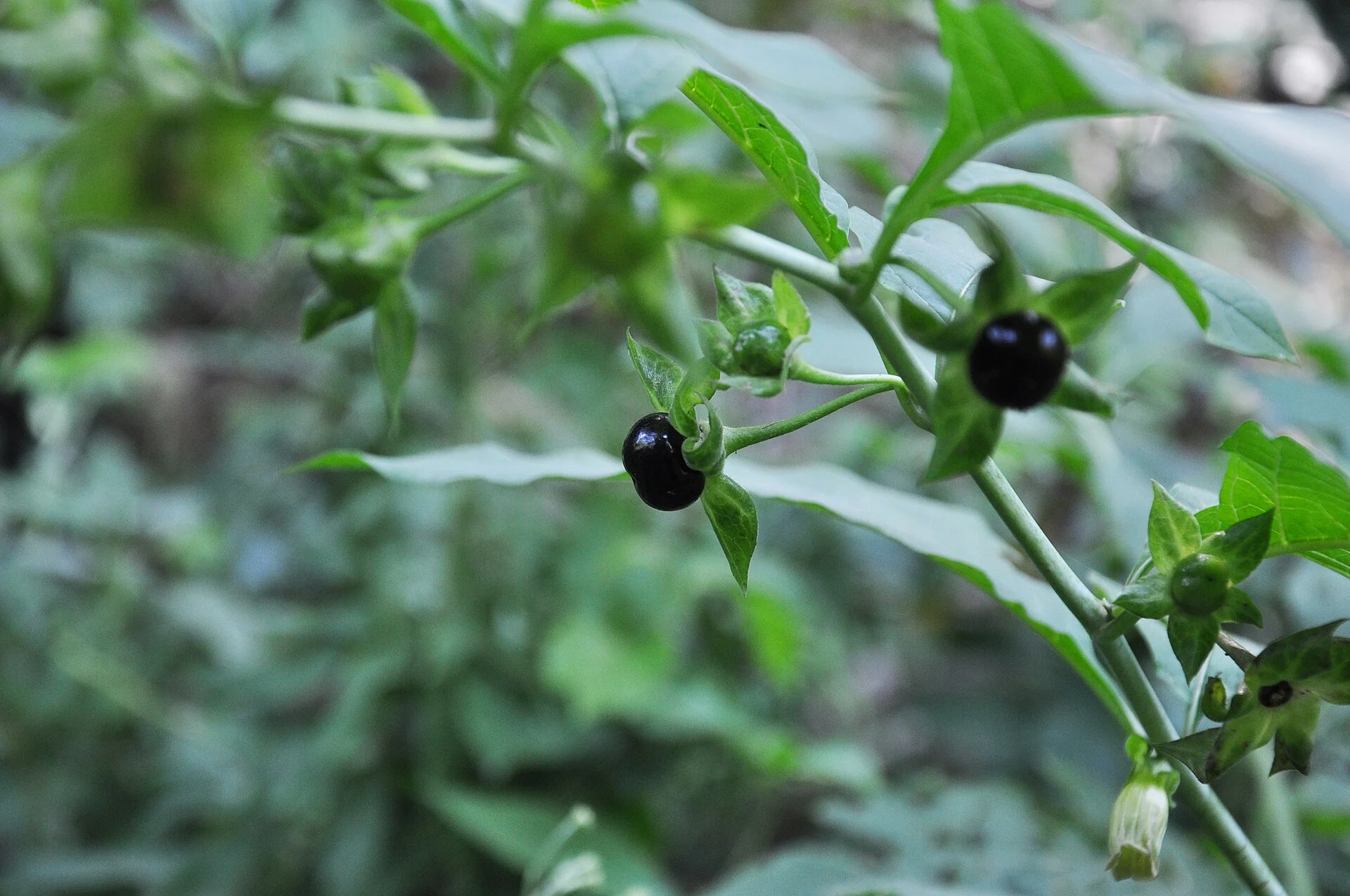
Inhabiting the damp forests and clearings of the Caucasus, this perennial herb plays a significant role in pharmacological history. It represents a close relative of the common deadly nightshade and is often classified as a subspecies of the latter. Botanists distinguish it by its glabrous stems and slightly paler blossoms.
This species contains a high concentration of tropane alkaloids, making it extremely toxic. It has been used as a substitute for European belladonna in medicinal preparations. The plant is legally protected in several regions of its native range due to habitat loss.
This robust perennial herb typically grows to a height of 90 to 120 centimeters. The erect stems are glabrous, lacking the sticky glandular hairiness found in the closely related European belladonna. Its leaves are broad, ovate, and arranged alternately on the upper parts of the stem.
The bell-shaped flowers of this species are purple or brownish-purple, though notably paler than those of Atropa belladonna. The fruit is a glossy, black, highly poisonous berry that develops in late summer. It contains multiple reniform seeds embedded in a dark, sweetish pulp.
Late spring to mid-summer, typically from May to July
Due to its high concentration of tropane alkaloids, particularly atropine and hyoscyamine, this plant is used exclusively in medicine and pharmacology. Historically, raw extracts were collected for industrial alkaloid extraction. Traditional medical preparations utilize the leaves and roots to produce antispasmodic and analgesic pharmaceuticals.
Atropa bella-donna
Atropa bella-donna, commonly known as deadly nightshade, is a highly toxic perennial herbaceous plant in …

Atropa lutea
A rare, yellow-flowered perennial herb related to the deadly nightshade, belonging to the Solanaceae family.

Picrasma
A genus of deciduous trees and shrubs known for their extremely bitter bark and medicinal …

Araucaria humboldtensis
A small, critically endangered coniferous tree native strictly to the high-altitude mountain peaks of southern …