
Deadly Nightshade
Atropa bella-donna
Atropa bella-donna, commonly known as deadly nightshade, is a highly toxic perennial herbaceous plant in …
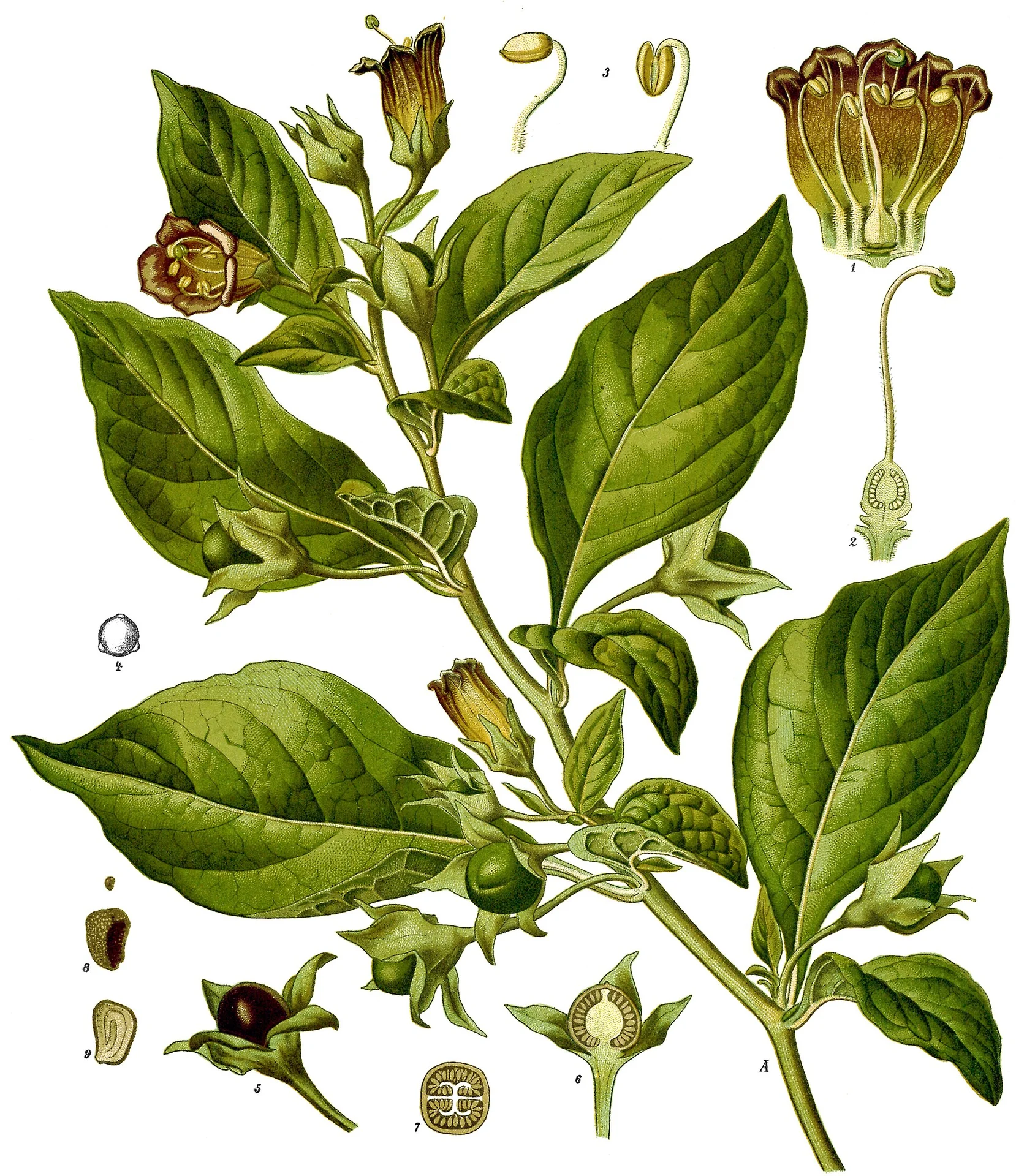
Growing primarily in temperate regions, this herbaceous perennial stands out within the Solanaceae family due to its distinct yellow flowers. It belongs to the genus Atropa, which is renowned for its highly potent alkaloids and historical significance in pharmacology. Historically described by the botanist Döll, the plant was later reclassified under its current binomial name.
Like its close relatives, this species produces dark, glossy berries that contain toxic chemical compounds. Researchers study this plant to compare its alkaloid profile with the more common deadly nightshade. It serves as an interesting subject for taxonomic debates regarding its classification as a separate species or a color variant.
This herbaceous perennial features erect stems that can reach heights of up to one meter. The leaves are ovate, smooth, and green, arranged alternately along the branching stems. Unlike the typical purple-flowered nightshade, this species is characterized by its bright yellow, bell-shaped flowers.
Following the flowering period, the plant develops spherical, shiny berries that turn black upon maturity. Each berry is surrounded by a persistent green calyx and contains numerous small seeds. The root system is thick, fleshy, and highly branched, storing nutrients for the plant's winter dormancy.
Summer, typically from June to August
Due to its high concentration of tropane alkaloids, this species finds application strictly in scientific research and pharmaceutical extraction. Compounds such as atropine and scopolamine are isolated from the plant tissues for medicinal use in ophthalmology and cardiology. It is never used in home remedies or horticulture due to the extreme danger of accidental poisoning.
Atropa bella-donna
Atropa bella-donna, commonly known as deadly nightshade, is a highly toxic perennial herbaceous plant in …

Atropa caucasica
A highly toxic perennial herb endemic to the Caucasus, distinguished by its glabrous stems and …

Picrasma
A genus of deciduous trees and shrubs known for their extremely bitter bark and medicinal …

Araucaria humboldtensis
A small, critically endangered coniferous tree native strictly to the high-altitude mountain peaks of southern …