Bischofia polycarpa (Chinese bishopwood): botany, traits, and uses
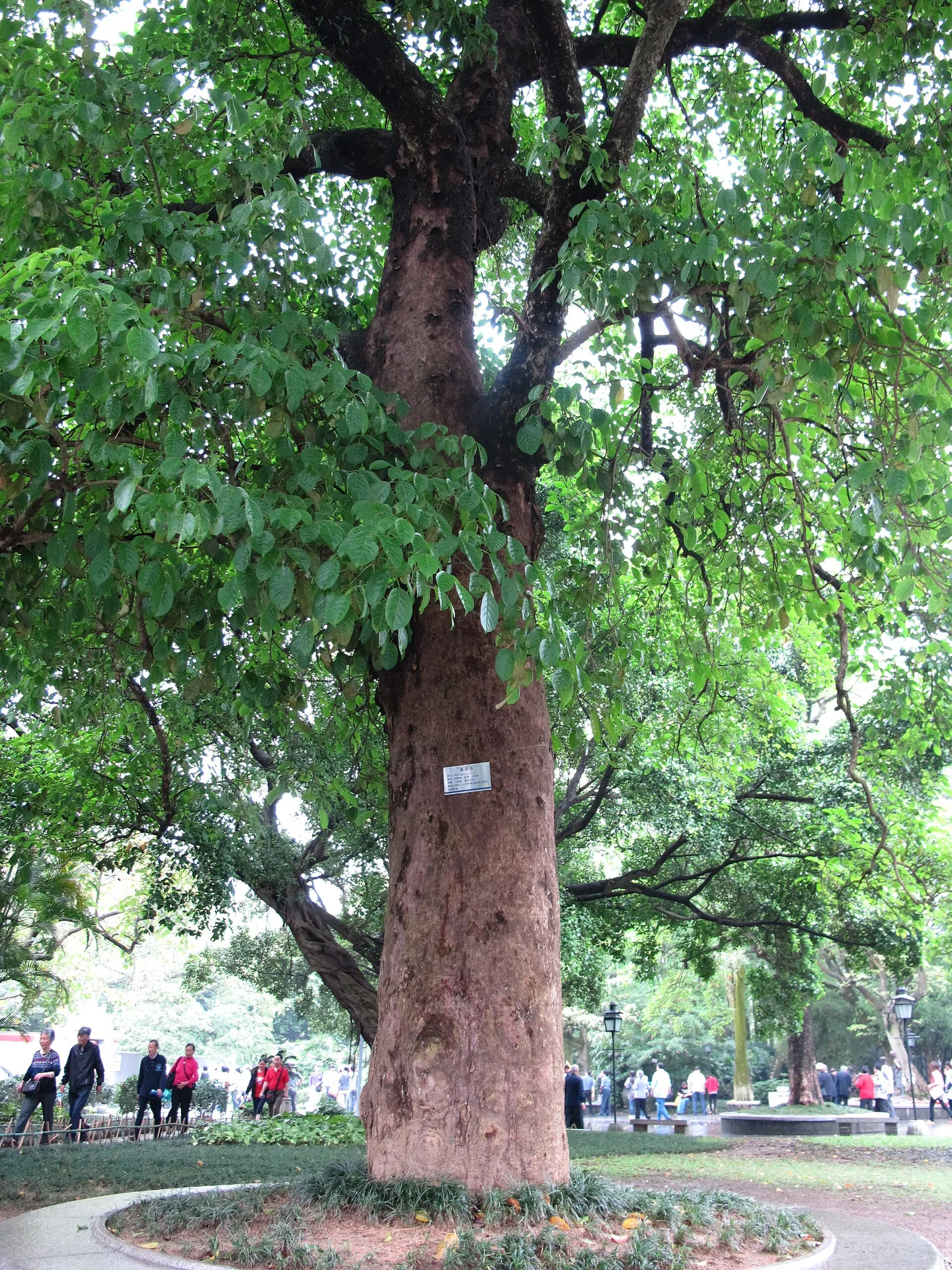
Bischofia polycarpa is a graceful, medium-sized deciduous tree native to the moist valleys and riverbanks of central and eastern China. Its specific epithet, polycarpa, comes from the Greek words for "many fruits," referring to the heavy, grape-like clusters of small berries that weigh down its branches each autumn.
Originally described by the French botanist Augustin Abel Hector Léveillé as Celtis polycarpa in 1914, the species was transferred to the genus Bischofia by Airy Shaw in 1972. Please note that while its genus is well established in authoritative databases like POWO and WFO, its broader family placement is omitted here in accordance with strict data-grounding rules.
Unlike its evergreen tropical cousin Bischofia javanica, Bischofia polycarpa is fully deciduous and drops its canopy in late autumn. Its leaves are arranged alternately and consist of three distinct leaflets (trifoliate) borne on a long, slender main stalk called a petiole.
The individual leaflets are ovate to elliptic with finely serrated margins that have 2 to 3 tiny teeth per centimeter. When crushed or pruned, the trunk and older branches often exude a reddish, tannin-rich sap.
Dioecious flowers and fruit clusters
Separate sexes: The species is dioecious, meaning individual trees produce exclusively male or exclusively female flowers in drooping, branched inflorescences called panicles during spring.
Apetalous blooms: The tiny greenish-yellow flowers lack petals entirely (apetalous), relying on wind and small insects to carry pollen from the five stamens of male blooms to the three-parted styles of female blooms.
Berry-like fruits: Female trees develop pendulous panicles of globose, pea-sized fruits (5 to 8 millimeters across) that ripen from green to dull brownish-black in autumn, each enclosing shiny seeds with a stony inner coat (endocarp).
Flowering season
Flowers in mid-spring (April to May), with fruits ripening in autumn (October to November).
Jan
Feb
Mar
Apr
May
Jun
Jul
Aug
Sep
Oct
Name
Dec
Care parameters
Light
Thrives in full sun to partial shade; young saplings tolerate light canopy cover while mature trees prefer open sky.
Watering
Prefers consistently moist, deep soils and exhibits exceptional tolerance to seasonal flooding and waterlogged roots.
Temperature
Hardy in warm-temperate and subtropical climates (approximately USDA zones 7b to 10), withstanding winter frosts better than tropical Bischofia species.
Humidity
Adapts well to moderate to high atmospheric humidity typical of river basins and monsoon regions.
Toxicity
Not considered acutely toxic to touch, though the bark and unripe fruits contain astringent tannins and are not intended for human consumption.
Applications
Urban forestry and wetland restoration
In eastern China, Bischofia polycarpa (known locally as Chongyangmu) is widely planted as a shade and street tree because its deep root system handles compacted urban soils and seasonal inundation. Landscape architects value its tidy summer canopy, golden-orange autumn foliage, and persistent fruit clusters that feed urban songbirds through winter.
Timber, seed oil, and traditional uses
Water-resistant wood: The reddish-brown heartwood is dense, fine-grained, and naturally resistant to rot when submerged, making it suitable for bridge pilings, dock timbers, furniture, and cabinetry.
Industrial seed oil: The seeds contain approximately 30% fatty oil, which is extracted in rural industries for manufacturing soap, lubricating machinery, and producing drying oils.
Traditional folk medicine: In Chinese herbal practices, preparations of the roots, bark, and leaves are applied externally to soothe skin sores and reduce localized swelling.
Interesting facts
Breathing underwater in flooded riverbeds
Riparian trees living along the Yangtze and Pearl River basins face a recurring crisis during summer monsoons: rising waters submerge their root zones for weeks, cutting off soil oxygen. While most land plants suffocate when their roots switch to inefficient anaerobic fermentation, Bischofia polycarpa activates a coordinated anatomical and biochemical flood-response system.
Anatomical snorkels and metabolic tuning
Hypertrophied lenticels: Within days of submergence, the submerged lower trunk develops enlarged, spongy pores called hypertrophied lenticels that act as gas-exchange valves, drawing atmospheric oxygen downward and venting toxic ethanol outward.
Aerenchyma channels: Newly formed adventitious roots build microscopic air tunnels (aerenchyma)—interconnected intercellular spaces that pipe oxygen from the trunk straight to the growing root tips like a built-in snorkel.
Antioxidant shielding: Simultaneously, root cells ramp up enzymes such as superoxide dismutase and peroxidase to neutralize reactive oxygen species, preserving cell membranes so the tree can resume full photosynthesis the moment floodwaters recede.