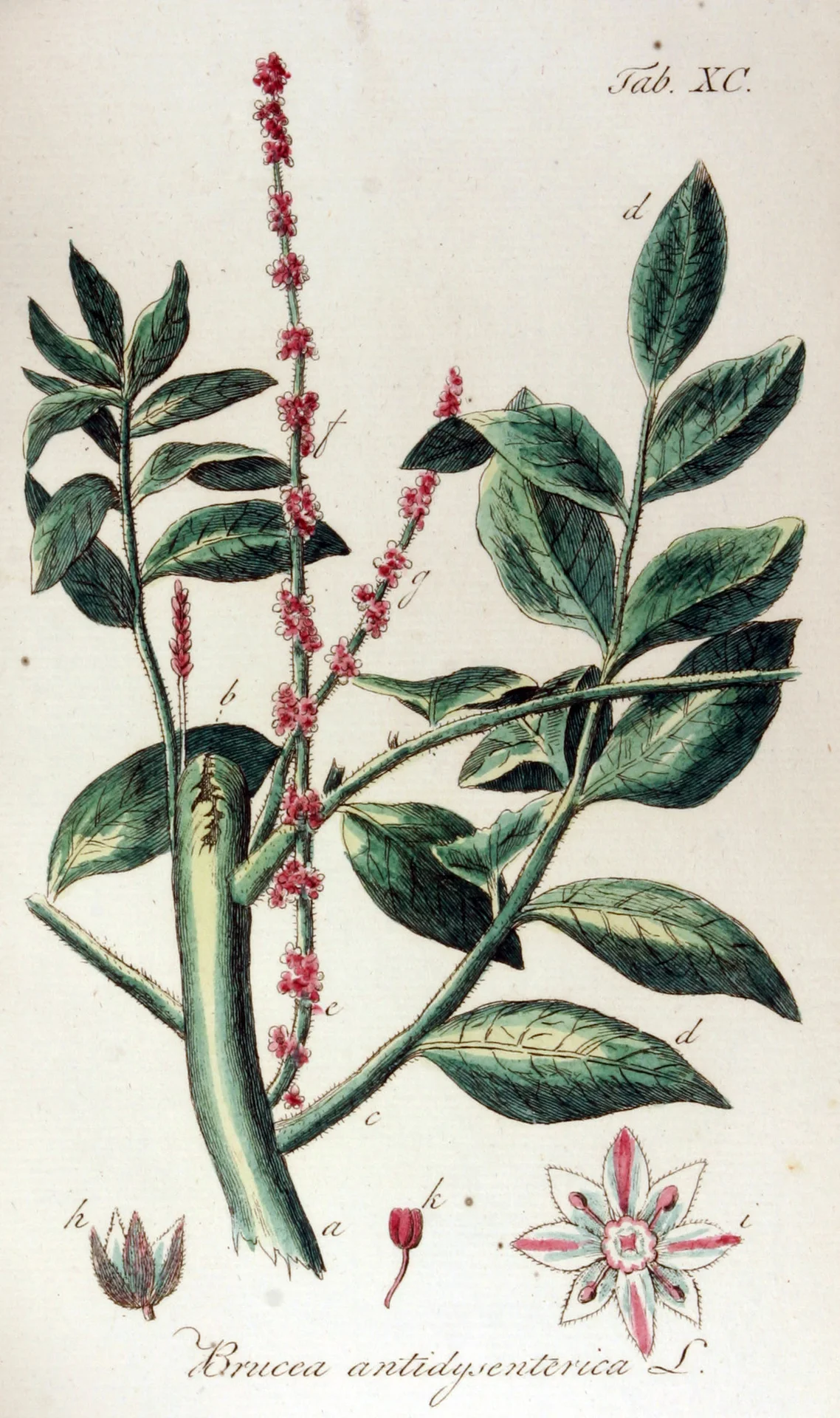
Brucea antidysenterica - Medicinal Properties and Toxicity
Inhabiting the high-altitude forests and woodlands of tropical Africa, this versatile shrub or small tree is celebrated for its pharmacological potential. It is widely distributed across regions ranging from Ethiopia and Guinea down to Angola and Zambia. The species has a long history of utilization in traditional African healing systems, particularly for gastrointestinal disorders.
This single-stemmed or branched woody plant grows up to 7 meters in height, thriving in elevations between 1,750 and 2,500 meters. The foliage consists of large, imparipinnate compound leaves. Small, greenish-yellow flowers are produced in elongated, axillary panicles.
Its distinctive yellow-red drupaceous fruits are oval-shaped and turn bright when ripe. The roots, bark, and seeds contain highly active bitter principles, primarily quassinoids such as bruceantines.
Applications
The bark, roots, and fruits have been traditionally prepared as decoctions to treat dysentery and malaria. Scientific studies have validated its effectiveness against amoebic dysentery and highlighted its active compounds' potential in fighting leishmaniasis. In veterinary medicine, leaf extracts are applied topically to treat skin conditions, wounds, and leprosy, or mixed with butter to treat scabies.
Interesting facts
Despite its therapeutic benefits for humans, the yellow-red fruits are highly toxic and potentially fatal to livestock, especially sheep and cattle. The species was scientifically named by John Frederick Miller in 1779, with the epithet antidysenterica directly reflecting its historical use as a cure for severe diarrhea.
Geography of distribution
Ethiopia
Eritrea
Kenya
Tanzania
Uganda
Democratic Republic of the Congo
Angola
Zambia
Malawi
Rwanda
Burundi
Guinea
Central African Republic
South Sudan
Sources
POWO (Plants of the World Online) - Distribution and taxonomy of Brucea antidysenterica.
JSTOR Global Plants - Specimens and habitat notes.
Useful Tropical Plants Database - Uses and toxicity profile.