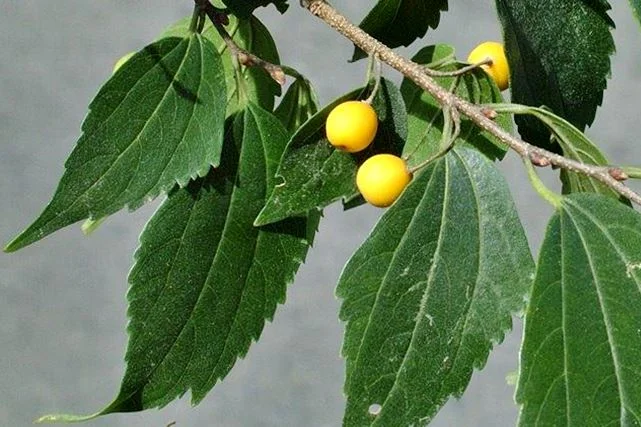

Brazilian hackberry
Celtis brasiliensis
A deciduous tree or scrambling shrub in the Cannabaceae family, native to various countries in …
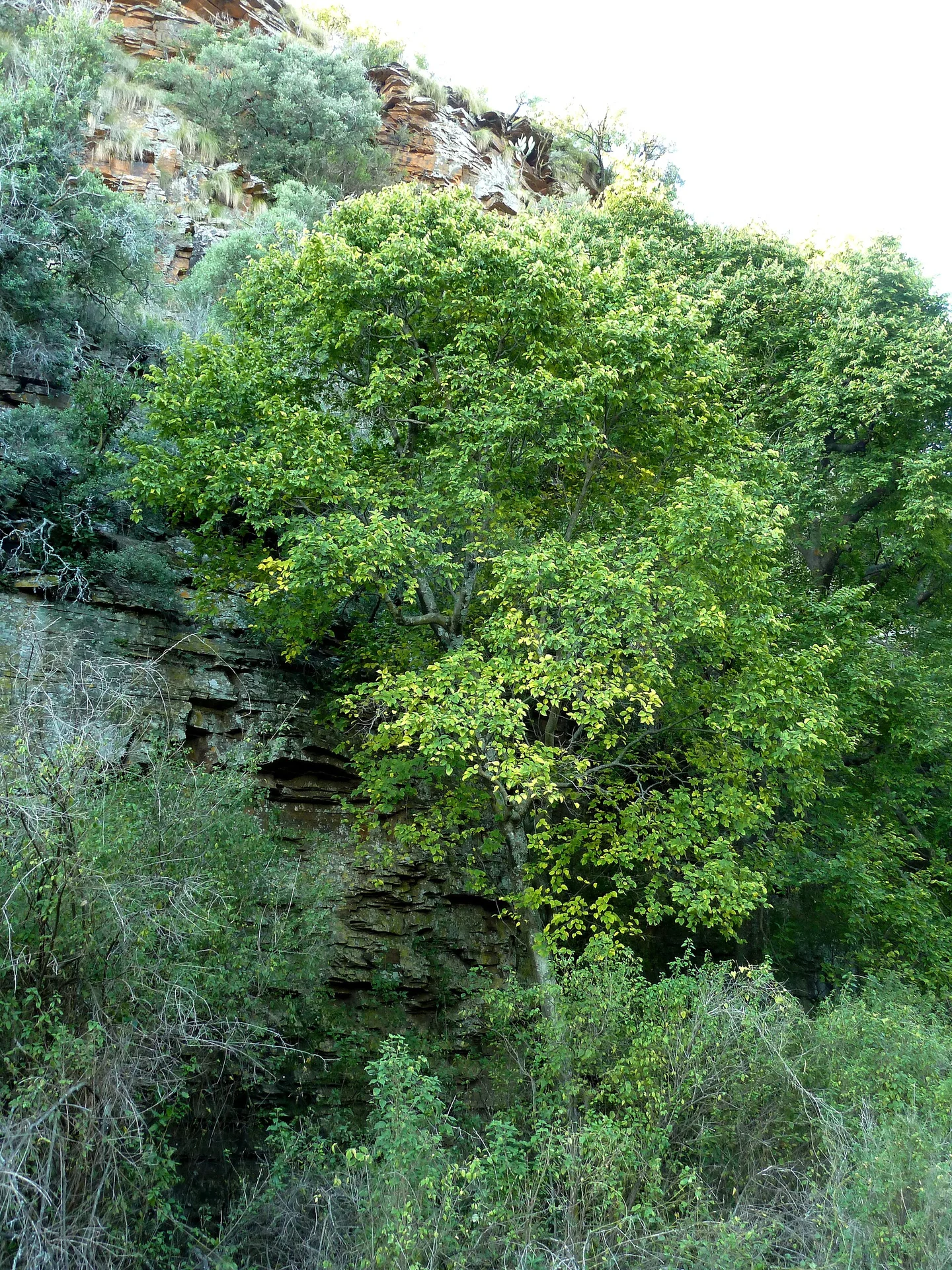
The distinctively unpleasant scent of freshly cut green timber gave rise to the evocative common name of the white stinkwood, yet this majestic tree offers a welcoming, dense canopy that graces landscapes from coastal forests to rocky inland gorges. Celtis africana is a highly adaptable, deciduous canopy tree that transforms its appearance through the seasons, showcasing pale grey bark that beautifully contrasts with its bright, tender green spring foliage.
Belonging to the family Cannabaceae, this versatile species can grow as a towering forest giant reaching up to 25 meters, a medium-sized shade tree in open country, or even a stunted shrub on challenging rocky outcrops. Its presence is a cornerstone of southern African ecology, attracting a vibrant array of wildlife while serving as an important cultural and functional plant across its vast sub-Saharan range.
The morphology of Celtis africana varies significantly depending on its growing conditions, often forming a dense, hemispherical canopy when cultivated in the open. The mature trunk features smooth, pale grey to white bark that may peel loosely, sometimes revealing distinctive horizontal ridges, while the bole itself is often buttressed and heavily branched near the ground.
Its simple, alternate leaves are ovate to acuminate, measuring 15 to 100 mm in length. A defining characteristic is the presence of three distinct veins originating from an asymmetrical leaf base. The upper leaf margins are notably serrate, whereas the basal third remains entire.
In spring, the foliage emerges as a hairy, bright light green, later maturing into a darker, smoother canopy. During the blooming season, the tree produces small, inconspicuous, pale yellow flowers. These are followed by prolific clusters of rounded drupes, roughly 4 mm in diameter, borne on long, thin stalks.
The tree produces small, inconspicuous pale yellow flowers in early spring, spanning from August to October in its native Southern Hemisphere range.
Thanks to its robust nature and appealing form, Celtis africana is extensively cultivated as a shade tree in urban planning and roadside plantings across southern Africa. Its relatively fast growth and dense canopy make it an ideal choice for parks and large residential gardens, where it provides excellent cooling shade during the hot summer months.
Beyond its landscape value, the tree is highly regarded for wildlife gardening. The abundant fruit crops attract numerous frugivorous birds, while the foliage serves as critical fodder for livestock such as cattle and goats. Historically, despite the unpleasant odor of the fresh wood, the timber has been used for making everyday items and furniture, though it is considered inferior in quality to the unrelated black stinkwood.
The ecological web supported by Celtis africana is incredibly diverse, making it a bustling hub of local biodiversity. It serves as a fascinating example of how a single species can sustain a wide variety of fauna across different habitats.
Taxon Synonyms: Celtis holtzii, Celtis kraussiana, Celtis henriquezii, Celtis burmanni, Celtis vesiculosa, Celtis eriantha, Celtis opegrapha
Celtis brasiliensis
A deciduous tree or scrambling shrub in the Cannabaceae family, native to various countries in …

Celtis gomphophylla
A tall tree species in the Cannabaceae family, widespread across sub-Saharan Africa, Madagascar, and the …

