
Brazilian hackberry
Celtis brasiliensis
A deciduous tree or scrambling shrub in the Cannabaceae family, native to various countries in …
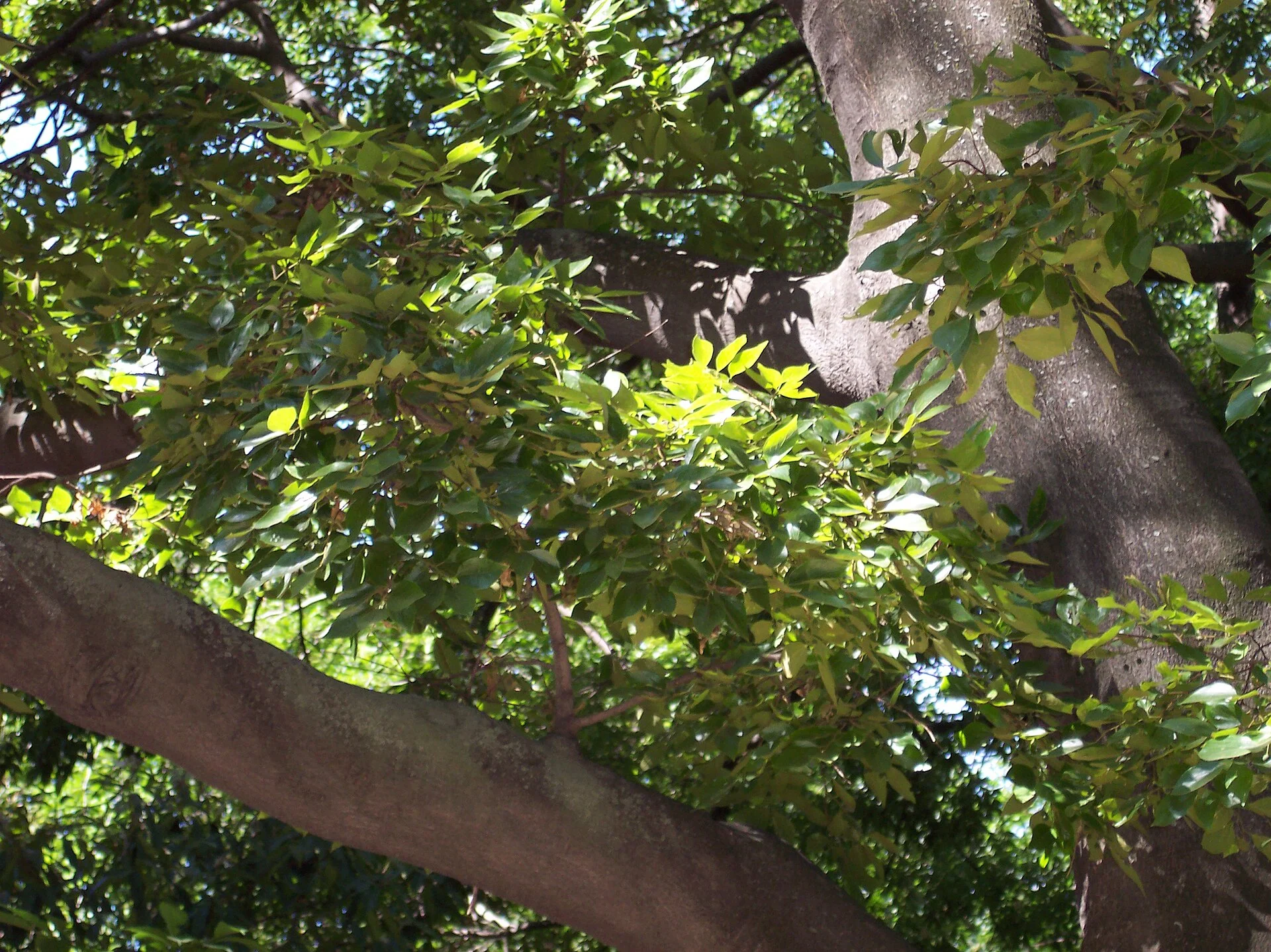
Among the resilient species of the Cannabaceae family, the deciduous Celtis bungeana thrives across the temperate landscapes of East Asia. This versatile plant can adapt its growth habit depending on environmental conditions, developing either as a compact shrub around 1.5 meters tall or a moderately sized tree reaching heights up to 15 meters. The species heavily favors rocky slopes and steppes, where its robust nature allows it to withstand both significant frosts and periods of drought.
The canopy forms a dense, broadly rounded structure supported by branches covered in smooth, light-grey bark. In their second year, the twigs transition to a grey-brown hue and feature scattered elliptical lenticels. Small, brown winter buds appear entirely glabrous and measure 1 to 3 millimeters in length.
Foliage consists of alternate, ovate to oblong-ovate leaves ranging from 4 to 8 centimeters long. Key leaf characteristics include:
During reproduction, the plant yields small, globose drupes measuring 6 to 7 millimeters in diameter. These fruits mature to a distinctive black-red or purplish-black color and contain a smooth, white endocarp.
Spring (April to May)
While not commonly cultivated for commercial timber, the tree holds value in ecological restoration and landscaping within its native range. Its high tolerance for poor, rocky soils makes it an excellent candidate for stabilizing degraded environments.
Cultural and practical applications include:
The species was formally described by the botanist Carl Ludwig von Blume in 1852. Its specific epithet honors Alexander von Bunge, a prominent botanist who extensively documented the flora of Northern China and Mongolia.
Notable ecological traits of the tree include:
Taxon Synonyms: Celtis chinensis, Celtis yangquanensis, Celtis bungeana var. lanceolata, Celtis amphibola, Celtis davidiana, Celtis mairei
Celtis brasiliensis
A deciduous tree or scrambling shrub in the Cannabaceae family, native to various countries in …

Celtis gomphophylla
A tall tree species in the Cannabaceae family, widespread across sub-Saharan Africa, Madagascar, and the …

