
Brazilian hackberry
Celtis brasiliensis
A deciduous tree or scrambling shrub in the Cannabaceae family, native to various countries in …
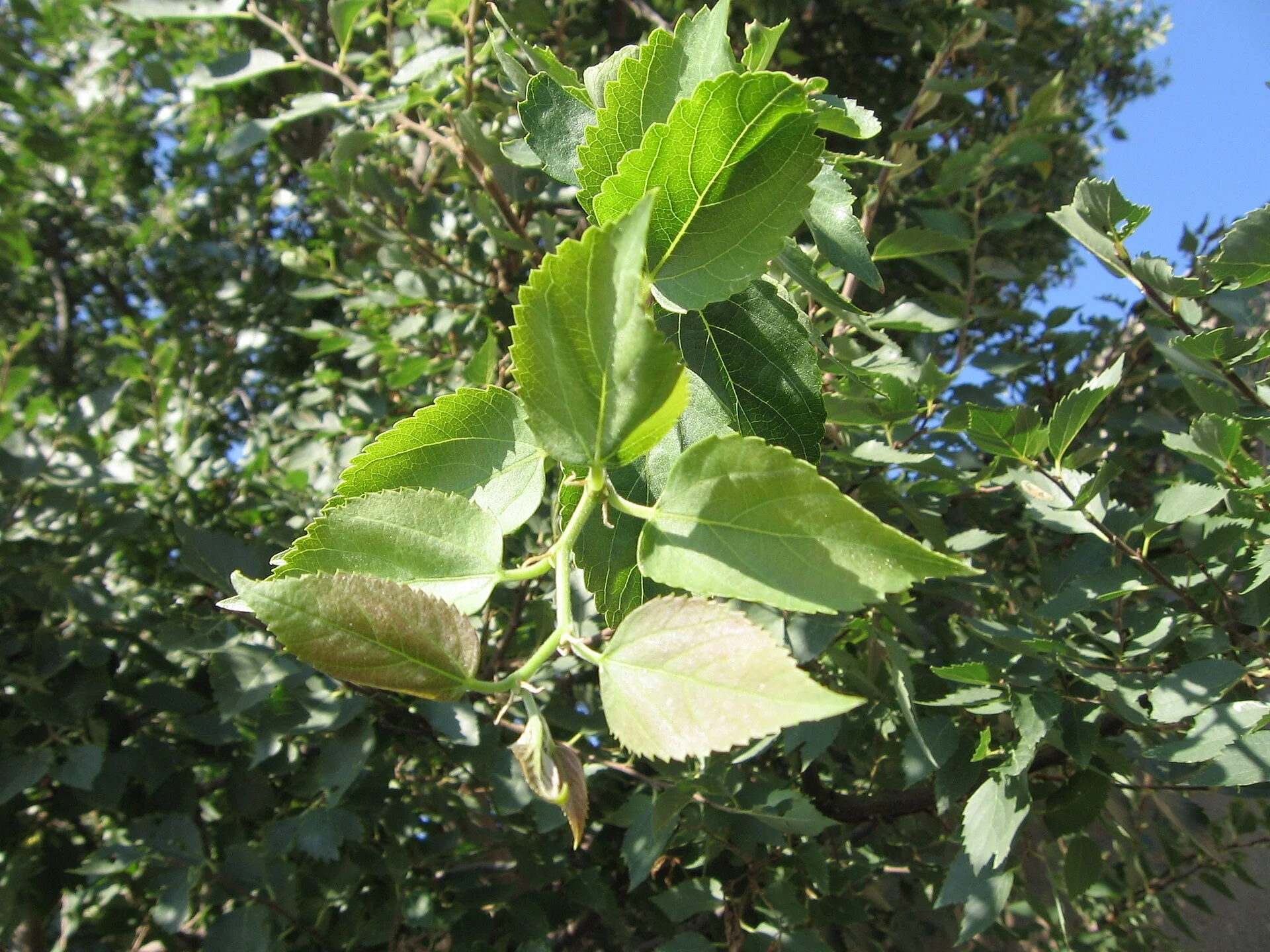
Clinging to the sun-baked, rocky inland cliffs of southeastern Europe and western Asia, a resilient botanical survivor defies the harshness of its arid surroundings. Celtis glabrata is a hardy deciduous shrub or small tree belonging to the Cannabaceae family, uniquely adapted to thrive at elevations up to 1,000 meters. Often found braving dry mountain slopes, it forms an integral part of rugged local ecosystems.
This rare plant is notable for its smooth bark and compact growth habit, typically reaching heights of two to four meters, though it can occasionally grow up to fifteen meters. The presence of Celtis glabrata adds a touch of yellowish-green foliage to stark landscapes extending from the Crimean Peninsula through the Caucasus and into the Middle East.
The physical structure of Celtis glabrata is characterized by a compact and resilient form, perfectly suited for rocky environments. The trunk features smooth, grayish-brown bark, while the young shoots emerge with a distinctive light brown or brownish-green hue.
Blooms in the spring, typically during April and May.
The botanical and regional history of Celtis glabrata presents several captivating details, particularly regarding its ecological rarity and cultural naming.
Celtis brasiliensis
A deciduous tree or scrambling shrub in the Cannabaceae family, native to various countries in …

Celtis gomphophylla
A tall tree species in the Cannabaceae family, widespread across sub-Saharan Africa, Madagascar, and the …

