
Brazilian hackberry
Celtis brasiliensis
A deciduous tree or scrambling shrub in the Cannabaceae family, native to various countries in …
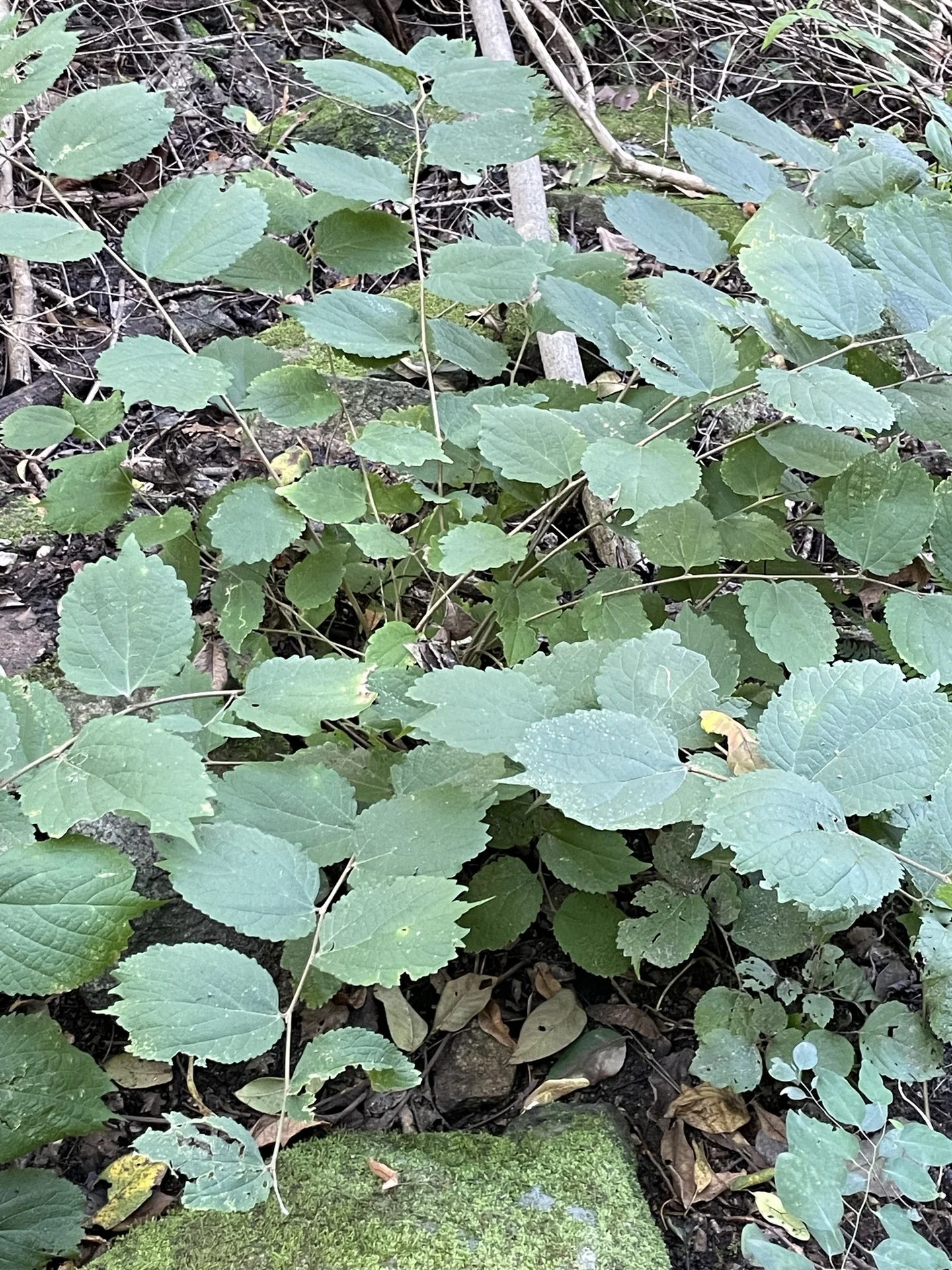
The striking Celtis koraiensis stands as a magnificent deciduous tree that graces the landscapes of Eastern Asia. Known commonly as the Korean hackberry, it thrives in temperate zones, typically growing in steppes and dry woodlands at elevations ranging from 100 to 1,500 meters.
Belonging to the family Cannabaceae, this robust tree can reach heights of up to 15 meters. Its impressive stature and dense canopy make it a prominent feature in its native ecological communities across the Korean Peninsula and northern China.
The tree develops a sturdy trunk covered in dark gray bark, while young branches appear light brown and slightly pubescent before becoming smooth. The foliage consists of alternate, simple leaves measuring 7 to 12 centimeters in length. These leaves are characteristically rounded-ovate to broad-ovate, featuring coarsely toothed margins with elongated tips and an asymmetrical base.
The reproductive cycle yields small, spherical to ellipsoid drupes that are 1 to 1.3 centimeters in diameter. As they mature from September to October, these fruits transition to a vibrant dark orange color, each encasing a grayish-brown, egg-shaped seed stone.
April to May
The wood of Celtis koraiensis is occasionally harvested for practical uses within its native range. It is primarily utilized for producing fuel wood and basic agricultural implements.
The fleshy, dark orange fruits produced in the autumn are edible and serve as a seasonal food source. Ecologically, the tree plays a vital role in its habitat by providing sustenance and shelter for various bird species.
The seeds of the Korean hackberry exhibit a pronounced state of dormancy, requiring a specific period of cold stratification to germinate successfully. Scientific studies indicate that applying gibberellic acid significantly enhances the germination rate of these dormant seeds.
Cytological research has established that the diploid chromosome number for this species is 2n = 20. The tree was formally described by the prominent Japanese botanist Takenoshin Nakai in 1909.
Celtis brasiliensis
A deciduous tree or scrambling shrub in the Cannabaceae family, native to various countries in …

Celtis gomphophylla
A tall tree species in the Cannabaceae family, widespread across sub-Saharan Africa, Madagascar, and the …

