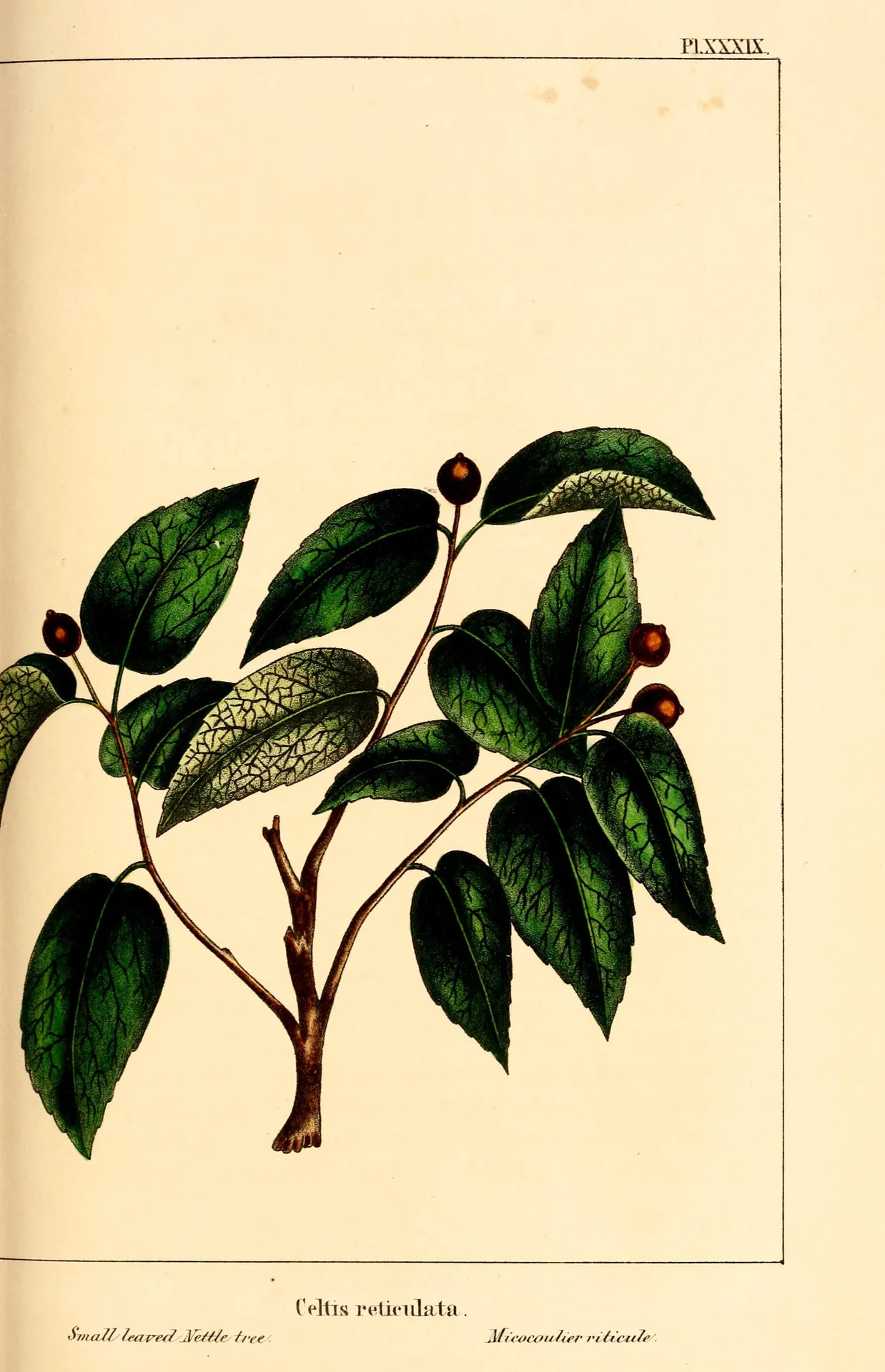

Brazilian hackberry
Celtis brasiliensis
A deciduous tree or scrambling shrub in the Cannabaceae family, native to various countries in …
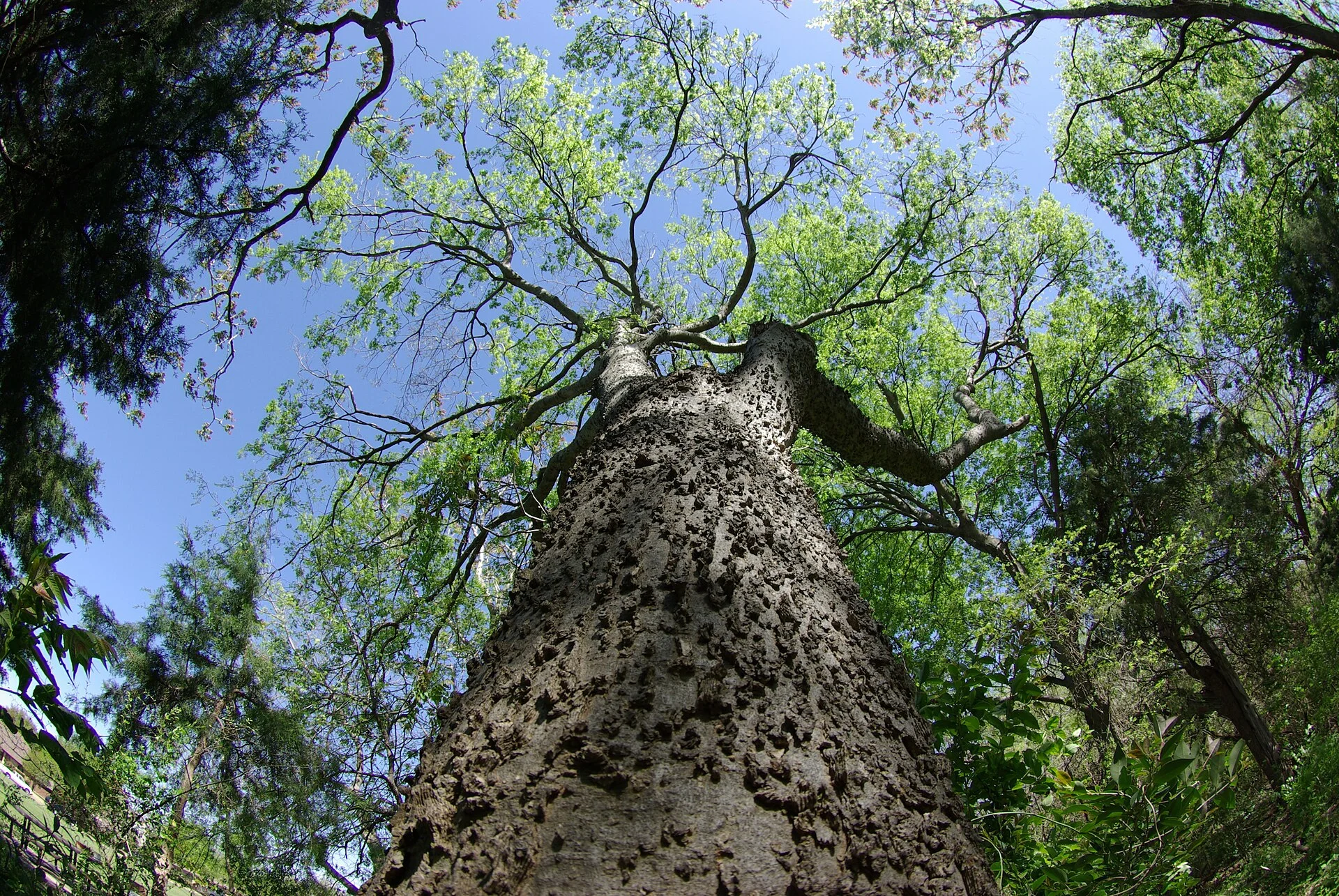
Along the moist, low-lying floodplains of the southeastern United States, a distinctive deciduous tree gracefully casts its shade over the understory. Celtis laevigata, widely recognized as the sugarberry or Southern hackberry, is a resilient medium-sized tree that defines many bottomland landscapes. With its unique warty bark and sweeping branches, it provides an architectural elegance to natural and urban environments alike.
Historically intertwined with the diverse ecosystems of North America, the sugarberry extends its reach from Virginia down to Florida, west to Texas, and into northeastern Mexico. It is frequently found sharing habitats with its close relative, the common hackberry (Celtis occidentalis), though it demonstrates a strong preference for lower elevations and riparian zones. The tree not only offers significant ecological value by supporting local wildlife but also holds a rich history of utility among Native American communities.
Celtis laevigata develops into a substantial tree, typically reaching heights of 10 to 30 meters with a broad, globose crown and elegantly drooping branches. Its trunk, which can grow up to 1 meter in diameter, is encased in a distinctive light gray bark that starts smooth but develops prominent, corky, wart-like lenticels as it matures. Unlike trees with deep taproots, it typically spreads its roots widely, making it somewhat sensitive to strong winds but well-adapted to softer soils.
The deciduous leaves of the sugarberry are arranged alternately and possess a thin, leathery texture. They are typically 5 to 8 centimeters long, displaying an elliptic-lanceolate to oblong-ovate shape with an asymmetrical, broadly wedge-shaped base and an acuminate, long-pointed tip. The leaf margins are predominantly smooth or feature very few teeth, distinguishing them from the more serrated leaves of related species.
During the spring, the tree produces small, inconspicuous, greenish or yellowish flowers that lack petals. These blooms give way to the tree's namesake fruit: fleshy, spherical drupes measuring 5 to 10 millimeters in diameter. Initially green, the sweet and juicy berries transition through shades of orange and red, eventually ripening to a dark purplish-black in late summer and persisting on the branches well into the winter months.
The tree typically blooms from mid-March to May, depending on the latitude, with flowers appearing simultaneously with the emergence of new spring leaves.
The wood of Celtis laevigata, which is relatively soft, pale yellow, and medium-strength, is highly valued in the woodworking industry. It is frequently harvested to produce high-quality furniture, as its naturally light color easily takes on beautiful light to medium-brown finishes without the need for bleaching. Additionally, the timber is utilized in the manufacturing of sporting goods, plywood, and various containers.
Beyond timber, the sugarberry serves as an excellent shade tree in urban landscaping due to its elm-like form, attractive warty bark, and general adaptability to city environments. Historically, Native American tribes utilized various parts of the tree; for instance, the Houma people created bark decoctions to treat sore throats and venereal diseases, while the Navajo boiled its leaves and branches to produce rich dark brown and red dyes for wool.
One of the most fascinating ecological adaptations of Celtis laevigata is its allelopathic nature. The leaf litter dropped by the tree contains specific chemical compounds, including ferulic, caffeic, and p-coumaric acids, which actively inhibit the seed germination and growth of many competing plant species, particularly grasses, beneath its canopy.
The tree acts as a crucial food source and habitat provider in its native range:
Taxon Synonyms: Celtis laevigata var. apposita, Celtis laevigata var. anomala, Celtis laevigata var. brachyphylla, Celtis laevigata var. laevigata, Celtis laevigata var. texana, Celtis berlandieri, Celtis laevigata f. microphylla, Celtis texana, Momisia lamarckii
Celtis brasiliensis
A deciduous tree or scrambling shrub in the Cannabaceae family, native to various countries in …

Celtis gomphophylla
A tall tree species in the Cannabaceae family, widespread across sub-Saharan Africa, Madagascar, and the …

