
Brazilian hackberry
Celtis brasiliensis
A deciduous tree or scrambling shrub in the Cannabaceae family, native to various countries in …
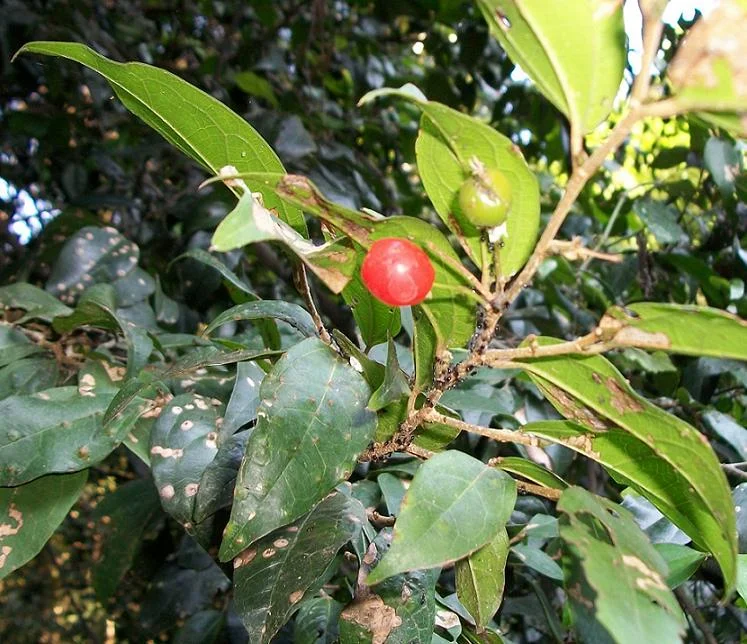
Celtis mildbraedii thrives as a prominent forest tree across the moist semi-deciduous and coastal forests of Sub-Saharan Africa. Reaching heights of up to 55 meters, it commands a significant presence in the forest canopy. Its trunk can grow between 30 to 100 centimeters in diameter and often remains branchless for the majority of its height.
The tree plays a crucial role in its native ecosystems, acting as a dominant species alongside others like African Mahogany. Its range extends widely from West Africa to Sudan, the Democratic Republic of the Congo, Angola, and Tanzania, with isolated populations in South Africa, Mozambique, and Madagascar. The species has adapted well to varying elevations, thriving between 200 and 1,600 meters above sea level.
The robust trunk of Celtis mildbraedii frequently develops prominent buttress roots that provide stability in the shallow soils of tropical forests. Its bark is characteristically smooth and light-colored, distinguishing it from related species. The foliage consists of dark green, flexible leaves that tend to have a drooping appearance.
As the tree matures, it produces small, fleshy fruits that transition to a vibrant red color upon ripening. These drupes are vital for local wildlife, despite viable seeds being notoriously difficult to secure for propagation. The wood itself is valued for its strength and light coloration, making it a sought-after resource in regions where it grows abundantly.
The sturdy and high-quality timber of Celtis mildbraedii is heavily utilized in commercial logging, particularly in Uganda and Ghana. The wood is widely harvested from the wild and exported globally for various construction and carpentry needs. Additionally, local communities rely on the tree for traditional medicinal purposes.
Extracts from the bark and leaves contain active compounds with documented sedative properties. These elements are routinely processed by indigenous practitioners to treat specific ailments. Furthermore, the tree contributes significantly to forest regeneration efforts and serves as a critical food source for primate populations in reserves like Budongo.
Despite its ecological importance and striking red fruits, Celtis mildbraedii remains exceptionally rare in certain parts of its range, particularly in South Africa. In 2009, researchers noted a complete absence of these trees in local nurseries, highlighting a significant lack of commercial propagation efforts.
Taxon Synonyms: Celtis usambarensis, Celtis dubia, Celtis bequaertii, Celtis franksiae, Celtis compressa
Celtis brasiliensis
A deciduous tree or scrambling shrub in the Cannabaceae family, native to various countries in …

Celtis gomphophylla
A tall tree species in the Cannabaceae family, widespread across sub-Saharan Africa, Madagascar, and the …

