
Brazilian hackberry
Celtis brasiliensis
A deciduous tree or scrambling shrub in the Cannabaceae family, native to various countries in …
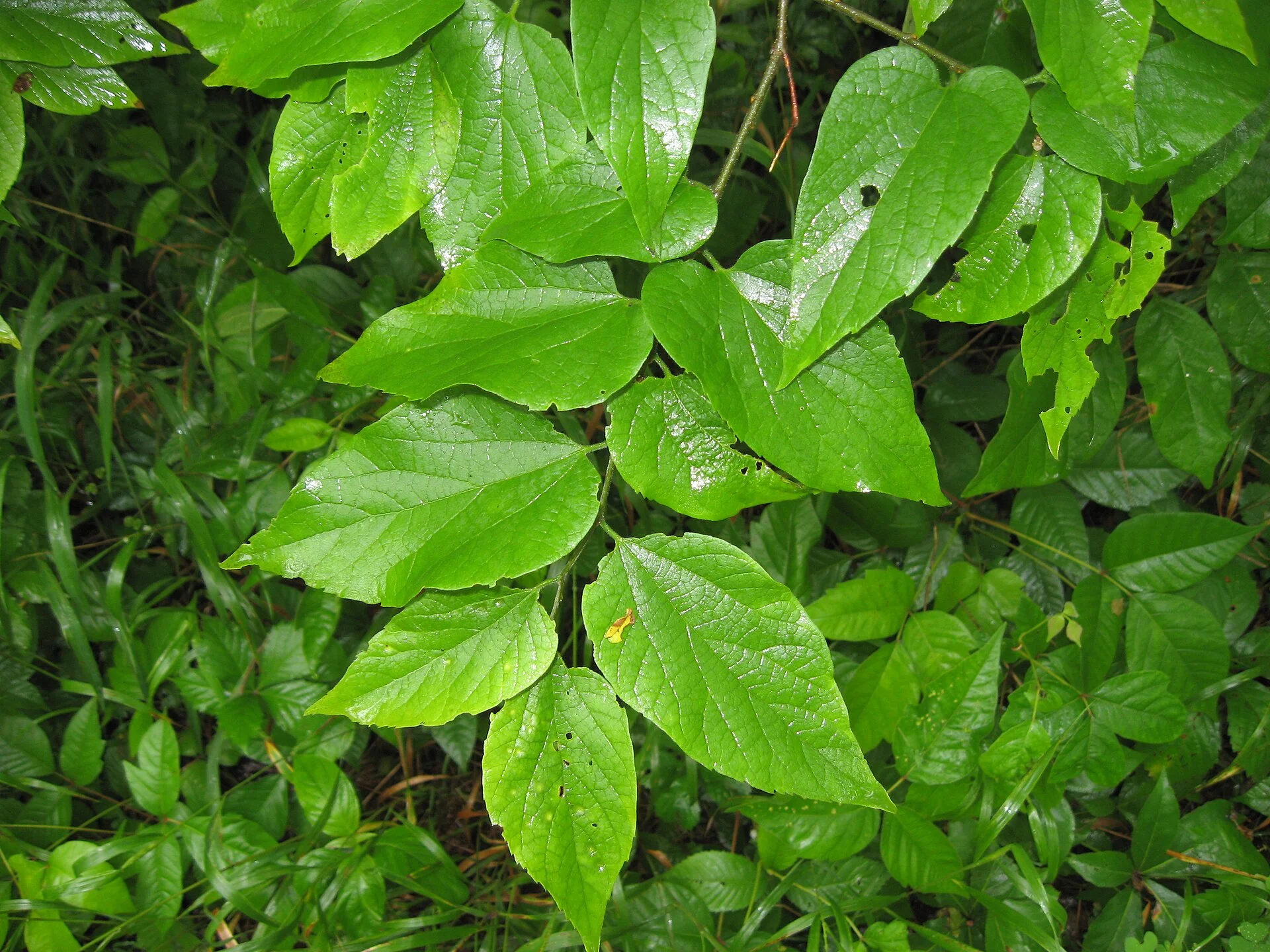
Adapting perfectly to dry upland habitats and thin calcareous soils, Celtis tenuifolia typically maintains a diminutive stature compared to its larger botanical relatives. This shade-intolerant and slow-growing woody plant, commonly known as the dwarf hackberry or Georgia hackberry, naturally occurs across eastern regions of the United States and extends into isolated pockets of southern Canada. The species demonstrates remarkable drought tolerance, often establishing itself in challenging environments such as open woodlands, rocky alvars, and sandy coastal areas where competing vegetation struggles to survive.
The foliage consists of alternate, simple leaves measuring 5 to 7 centimeters in length and 2 to 3.5 centimeters in width. These finely hairy leaf blades are characterized by shallowly toothed margins and a generally ovate outline.
During dormancy, the plant exhibits small, brown, hairy winter buds measuring merely 1 to 2 millimeters in length, notably lacking true terminal buds. As a monoecious species, it produces unisexual flowers that are wind-pollinated, appearing either solitarily or in small clusters.
The resulting fruit is a spherical drupe, 5 to 8 millimeters in diameter, containing a single stone surrounded by a thin, sweet mesocarp. This fruit undergoes a dramatic color transformation during maturation, progressing from green to light orange, deepening to dark red, and ultimately settling into a purplish-brown hue.
The sweet, edible mesocarp of the fruit is composed of a smooth outer crust surrounding a pulpy yellow interior. While primarily serving as an important ecological food source, these berries provide crucial sustenance for various songbirds and terrestrial wildlife, which in turn act as the primary vectors for local seed dispersal.
Despite its broad distribution across the eastern United States, this species becomes exceedingly rare in the northern extremes of its range. In Canada, where it reaches its northernmost limits in the province of Ontario, Celtis tenuifolia is formally designated as a threatened species and receives strict protection under the federal Species at Risk Act.
Furthermore, as a moderate calciphile, it exhibits a strong affinity for limestone-derived soils. The plant frequently hybridizes with other Celtis species when their populations overlap in natural environments.
Taxon Synonyms: Celtis tenuifolia var. soperi, Celtis pumila var. georgiana, Celtis occidentalis subsp. tenuifolia, Celtis tenuifolia var. georgiana, Celtis occidentalis var. georgiana, Celtis occidentalis subsp. georgiana, Celtis georgiana
Celtis brasiliensis
A deciduous tree or scrambling shrub in the Cannabaceae family, native to various countries in …

Celtis gomphophylla
A tall tree species in the Cannabaceae family, widespread across sub-Saharan Africa, Madagascar, and the …

