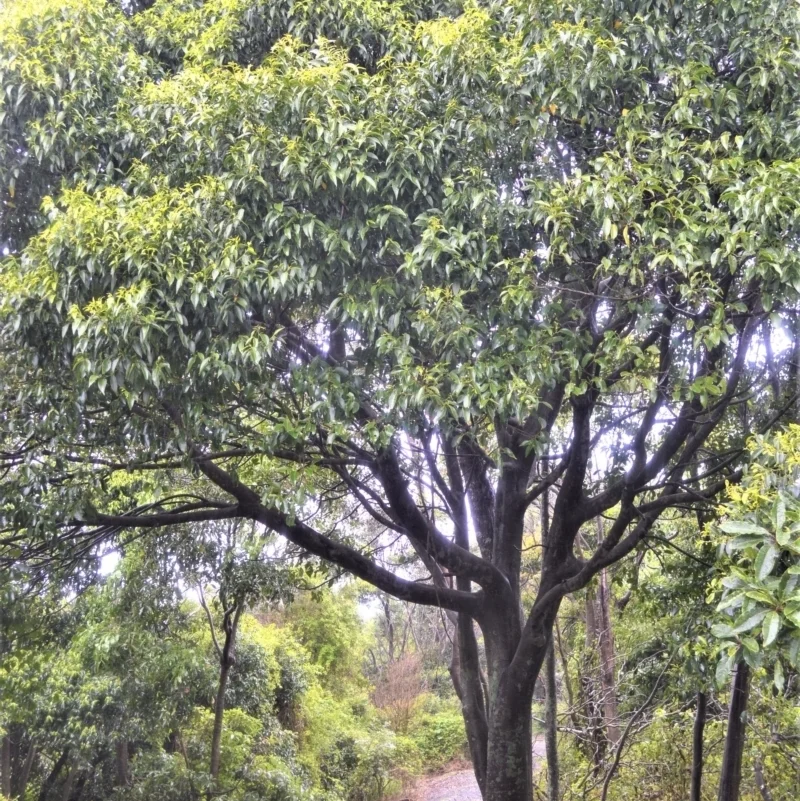

Brazilian hackberry
Celtis brasiliensis
A deciduous tree or scrambling shrub in the Cannabaceae family, native to various countries in …
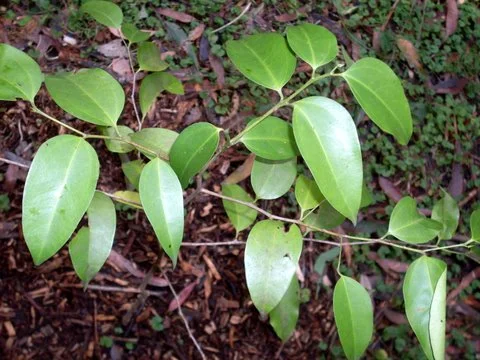
Towering up to 40 meters in its natural rainforest habitat, Celtis paniculata commands attention with its mostly cylindrical trunk and subtle buttress roots. Often referred to as the investigator tree or silky celtis, this impressive member of the Cannabaceae family thrives across a vast expanse of tropical Asia and the Pacific. The species plays a pivotal ecological role in its native ecosystems, providing sustenance for numerous bird species and serving as a crucial host plant for specialized butterflies.
The vegetative structure features alternate, simple leaves that are elliptical in shape with a pronounced, pointed tip. Measuring between 6 and 10 centimeters in length, the foliage presents a dull green shade on both surfaces and is characterized by smooth, non-toothed margins.
A distinctive identifying trait is the intramarginal leaf vein, which runs along both edges from the base for up to half the leaf's length. Translucent glands become visible under magnification, while the leaf base often displays an asymmetrical or oblique form.
Reproductive structures emerge as axillary cymes or panicles bearing small green flowers. Following successful pollination, the plant develops fleshy, round to oval drupes measuring 8 to 10 millimeters in length.
These fruits transition to a deep blue or black hue upon maturity and contain a single seed characterized by prominently veined ridges. The trunk is cloaked in thin, grayish-brown bark adorned with vertical pustular lines.
Summer
The robust wood of Celtis paniculata offers utility as a general-purpose timber, boasting a specific gravity of 0.70. Ecologically, it functions as a vital food resource; the fruit sustains various rainforest pigeons and other avian species. Additionally, the foliage acts as a larval food source for several butterfly species, including the blue beak, common aeroplane, and tailed emperor.
This botanical specimen holds a unique place in maritime history. In 1802, the renowned explorer Matthew Flinders inscribed the name of his ship, HMS Investigator, onto the trunk of a Celtis paniculata on Sweers Island in the Gulf of Carpentaria. This historic landmark became known as the Investigator Tree, with subsequent explorers adding their own vessels' names to the bark.
Following severe damage from a tropical cyclone in 1887, a section of the inscribed trunk was salvaged and preserved in the Queensland Museum. Beyond its historical lore, an endangered population of the leaf beetle Menippus darcyi relies exclusively on this specific tree for its survival.
Taxon Synonyms: Celtis ingens, Celtis opaca, Celtis palauensis
Celtis brasiliensis
A deciduous tree or scrambling shrub in the Cannabaceae family, native to various countries in …

Celtis gomphophylla
A tall tree species in the Cannabaceae family, widespread across sub-Saharan Africa, Madagascar, and the …

