
Brazilian hackberry
Celtis brasiliensis
A deciduous tree or scrambling shrub in the Cannabaceae family, native to various countries in …
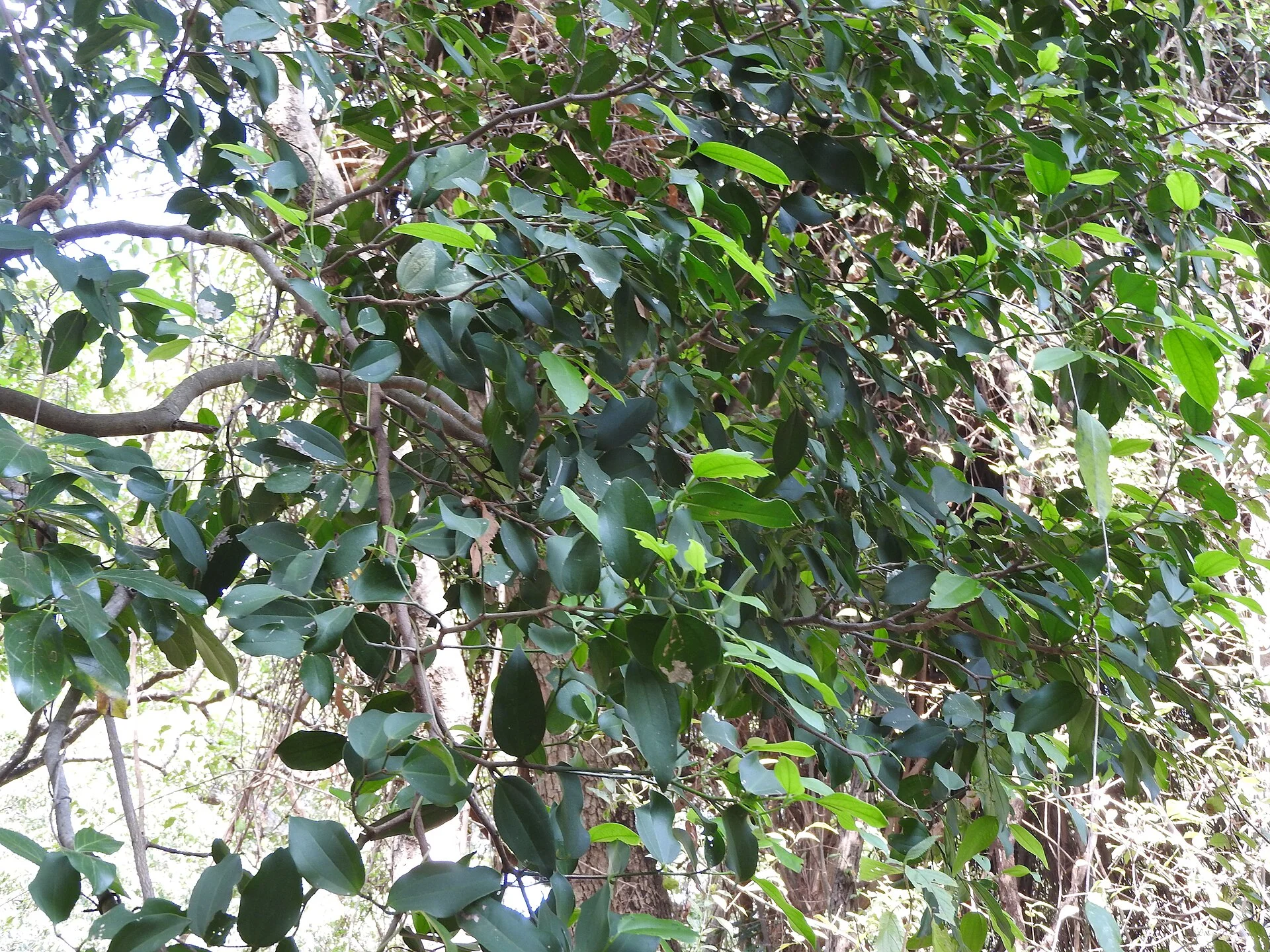
In the dappled sunlight of tropical and subtropical forests, from the coasts of Africa to the monsoonal landscapes of Australia, rises a towering giant of the Cannabaceae family. Celtis philippensis can reach impressive heights of up to 45 meters, its massive cylindrical trunk anchoring it firmly into the humid earth.
This expansive range covers diverse ecosystems, including littoral forests and moist evergreen environments up to 2,000 meters above sea level. Beyond its physical grandeur, this tree serves as a vital ecological cornerstone, supporting numerous species of native wildlife across multiple continents.
The impressive structure of Celtis philippensis begins with its straight, cylindrical trunk, which can grow to a substantial diameter of 200 centimeters. The bark is characteristically brown and completely covered with fine, soft hairs.
Its foliage consists of simple, green leaves arranged spirally along the branches to capture maximum sunlight. During its blooming period, the tree produces delicate, creamy-white flowers that eventually give way to round, fleshy, orange fruits.
Blooming occurs from July to April, with fruits ripening by late autumn.
The timber of Celtis philippensis is highly valued for its substantial strength and overall durability. It has been traditionally utilized in various forms of heavy construction and precise craftsmanship.
This species boasts an incredibly wide distribution, spanning across the diverse landscapes of Africa, Asia, and Oceania. In Australia, the tree plays a crucial role in local ecosystems as an indispensable host plant.
Taxon Synonyms: Celtis hasseltii, Celtis collinsae, Celtis djungiel, Celtis brevinervis, Celtis philippensis var. philippensis, Celtis philippensis var. consimilis, Celtis philippensis var. wightii, Sponia strychnifolia, Celtis laurifolia, Celtis wightii
Celtis brasiliensis
A deciduous tree or scrambling shrub in the Cannabaceae family, native to various countries in …

Celtis gomphophylla
A tall tree species in the Cannabaceae family, widespread across sub-Saharan Africa, Madagascar, and the …

