
Brazilian hackberry
Celtis brasiliensis
A deciduous tree or scrambling shrub in the Cannabaceae family, native to various countries in …
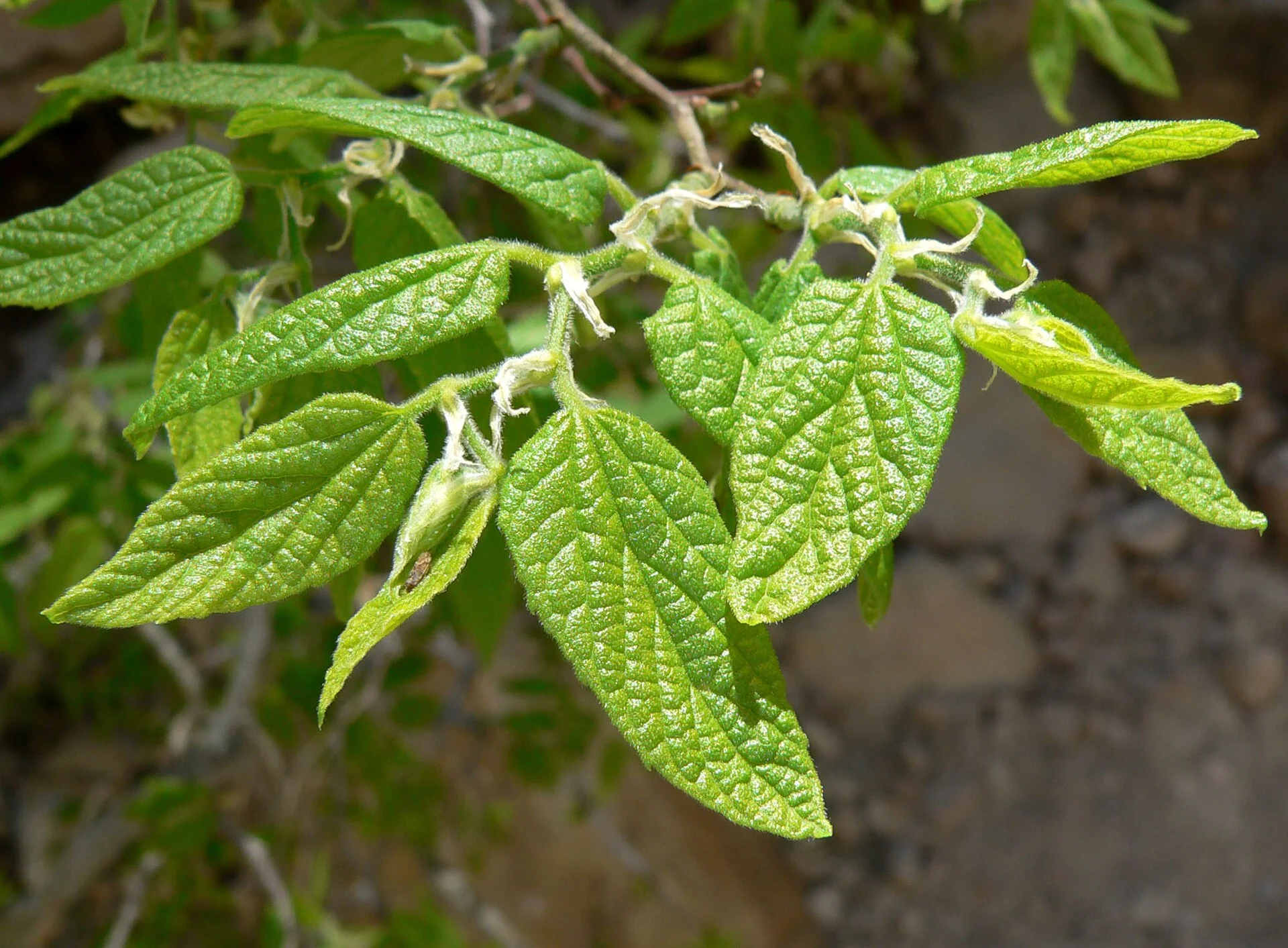
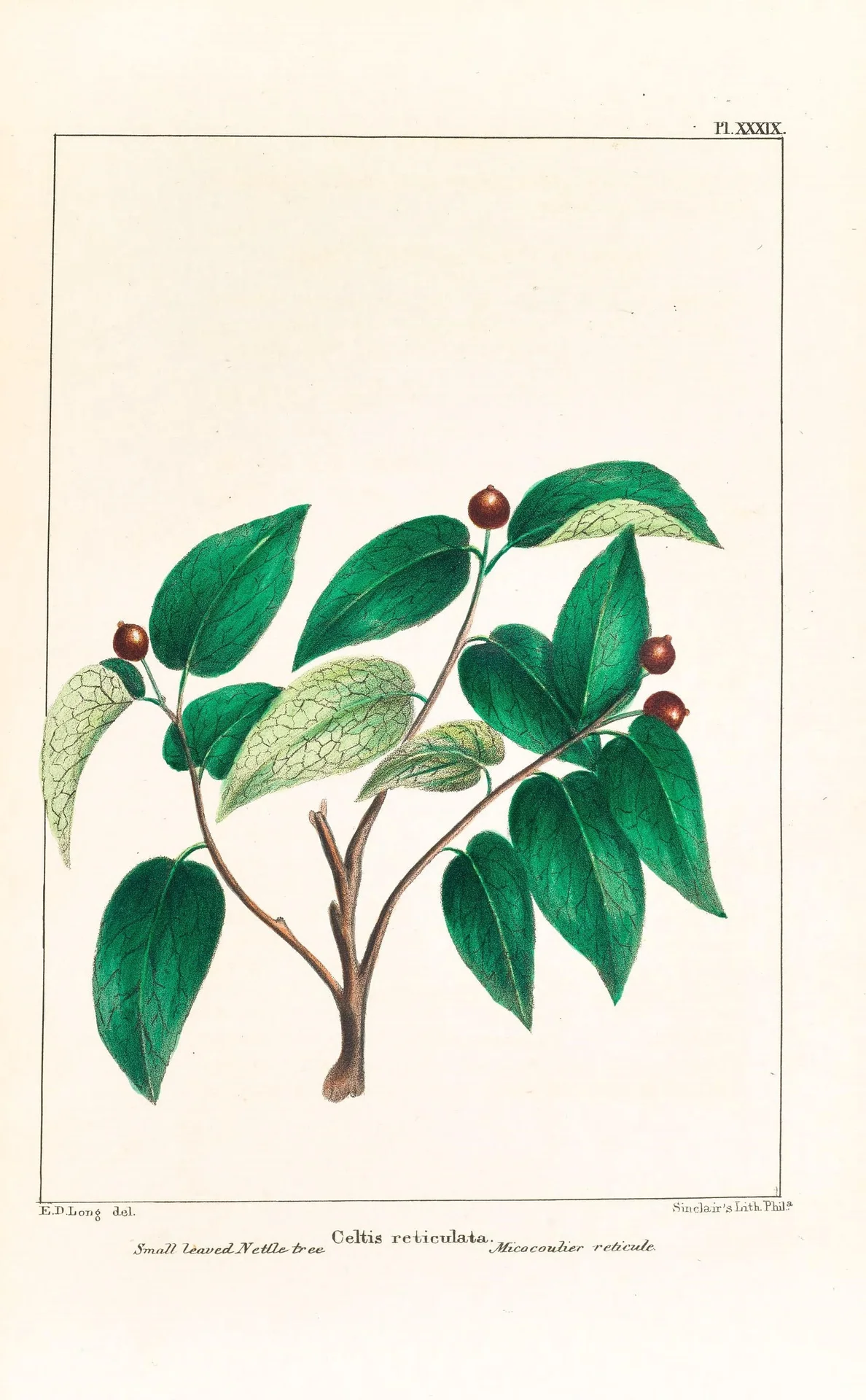
Adapting to arid and semi-arid environments, Celtis reticulata thrives across the diverse topographies of the United States and Mexico. Commonly known as the netleaf hackberry, this deciduous tree typically attains heights of 6 to 9 meters. It often assumes a stunted or scraggly growth habit, particularly when anchoring into rocky slopes or alluvial soils far above the water line.
The bark of mature specimens presents a grayish-brown hue, characterized by prominent, vertical corky ridges. Young twigs are densely covered with fine puberulent hairs. The leathery foliage is asymmetrical at the base, measuring 2 to 8 centimeters in length, with a distinctly net-veined abaxial surface.
Notable botanical characteristics include:
Historically, the species served as a crucial subsistence resource for Indigenous peoples of the Southwestern United States. Both the Apache and Navajo nations harvested the berries and seeds, consuming them fresh or preserved for winter sustenance. In contemporary settings, the tree is frequently incorporated into ecological restoration projects and drought-tolerant landscape designs.
Palynological studies conducted in the Waterman Mountains of Arizona have revealed that this species was present in the region immediately following the Wisconsinan glaciation. The plant supports complex local ecosystems by providing sustenance for various fauna.
Primary consumers of the tree include:
Taxon Synonyms: Celtis occidentalis f. reticulata, Celtis douglasii, Celtis laevigata var. brevipes, Celtis brevipes, Celtis laevigata subsp. reticulata, Celtis reticulata var. vestita, Celtis laevigata var. reticulata
Celtis brasiliensis
A deciduous tree or scrambling shrub in the Cannabaceae family, native to various countries in …

Celtis gomphophylla
A tall tree species in the Cannabaceae family, widespread across sub-Saharan Africa, Madagascar, and the …

