
Brazilian hackberry
Celtis brasiliensis
A deciduous tree or scrambling shrub in the Cannabaceae family, native to various countries in …
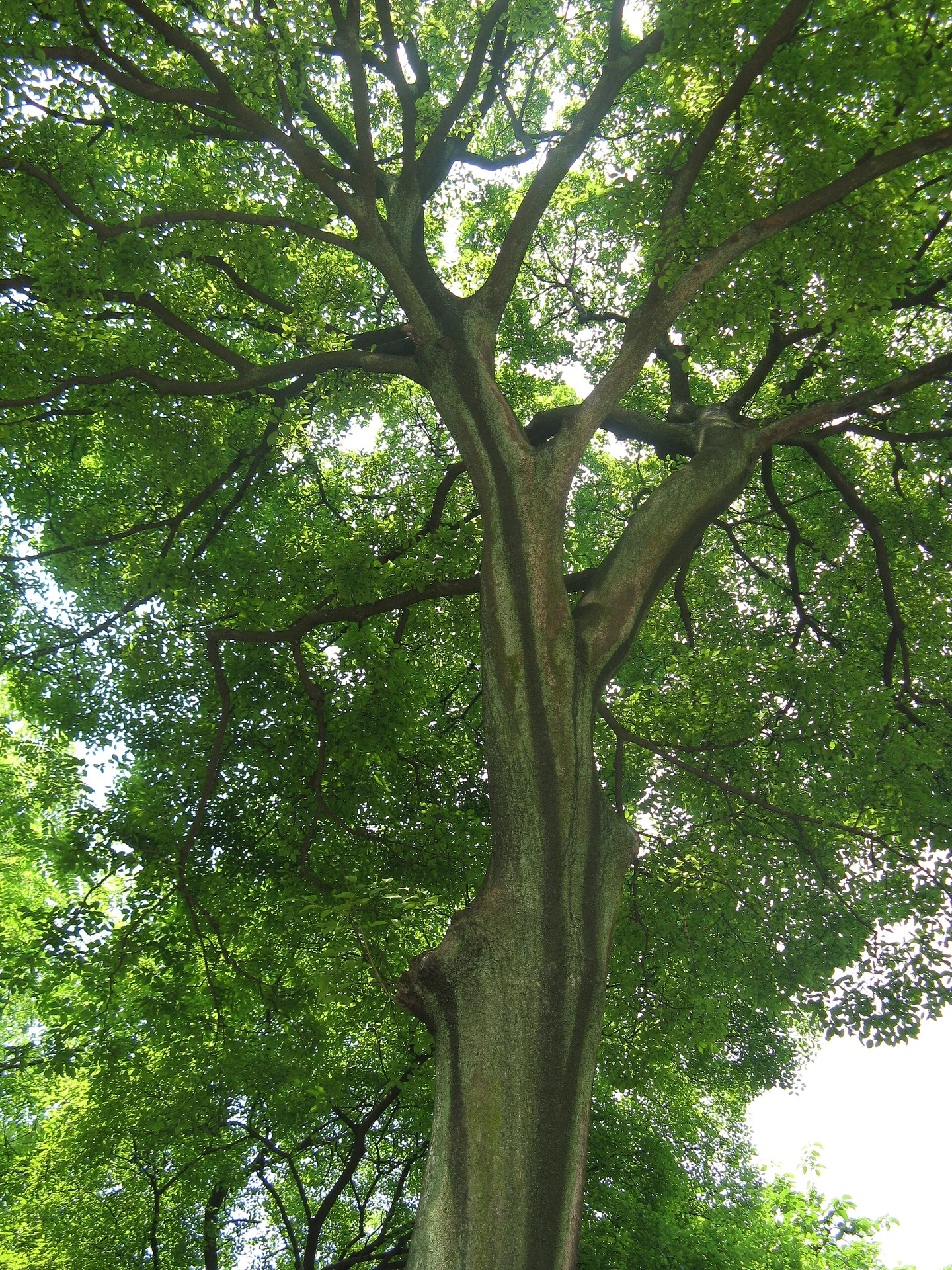
Rising majestically above the landscapes of East Asia, the imposing silhouette of the Chinese hackberry with its rounded canopy has long offered a welcoming refuge of shade for travelers along ancient roads. Celtis sinensis is a robust deciduous tree that seamlessly blends into both rugged mountain slopes and meticulously designed classical gardens. Renowned for its resilience, it establishes deep roots in various soils and stands strong against harsh coastal winds.
As the seasons shift, the foliage of this species undergoes a striking transformation, turning a vibrant golden yellow in autumn before yielding small, sweet drupes that attract a myriad of local wildlife. Historically revered and often planted near temples, Celtis sinensis continues to hold a place of cultural reverence and practical utility across its native range.
Reaching heights of up to 20 meters, Celtis sinensis develops a dense, broadly rounded crown supported by a trunk covered in smooth, light gray bark. The tree's deciduous leaves are arranged alternately along the stems, featuring a broadly ovate to elliptic shape with an asymmetrical base and an acuminate apex. These leaves, typically 4 to 10 centimeters long, have a glossy, dark green upper surface and a paler underside, with margins that are serrated primarily along the upper half.
The root system is vigorous, forming extensive horizontal networks that allow the tree to thrive in challenging environments. In early spring, Celtis sinensis produces small, inconspicuous yellowish-green flowers that appear simultaneously with the emerging foliage. The blossoms are followed by globose drupes, measuring roughly 5 to 7 millimeters in diameter, which transition from green to a deep orange or reddish-brown hue as they ripen in autumn.
Flowering occurs in early spring, producing small, wind-pollinated blossoms.
The robust and flexible wood of Celtis sinensis has historically been utilized in construction, shipbuilding, and the crafting of furniture and agricultural tools. Due to its dense nature and resistance to splitting, it often serves as a valuable timber substitute for other hardwoods. The tree offers several distinct economic and medicinal benefits:
Beyond its utilitarian purposes, the species plays a prominent role in classical East Asian landscape design. It is frequently planted as an imposing ornamental tree in parks, providing expansive shade and aesthetic appeal.
Throughout history, Celtis sinensis has been deeply intertwined with the cultural and spiritual fabric of East Asia. During the Edo period in Japan, these trees were systematically planted as milestone markers along major travel routes, providing both shade and navigation points for weary travelers. It also holds profound spiritual significance in Japanese folklore:
Ecologically, the Chinese hackberry is an indispensable host plant for numerous butterfly species. It is particularly renowned for supporting the larvae of the Great Purple Emperor, Japan's national butterfly, making it a crucial component of local biodiversity conservation.
Taxon Synonyms: Celtis nervosa, Celtis labilis, Celtis japonica, Celtis sinensis var. nervosa, Celtis bodinieri, Celtis willdenowiana, Celtis cercidifolia, Celtis tetrandra subsp. sinensis, Celtis bungeana var. pubipedicella
Celtis brasiliensis
A deciduous tree or scrambling shrub in the Cannabaceae family, native to various countries in …

Celtis gomphophylla
A tall tree species in the Cannabaceae family, widespread across sub-Saharan Africa, Madagascar, and the …

