
Brazilian hackberry
Celtis brasiliensis
A deciduous tree or scrambling shrub in the Cannabaceae family, native to various countries in …
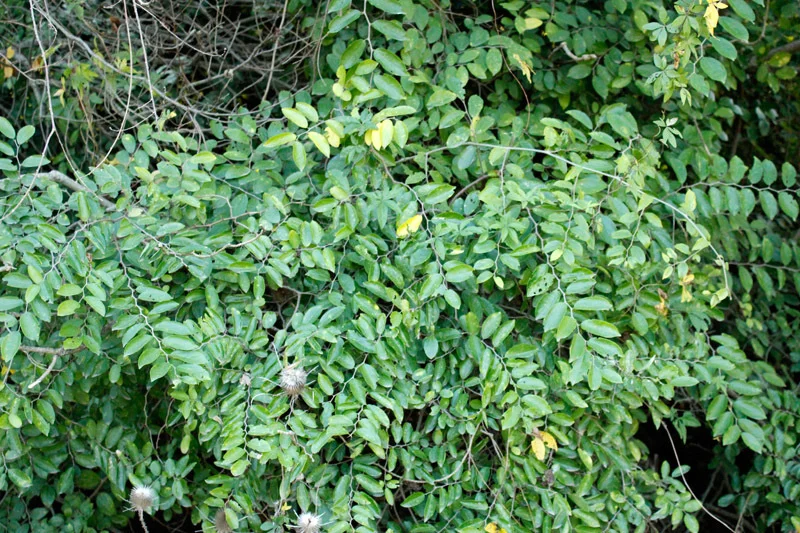
Endemic to the diverse biomes of South America, Celtis spinosa thrives across a vast territorial expanse in Brazil. This member of the Cannabaceae family has successfully adapted to numerous environmental conditions, flourishing from the northern regions down to the southern state of Rio Grande do Sul. The specific botanical name references its spiny morphological characteristics, which serve as natural defense mechanisms.
The species exhibits a robust ecological plasticity, allowing it to populate diverse states including Bahia, Mato Grosso do Sul, and São Paulo. Its widespread presence highlights the evolutionary success of the Celtis genus in neotropical habitats.
Although comprehensive morphological descriptions are specialized, the nomenclature of Celtis spinosa clearly indicates the presence of thorns or spines on its branches. These structural adaptations are typically evolved to deter herbivory and protect the plant during its vulnerable growth stages.
Like other members of its genus, it likely produces simple, alternate leaves and small drupes that attract local wildlife. These reproductive structures are essential for the natural regeneration of populations across its extensive Brazilian range.
Observation and study of Celtis spinosa reveal several fascinating aspects related to its biogeography and taxonomic journey.
Taxon Synonyms: Celtis bonplandiana, Celtis tala var. gaudichaudiana
Celtis brasiliensis
A deciduous tree or scrambling shrub in the Cannabaceae family, native to various countries in …

Celtis gomphophylla
A tall tree species in the Cannabaceae family, widespread across sub-Saharan Africa, Madagascar, and the …

