
Brazilian hackberry
Celtis brasiliensis
A deciduous tree or scrambling shrub in the Cannabaceae family, native to various countries in …
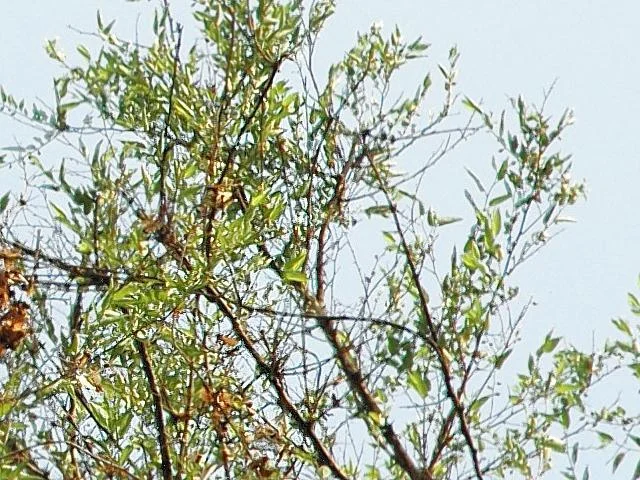
Native to the dry prairies and pampas of South America, Celtis tala thrives as a prominent medium-sized deciduous tree. It forms a crucial arboreal component of the Gran Chaco ecosystem and adapts effectively to varying levels of water availability.
Botanists often refer to it by its synonym, Celtis ehrenbergiana, recognizing its importance in both tropical and subtropical regional landscapes. The tree frequently develops a dense canopy, offering structural complexity to its native habitat.
This medium to large-sized tree can reach up to 12 meters in height, developing either an arboreous or shrubby growth habit depending on local moisture levels. When growing as a proper tree, it forms a rather tortuous trunk approaching 40 cm in diameter, whereas the shrubby form produces multiple branched trunks. The relatively smooth bark exhibits light coloration, typically ranging from gray to brown.
Its alternate, simple, and petiolate leaves feature a rounded base and a serrated margin near the apex. These trinervate, dark green leaves emerge along a dense mesh of zigzagging branches armed with strong spines that can exceed 1.5 cm in length.
During the blooming phase, the plant yields inconspicuous, yellowish, pentamerous flowers. Because these hermaphroditic flowers are self-fertile, they successfully develop into small, fleshy, and sweet drupes measuring approximately 1 cm wide.
Spring
Woodworkers highly appreciate the tough and relatively heavy timber produced by this species. Due to the modest dimensions of the tortuous trunk, the wood is typically reserved for carving small objects, crafting hand tool handles, and creating artisanal items.
In rural areas, the dense wood also serves as an excellent source of high-quality fuel. While the fleshy drupes are sweet and perfectly edible for humans, there is no significant commercial market for them, leaving the fruit to be primarily consumed by local bird populations and insects.
The robust, spiny branches of this tree naturally provide exceptional protective cover and nesting sites for various bird species native to the South American plains. Its remarkable phenotypic plasticity allows it to effortlessly transition between a full-sized tree and a multi-stemmed shrub based on environmental conditions.
Taxon Synonyms: Celtis tala var. selloviana, Celtis tala var. gilliesiana, Celtis tala var. weddelliana, Mertensia texana, Celtis weddelliana, Celtis cinerea, Celtis selloviana, Mertensia tala, Momisia integrifolia
Celtis brasiliensis
A deciduous tree or scrambling shrub in the Cannabaceae family, native to various countries in …

Celtis gomphophylla
A tall tree species in the Cannabaceae family, widespread across sub-Saharan Africa, Madagascar, and the …

