
Brazilian hackberry
Celtis brasiliensis
A deciduous tree or scrambling shrub in the Cannabaceae family, native to various countries in …
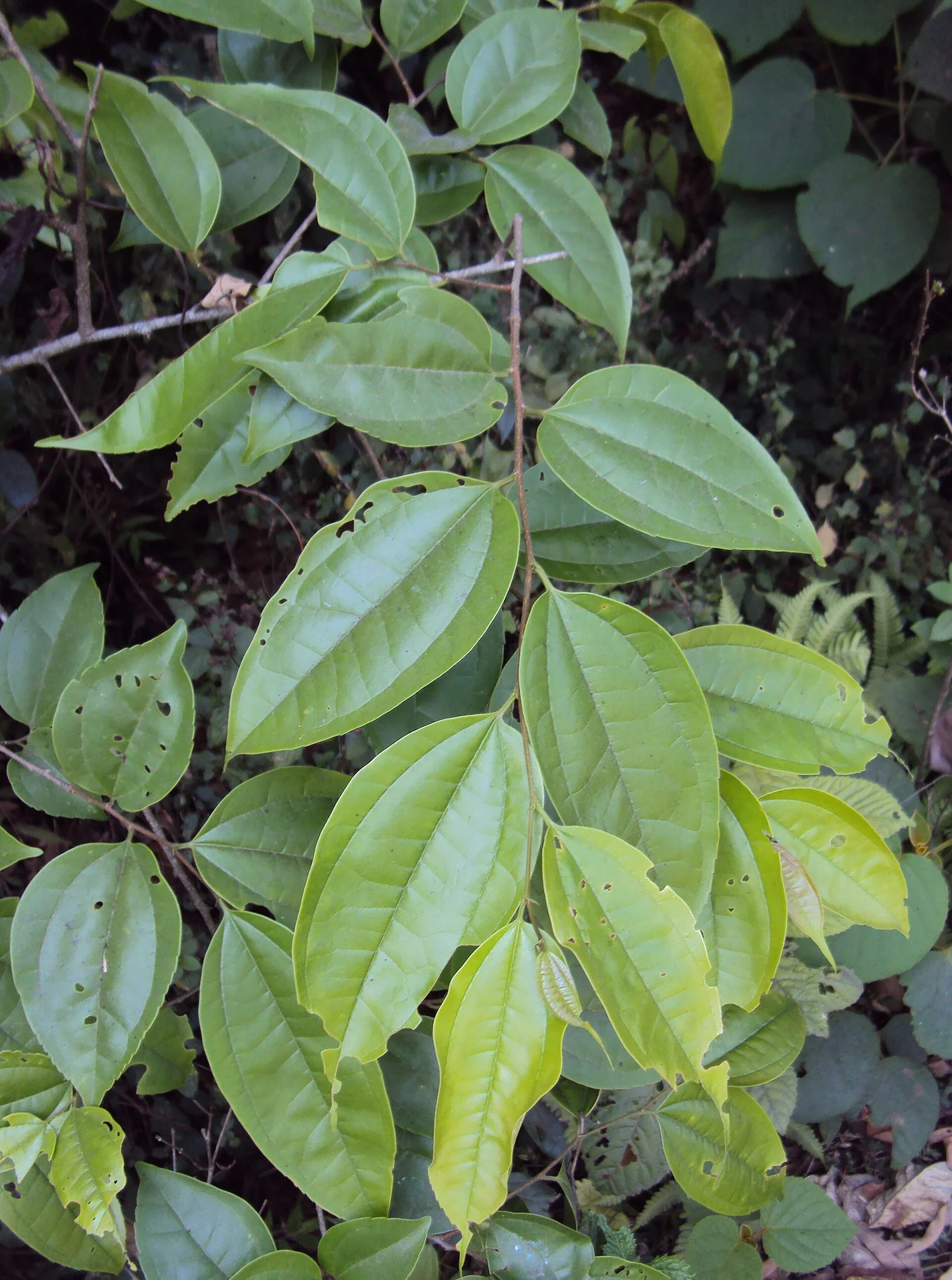
Deep within the tropical rainforests of Asia, Celtis timorensis commands attention not just through its impressive stature, but due to a highly distinct olfactory signature. This robust member of the Cannabaceae family can reach up to 25 meters in height and forms an integral part of the primary forest canopy in numerous Southeast Asian and South Asian ecosystems. Its most remarkable trait is the strong, excrement-like odor released by its bark and sap, caused by the presence of the organic compound skatole.
The foliage consists of strongly 3-veined leaves that grow 5 to 13 centimeters in length, exhibiting an oblate to oblong shape. While these leaves bear a striking resemblance to species in the genus Cinnamomum, they are easily distinguished by their distinctly serrated margins.
The reproductive structures vary by sex, presenting the following features:
Following pollination, the tree develops pear-shaped, prominently beaked drupes. Each fruit encloses a seed protected by a hard, durable endocarp measuring 7 to 11 millimeters long, specifically adapted for water dispersal in its native tropical habitat.
In Sri Lanka, the heartwood of the tree, locally known as gurenda, is utilized in traditional Ayurvedic practices. Across various local cultures, extracts and wood derivatives have historically been employed in folk medicine.
Traditional uses primarily involve:
The potent skatole-derived odor generally limits its use as a standard timber resource for construction or furniture.
According to Thai folklore, the legendary King Phra Ruang of the Sukhothai dynasty supposedly used the leaves of this tree, embedding its pungent aroma into local legend. The tree's distinct smell permeates the surrounding forest air wherever it grows abundantly.
Fascinating ecological details include:
Taxon Synonyms: Celtis dysodoxylon, Celtis hamata, Sponia pendula, Celtis reticulosa, Celtis waitzii
Celtis brasiliensis
A deciduous tree or scrambling shrub in the Cannabaceae family, native to various countries in …

Celtis gomphophylla
A tall tree species in the Cannabaceae family, widespread across sub-Saharan Africa, Madagascar, and the …

