
Brazilian hackberry
Celtis brasiliensis
A deciduous tree or scrambling shrub in the Cannabaceae family, native to various countries in …
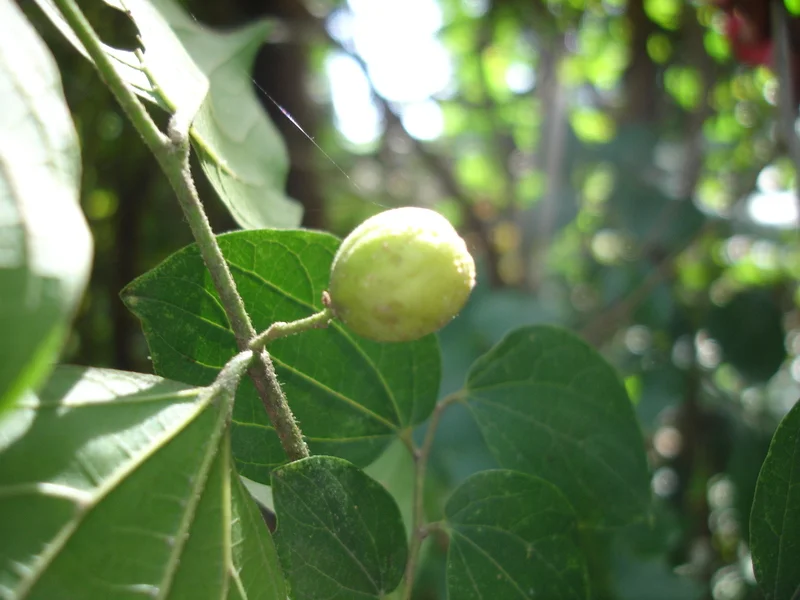
Flourishing in the Sudanian-Sahel savannah, Celtis toka grows as a resilient medium-sized tree alongside streams and rivers. It belongs to the Cannabaceae family and demonstrates remarkable adaptability to drier habitats across tropical Africa and parts of the Arabian Peninsula. This species plays an integral role in its native ecosystems, offering both ecological value and historical uses among local communities.
The tree typically reaches heights of up to 25 meters, featuring a cylindrical trunk and a fairly compact crown. Its bark exhibits a light grey and smooth appearance, distinguished by narrow buttressed roots and brown patches where thin scales have naturally exfoliated.
Leaves are arranged simply and possess a coriaceous, scabrid surface with a broadly ovate outline. These leaves measure approximately 5 to 7 centimeters in length, featuring an acuminate to rounded apex and a cordate base. The stomata display an unequalled cell type, scientifically recognized as anisocytic.
During its reproductive cycle, the plant produces yellow-green flowers arranged in axillary cymes. The resulting fruits develop as globular drupes measuring 8 to 11 millimeters in length, containing a greyish, ovoid endocarp.
Various parts of the tree serve multiple purposes within local communities across its native range. The wood and bark provide essential materials for constructing woven mats and are frequently gathered for firewood.
Traditional ethnobotanical practices utilize extracts from the roots and bark. These botanical components are highly valued in local herbal traditions, demonstrating the plant's significant cultural and practical importance.
Despite its preference for areas adjacent to streams and rivers, this species exhibits remarkable drought resistance. This adaptability allows it to survive in the arid and challenging environments of the Sahel region.
Taxon Synonyms: Celtis integrifolia, Ficus toka
Celtis brasiliensis
A deciduous tree or scrambling shrub in the Cannabaceae family, native to various countries in …

Celtis gomphophylla
A tall tree species in the Cannabaceae family, widespread across sub-Saharan Africa, Madagascar, and the …

