
Brazilian hackberry
Celtis brasiliensis
A deciduous tree or scrambling shrub in the Cannabaceae family, native to various countries in …
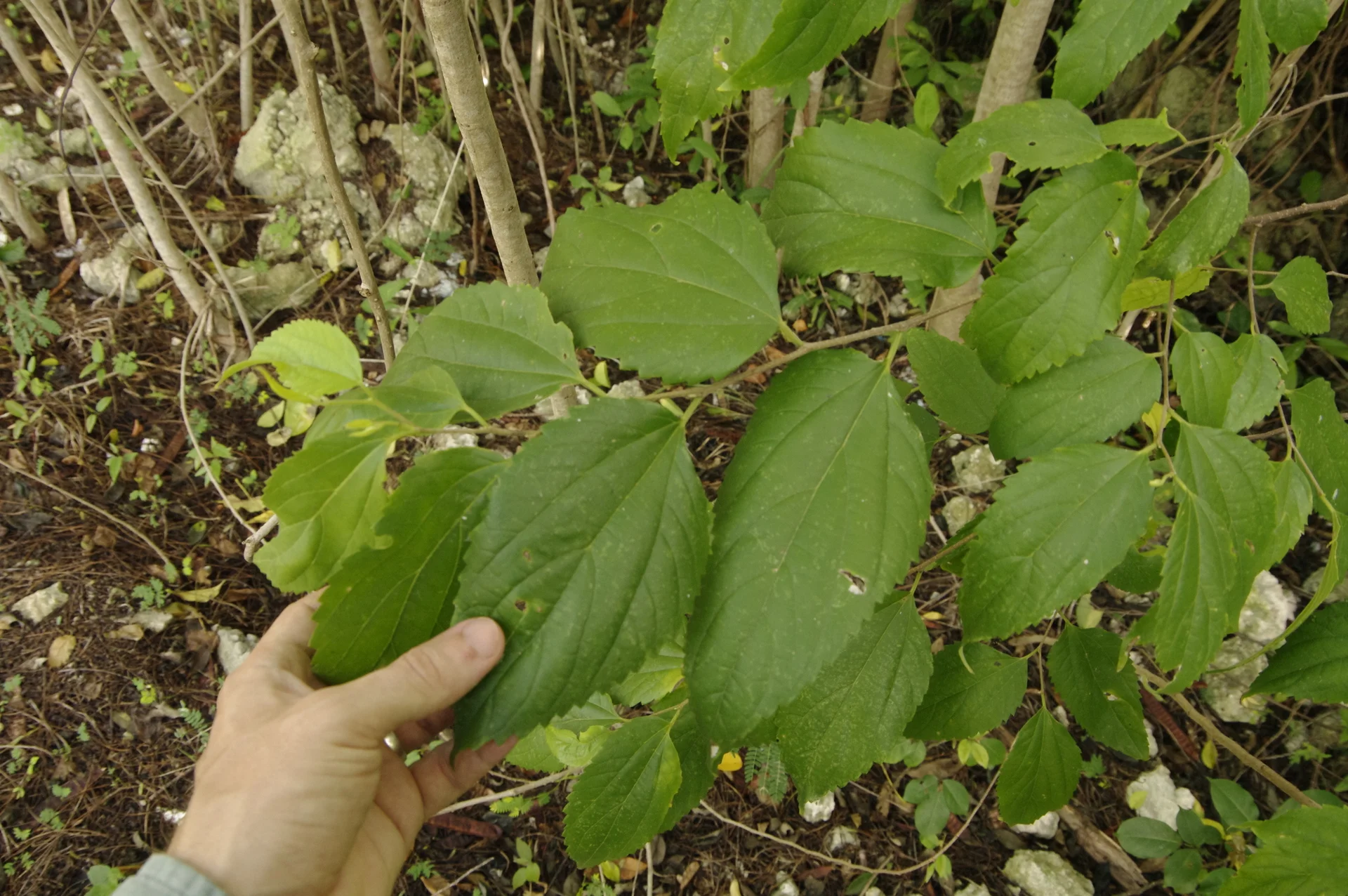
Within the diverse Cannabaceae family, Celtis trinervia stands out as a distinctive tree species native to the Americas. It is widely distributed across Central America and the Caribbean, typically thriving in highly humid forest environments. Local populations often refer to this plant by vernacular names such as guanasa, guasiriano, or hueso.
First described by the French naturalist Jean-Baptiste Lamarck, this botanical taxon is well-adapted to tropical climates. It is frequently observed growing naturally on limestone outcrops and other specialized ecological niches.
Trees of this species can attain heights of 10 to 15 meters, featuring a distinct, smooth gray bark. The foliage consists of narrowly ovate-lanceolate leaves that measure between 4 and 13 centimeters in length, characterized by a long acuminate apex and serrated margins.
The reproductive structures are organized in cymose inflorescences, bearing both staminate and perfect flowers. The resulting fruit is a subglobose drupe, approximately 8 to 10 millimeters in diameter, which matures to a dark purple-black hue.
June
Celtis brasiliensis
A deciduous tree or scrambling shrub in the Cannabaceae family, native to various countries in …

Celtis gomphophylla
A tall tree species in the Cannabaceae family, widespread across sub-Saharan Africa, Madagascar, and the …

