Thorny Elm (Chaetachme aristata)

Thorny-elm Snake tree
#292411
#0F250D
#416D43
#5F5F3E
#25541F

Chaetachme aristata (thorny elm): morphology, ecology, and uses

Chaetachme aristata, known across Africa as the thorny elm or snake tree, is a densely branched scrambling shrub or small evergreen tree reaching up to 10 meters in height. Native to forest margins, coastal scrub, and riverine thickets across sub-Saharan Africa and Madagascar, it is immediately recognized by its zigzagging twigs, sharp axillary spines, and glossy leaves tipped with a fine bristle — a feature reflected in its Latin specific epithet aristata, meaning 'awned' or 'bristle-tipped'.

First described in 1848 by the French botanist Jules Émile Planchon, this species belongs to the hemp and hackberry family, Cannabaceae (though earlier classifications placed it in Ulmaceae). It is the sole accepted species in the monotypic genus Chaetachme, whose Greek name translates to 'bristle-point' in reference to the distinctive needle-like mucro at the tip of every leaf.

Taxonomy

  • ∟ царство Plantae
  • ∟ division Tracheophytes (Vascular Plants)
  • ∟ subdivision Spermatophytes (Seed plants)
  • ∟ Angiosperms
  • ∟ mesangiosperms (Core angiosperms)
  • ∟ eudicots
  • ∟ core eudicots
  • ∟ Superrosids
  • ∟ rosids
  • ∟ order Rosales
  • ∟ family Cannabaceae (Hemp family)
  • ∟ genus Chaetachme
  • ∟ species Chaetachme aristata (Thorny Elm)

Living Pulse

Morphology

Depending on its surroundings, Chaetachme aristata grows either as a compact, low-branching tree with a rounded crown in open savanna or as a long-stemmed woody scrambler weaving through taller forest trees. Older trunks develop smooth grey bark that gradually breaks into vertical fibrous strips.

Stems, spines, and foliage

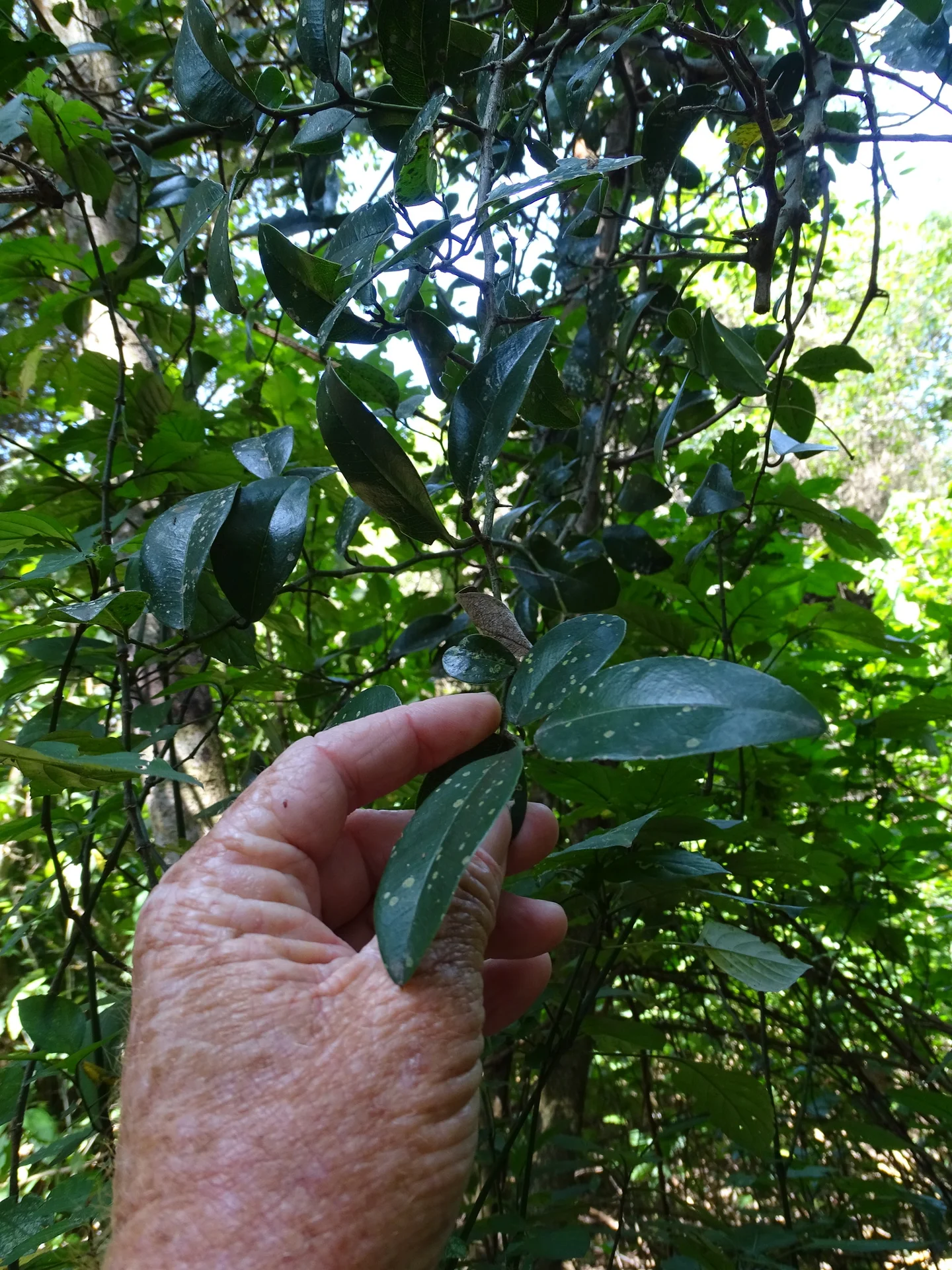
  • Zigzag branches and thorns: Young twigs bend sharply at each node in a zigzag pattern and are armed with sturdy axillary spines measuring 1 to 3.5 centimeters long, which often appear in unequal pairs.
  • Bristle-tipped blades: The alternate, leathery leaves are elliptic to oblong (3 to 11 centimeters long) with an asymmetrical base and a dark glossy upper surface, terminating in a hair-like bristle (mucro — a fine projecting point formed by the extension of the midrib) up to 7 millimeters long.

Flowers and fruits

  • Inconspicuous inflorescences: The plant is mostly dioecious, producing tiny greenish-yellow male flowers in dense axillary clusters and solitary female flowers along the new shoots.
  • Hard-stoned drupes: Ripe fruits are oval, fleshy drupes about 1.2 to 1.5 centimeters across that turn yellow to bright orange, enclosing a remarkably hard, bony endocarp (the inner stone protecting the seed).

Flowering season

Flowers predominantly from spring to midsummer in the Southern Hemisphere (September to January), with fruits ripening from summer through autumn.

Jan
Feb
Mar
Apr
May
Jun
Jul
Aug
Sep
Oct
Name
Dec

Applications

Although Chaetachme aristata is primarily a wild tree of African thickets and riverine corridors, local communities and conservationists value its durable timber and impenetrable growth habit.

  • Living security hedges and kraals: Because of its dense, zigzagging branches and fierce axillary spines, rural homesteads plant or weave its branches into natural barriers to protect livestock enclosures from predators.
  • Dense wood for tools and carving: The yellowish-white timber is hard, heavy, and fine-grained, making it sought after for crafting durable tool handles, walking sticks, and carved household implements.
  • Traditional medicine and butterfly gardens: In regional ethnomedicine, bark and root preparations are used for dental ailments and wound care, while ecological landscapers in South Africa plant the tree to attract native Charaxes butterflies, whose caterpillars feed exclusively on its foliage.

Interesting facts

The architecture of Chaetachme aristata showcases a finely tuned mechanical defense and climbing system adapted to browser-rich African savannas and crowded forest edges.

Dual-function geometry of zigzag twigs and spines

  • Browsing deterrence and grappling hooks: At every node where the twig changes direction, a stiff modified branchlet forms a sharp spine (cauline spine — a thorn derived from stem tissue rather than a leaf, giving it a deep vascular connection that resists snapping).
  • Mechanical load distribution: When the plant grows in shaded forest margins, these angled spines act like climbing grapples that hook onto neighboring trees, whereas in open grasslands the exact same zigzag-and-spine geometry creates a springy cage that deflects the muzzles of large herbivores away from the tender shoot tips.

The drip-tip bristle on a leathery leaf

  • Rapid water shedding: The slender terminal bristle that gave Chaetachme aristata both its generic and specific names functions as a miniature drainage spout, channeling rainwater off the waxy leaf surface so moisture does not linger and invite fungal spores in humid coastal forests.
  • Specialized caterpillar partnership: Despite its tough, fibrous cuticle, the foliage serves as the primary larval host for the glamorous White-barred Charaxes (Charaxes brutus) and Demon Charaxes (Charaxes tiridates), whose caterpillars possess specialized mandibles capable of slicing through the leathery leaf margins.

Geography of distribution

  • Angola
  • Benin
  • Botswana
  • Central African Republic
  • Côte d'Ivoire
  • Cameroon
  • Democratic Republic of the Congo
  • Republic of the Congo
  • Equatorial Guinea
  • Eswatini
  • Ghana
  • Kenya
  • Madagascar
  • Malawi
  • Mozambique
  • Nigeria
  • Sierra Leone
  • South Africa
  • South Sudan
  • Tanzania
  • Uganda
  • Zambia
  • Zimbabwe

Technical Information

Taxon Synonyms: Celtis subdentata, Celtis appendiculata, Celtis aristata, Chaetachme madagascariensis, Bosqueia spinosa, Chaetachme serrata, Chaetachme microcarpa

External Databases: GBIF, POWO, Tropicos
See also

True Araucarias

True Araucarias

Araucaria sect. Araucaria

Araucaria sect. Araucaria is a botanical section of evergreen conifers native to South America. It …