
Poison Hemlock
Conium maculatum
Conium maculatum, commonly known as poison hemlock, is a highly toxic biennial herbaceous flowering plant …
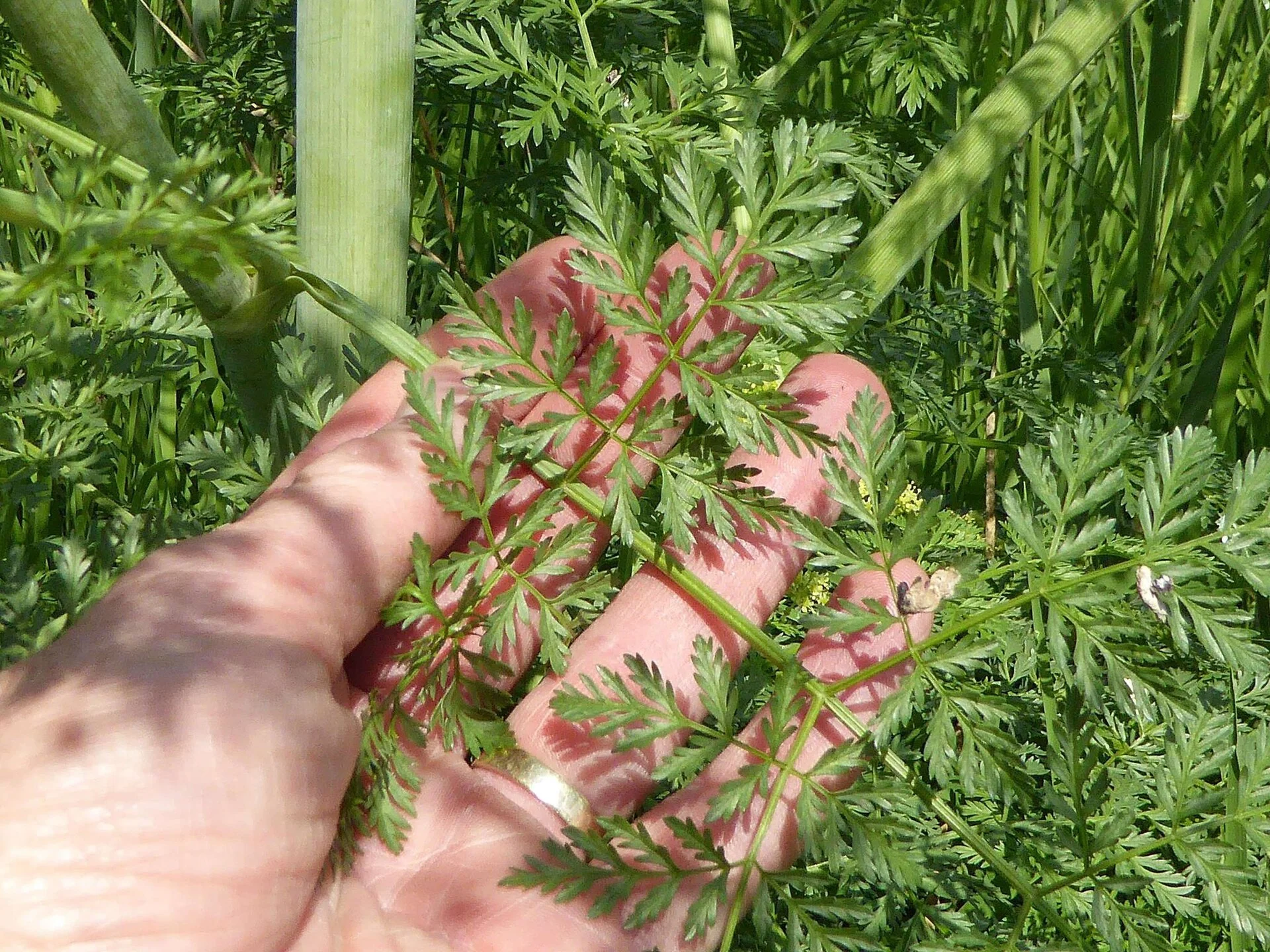
Growing across various regions of Southern Africa, Conium chaerophylloides stands as a notable toxic member of the Apiaceae family. Commonly referred to as the South African hemlock, this species was originally described as Seseli chaerophylloides by Carl Peter Thunberg in 1794. It was later reclassified into the genus Conium by Ecklon and Zeyher in 1837.
This herbaceous biennial typically exhibits upright, ribbed stems that may reach significant heights in favorable conditions. The leaves are highly dissected, resembling chervil, which is reflected in the specific epithet. Large compound umbels of tiny white flowers develop at the terminal ends of the branches, producing small, dry, paired fruits.
Spring to summer
This poisonous species has no beneficial applications in gardening, farming, or medicine due to the presence of lethal conium alkaloids. It represents a significant hazard to grazing livestock in its native habitats, requiring active management by local farmers. Scientific interest is primarily restricted to toxicology and plant systematics.
The specific epithet chaerophylloides translates to "resembling chervil," warning of its deceptive appearance to edible herbs. Unlike the common European hemlock, this species is native to the southern hemisphere, particularly adapted to the diverse climates of Southern Africa.
Conium maculatum
Conium maculatum, commonly known as poison hemlock, is a highly toxic biennial herbaceous flowering plant …

Picrasma
A genus of deciduous trees and shrubs known for their extremely bitter bark and medicinal …

Araucaria humboldtensis
A small, critically endangered coniferous tree native strictly to the high-altitude mountain peaks of southern …

Araucaria sect. Araucaria
Araucaria sect. Araucaria is a botanical section of evergreen conifers native to South America. It …