Whispering in the damp ditches of European roadsides, the dark green canopy of Conium maculatum conceals a lethal chemistry that once silenced the ancient philosopher Socrates. This notorious biennial weed has traveled far beyond its native Mediterranean and Euro-Siberian origins, successfully colonizing disturbed soils across the Americas and Australia.
Though its delicate white umbels mimic harmless wild carrots, the entire organism is saturated with volatile piperidine alkaloids. Even a brief touch or inhalation of its crushed foliage can release a distinct, mouse-like odor that warns of its extreme toxicity.
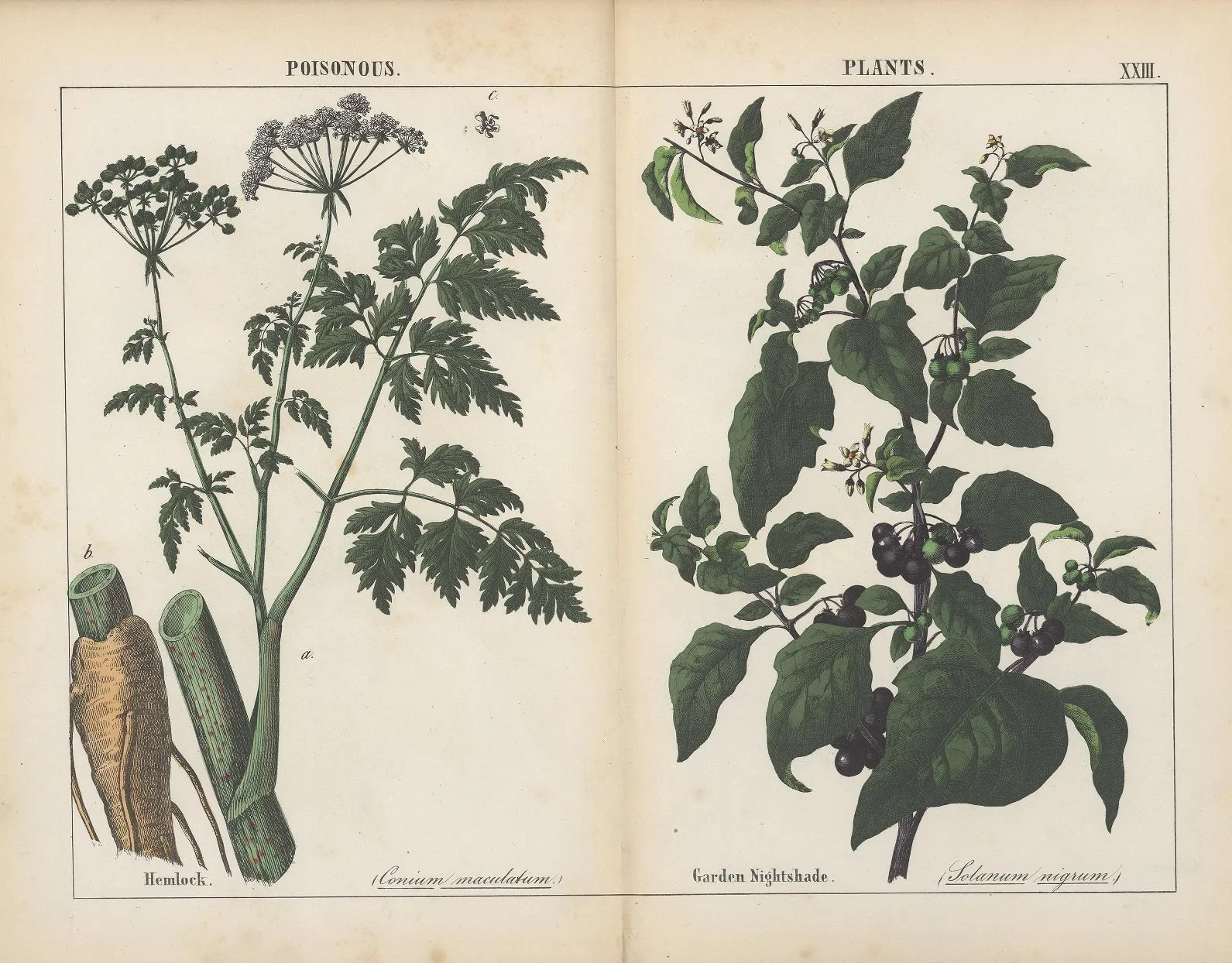
Botanical illustration
Фото: BioDivLibrary / Лицензия: Public Domain Mark
Morphology
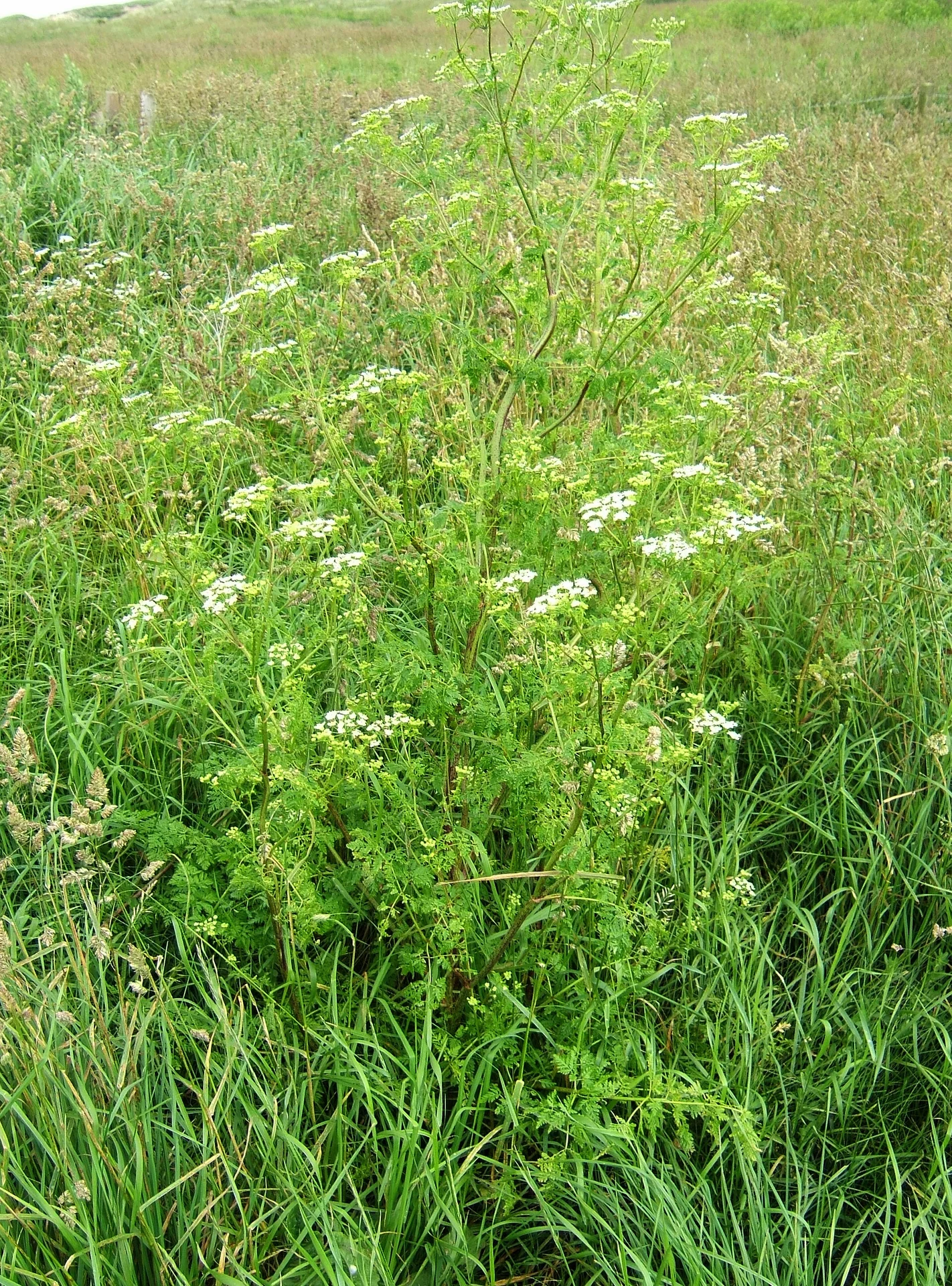
Conium maculatum is a robust biennial herb that can reach heights of 1.5 to 2.5 meters. In its first year, it forms a low-growing rosette of leaves, while in the second year, it produces a tall, highly branched flowering stem.
The identifying features of its structure include:
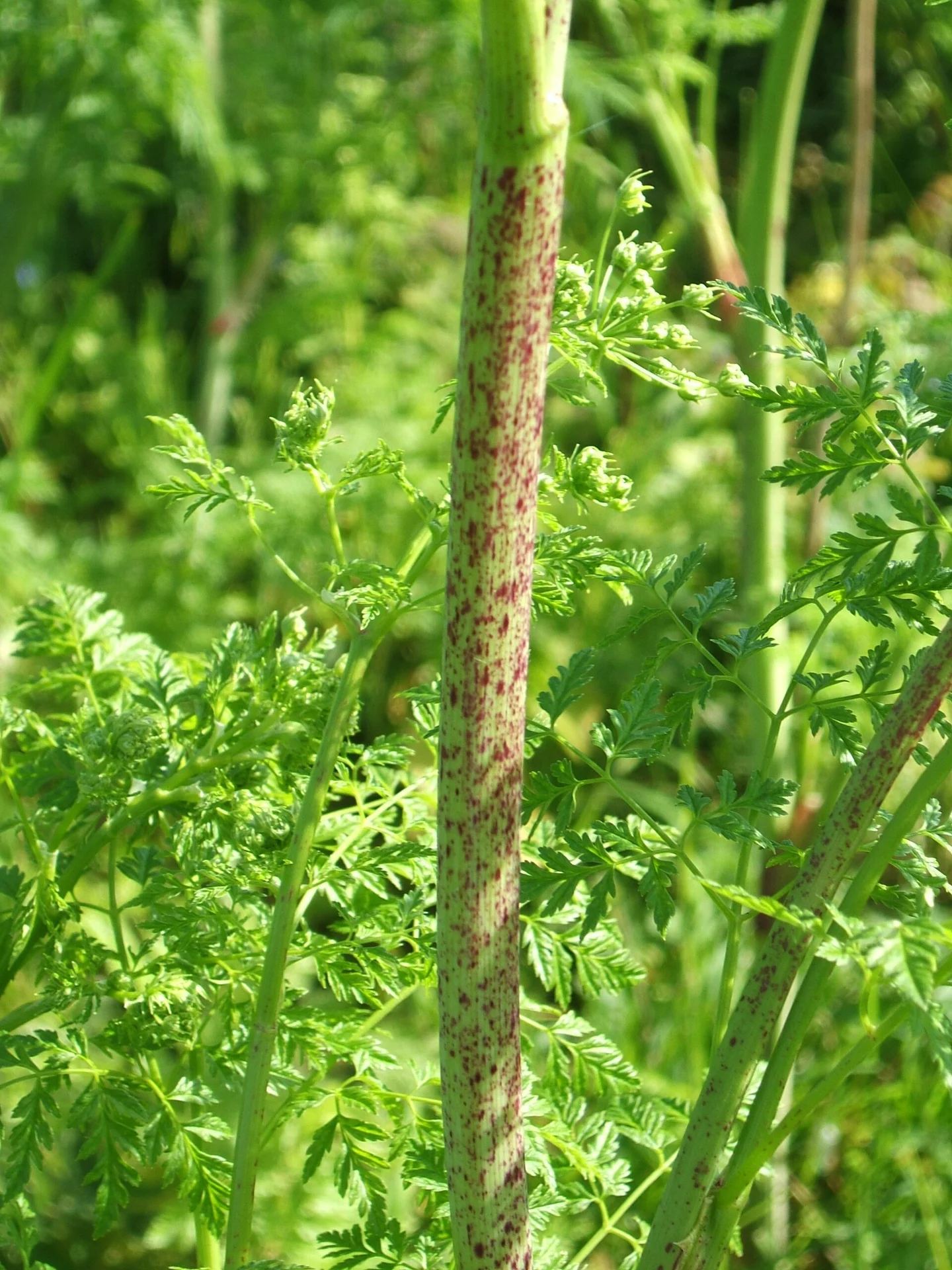
Stem: Erect, hollow, and glaucous, distinguished by prominent purple or reddish-brown splotches near the base.
Foliage: Alternate, tripinnate leaves that are finely divided, soft, and triangular in outline, resembling fern fronds.
Inflorescence: Numerous small, white flowers clustered in compound umbels measuring 10 to 15 centimeters in diameter.
Root System: A thick, white, carrot-like taproot that penetrates deep into the soil.
Fruit: Small, oval-shaped schizocarps featuring five distinct, wavy longitudinal ribs when mature.
Flowering season
Late spring to mid-summer, typically from June to July.
Jan
Feb
Mar
Apr
May
Jun
Jul
Aug
Sep
Oct
Name
Dec
Applications
Historically, preparations of Conium maculatum were utilized in traditional medicine as a powerful sedative, antispasmodic, and local analgesic. It was sometimes applied externally in cataplasms or liniments to soothe severe neuralgias, joint pain from rheumatism, and terminal cancer discomfort.
In modern medicine, its direct therapeutic application has been entirely abandoned due to the unpredictable concentration of its lethal alkaloids. However, its primary alkaloid, coniine, serves as a significant subject in pharmacological research regarding nicotinic acetylcholine receptors.
Interesting facts
The most famous historical victim of Conium maculatum was the Greek philosopher Socrates, who was sentenced to death in 399 BC and drank a potent hemlock infusion. The execution method was a standard practice in ancient Athens for condemned prisoners, including political figures like Theramenes and Phocion.
Intriguingly, ancient mythological accounts associate hemlock with Hecate, the goddess of magic and witchcraft, as well as her daughters Medea and Circe. On the island of Ceos, elderly citizens over the age of sixty were once legally obligated to consume hemlock during famines to ensure sufficient food for the younger population.
The plant is also notorious for its foul smell, which resembles mouse urine; this characteristic odor is caused by the volatile alkaloid coniine and becomes particularly strong when the leaves are bruised.