Releasing a warning, mouse-like odor when crushed, the poisonous hollow stems of these biennial herbs have stood as silent executioners since the days of ancient Athens. Historically feared and revered, Conium comprises species that harbor potent neurotoxins capable of paralyzing respiratory systems.
These plants thrive in damp, nitrogen-rich soils, frequently colonizing disturbed areas, riverbanks, and pasture margins. Their deceptive appearance, resembling harmless members of the carrot family, often leads to fatal misidentifications by foragers.
While their cultivation as ornamentals has declined, they remain a focus of intensive research due to their unique chemical properties. Understanding their biology is essential for managing their spread as invasive weeds and preventing livestock poisoning.
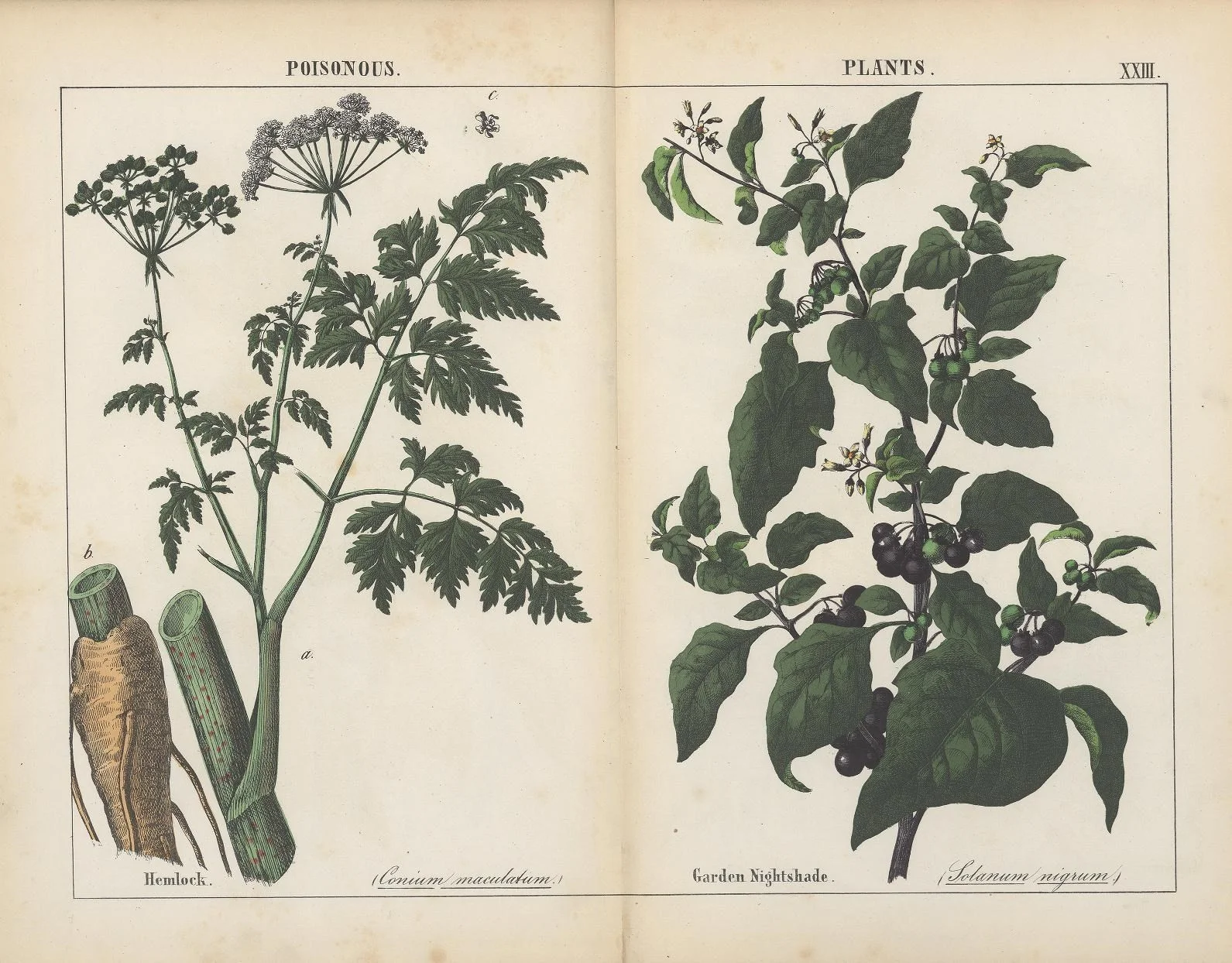
Botanical illustration
Фото: BioDivLibrary / Лицензия: Public Domain Mark
Morphology
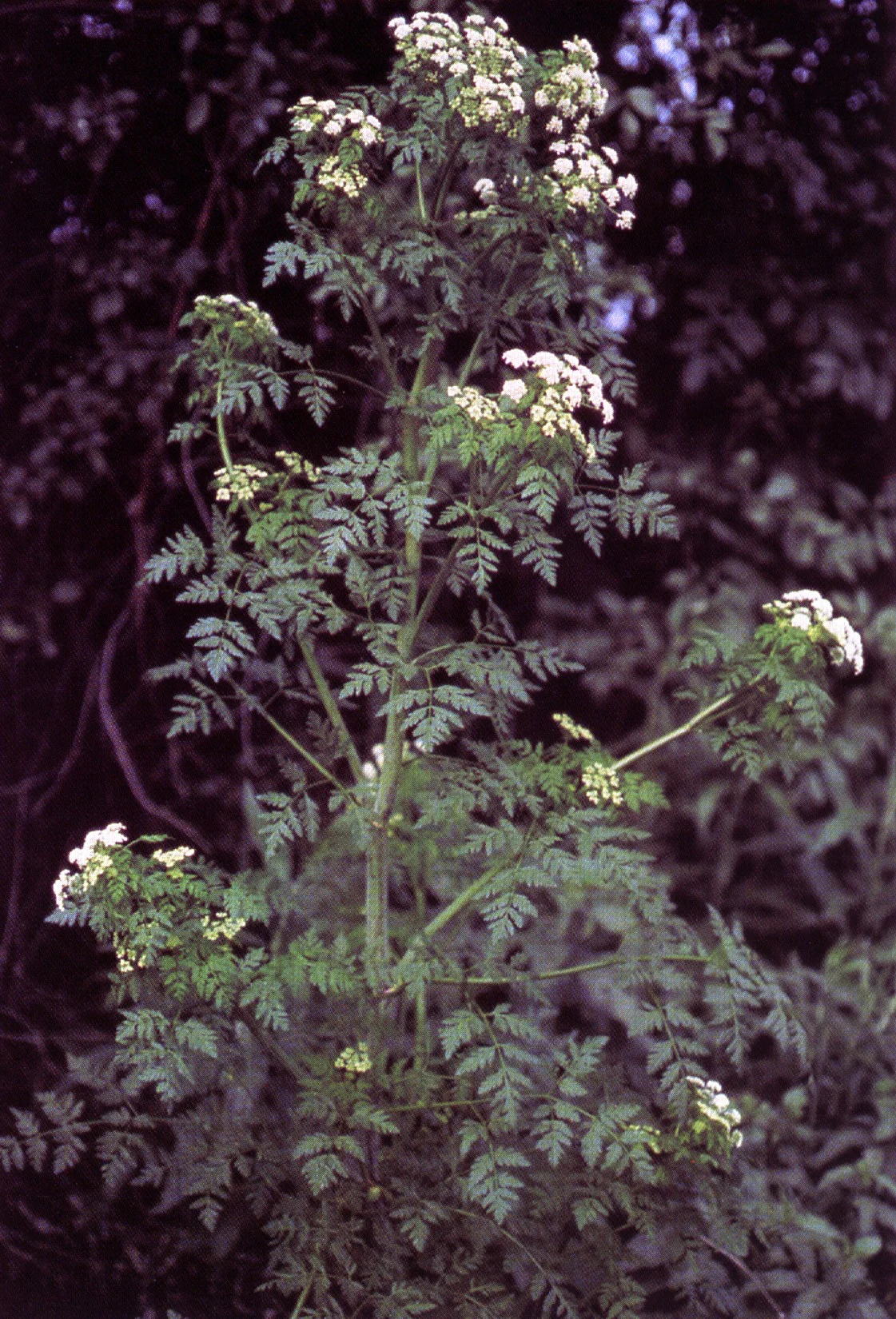
Plants in the genus Conium are typically biennial herbs that reach heights of one to three meters. In their first year, they establish a basal rosette of leaves, while in the second year, they produce a tall, erect, and hollow flowering stem.
The vegetative and reproductive organs of these species exhibit distinct characteristics that allow for precise identification:
Stems: The herbaceous stems are completely hairless, hollow, and striated, often marked with distinctive reddish-purple spots or blotches near the base.
Leaves: Alternately arranged and pinnately compound, the leaves are finely divided, resembling parsley; basal leaves are typically 1-3 pinnate, while stem leaves are 2-4 pinnate.
Flowers: Small, white or yellow-green flowers are clustered in dense, umbrella-shaped compound umbels that range from one to eight centimeters in diameter.
Fruits and Seeds: The dry fruit is subglobose, laterally flattened, and composed of two mericarps with prominent, sometimes wavy or scalloped ribs, containing seeds that remain viable for up to six years.
Flowering season
Flowers typically bloom from early summer to late summer, generally between June and August.
Jan
Feb
Mar
Apr
May
Jun
Jul
Aug
Sep
Oct
Name
Dec
Applications
Although modern applications are extremely limited due to extreme toxicity, Conium species have historically been utilized in several specialized fields:
Agricultural Protection: Due to their toxic effects on mammals, these plants are occasionally grown along fences and watercourses to serve as natural barriers against predatory animals like wolves.
Historical Medicine: Extracts were once prescribed as sedatives and antispasmodics, though these practices were entirely discontinued by the early 20th century due to safety concerns.
Homeopathy: Despite severe health risks and a lack of scientific validation, diluted preparations are still used in homeopathy for conditions such as anxiety and respiratory issues.
Pesticide Research: Scientific studies have investigated the use of hemlock alkaloids, specifically coniine, as organic pesticides against aphids, blowflies, and certain fungal diseases.
Interesting facts
The genus Conium has left a dark and indelible mark on human history and literature:
The Death of Socrates: The most famous historical event involving this plant occurred in 399 BC, when the philosopher Socrates was sentenced to death and executed by drinking a potion derived from poison hemlock.
Socrates' Blood: In European folklore, the characteristic reddish-purple spots found on the stems are sometimes poetically referred to as "Socrates' blood."
Witches and Folklore: In medieval Europe, hemlock was considered a staple ingredient in witches' potions and was colloquially referred to as "the devil's flower."
Naming Origin: The name Conium is derived from the Greek word koneios, which means "to spin" or "whirl," describing the intense vertigo experienced after ingestion.
Invasive Threat: Introduced to North America as an ornamental garden plant, poison hemlock has become a highly aggressive invasive weed that outcompetes native grasses and poses a severe threat to livestock.