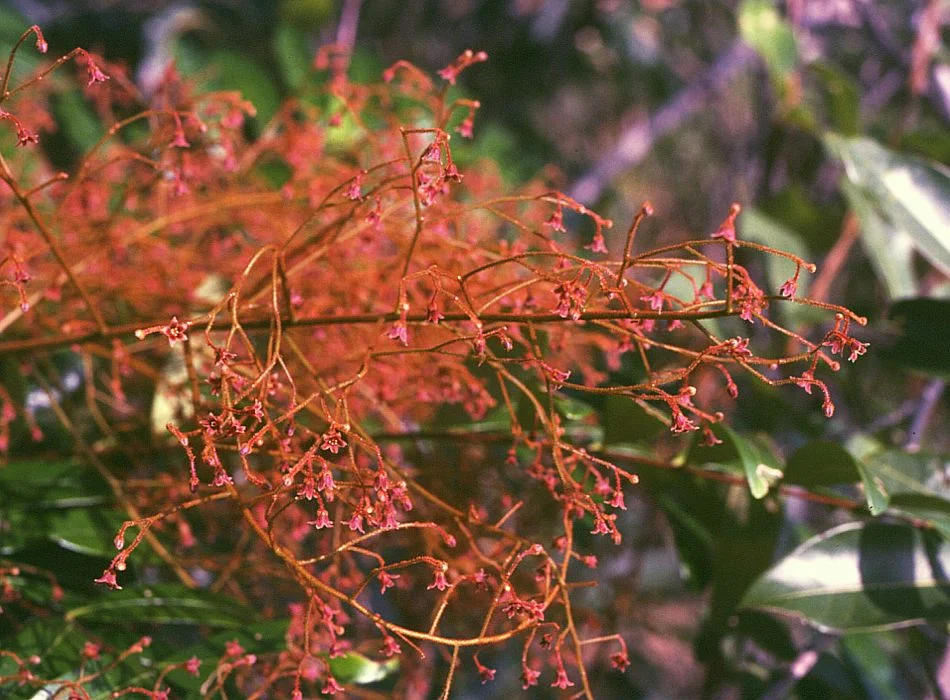
Harmand's Tongkat Ali (Eurycoma harmandiana)

Pla-lai-phueak-noi Small bitter drug shrub

Eurycoma harmandiana: Uses, Active Compounds, and Botanical Profile

In the dry deciduous forests of Thailand, Vietnam, Laos, and Cambodia, Eurycoma harmandiana develops a long, pale taproot that can extend deep into the soil. This slow-growing shrub belongs to the Simaroubaceae family. It has garnered significant attention in regional herbalism due to its intensely bitter taste and biological activity.

Unlike some of its larger relatives, this species maintains a compact shrubby habit. It thrives in seasonal tropical climates where water availability fluctuates throughout the year.

Taxonomy

  • царство Plantae
  • division Tracheophytes
  • subdivision Spermatophytes (Seed plants)
  • Angiosperms
  • mesangiosperms
  • eudicots
  • Superrosids
  • rosids
  • malvids
  • order Sapindales
  • family Simaroubaceae (Quassia family)
  • genus Eurycoma (Tongkat Ali Tree)
  • species Eurycoma harmandiana (Harmand's Tongkat Ali)

Living Pulse

Morphology

The plant possesses highly specialized vegetative and reproductive structures adapted to dry forest environments:

  • Roots: It produces a single, exceptionally long taproot that can exceed 2 meters in length and has a yellowish-white color.
  • Leaves: The pinnately compound leaves have asymmetric bases and a slightly raised midrib on the upper surface.
  • Flowers: Small, purplish-red unisexual flowers are arranged in axillary panicles that grow parallel to the ground.
  • Fruits: The ovoid, fleshy drupes feature a thin outer skin and short stalks.

The leaflets are smooth and glossy to reduce water loss during the dry season. The entire inflorescence is covered in fine, soft hairs.

Applications

Ethnobotanical practices in Thailand and neighboring countries rely on the therapeutic qualities of this shrub. The roots and bark are used in various remedies:

  • Antipyretic Use: The roots are brewed to treat malaria, reduce high fevers, and alleviate physical pain.
  • Detoxification: Traditional practitioners administer root extracts to combat poisons, relieve sore throats, and regulate blood pressure.

Scientific studies have identified active bitter principles such as eurycomalactone, eurycomanol, and eurycomanone. These compounds show cytotoxic activity against certain cancer cell lines in laboratory tests.

Interesting facts

The common name "Pla-lai-phueak-noi" translates to "small white eel," referencing the appearance of its long, pale taproot. This root is so long that harvesting it fully without breaking it requires considerable effort and skill.

Geography of distribution

  • Vietnam
  • Thailand
  • Laos
  • Cambodia

Sources

  • Plants of the World Online (POWO)
  • World Flora Online (WFO)
  • Global Biodiversity Information Facility (GBIF)

Technical Information

External Databases: GBIF, POWO, Tropicos

Смотрите также

Tongkat Ali

Tongkat Ali

Eurycoma longifolia

Eurycoma longifolia, commonly known as tongkat ali, is a slender evergreen shrub native to Southeast …

Norfolk Island Pine

Norfolk Island Pine

Araucaria heterophylla

Araucaria heterophylla, commonly known as the Norfolk Island pine, is a majestic coniferous tree native …

True Araucarias

True Araucarias

Araucaria sect. Araucaria

Araucaria sect. Araucaria is a botanical section of evergreen conifers native to South America. It …