Eurycoma longifolia: Botanical Properties and Traditional Uses
Deep within the humid undercanopy of Southeast Asian rainforests, a slender, mostly unbranched tree stands as a legendary symbol of vital energy. This plant, scientifically known as Eurycoma longifolia, has captured the attention of both traditional healers and modern researchers due to its biologically active compounds. The species is widely recognized for its intensely bitter roots, which have earned it various descriptive folk names across its native range.
For generations, indigenous communities in Malaysia and Indonesia have harvested the roots of Eurycoma longifolia to brew stimulating tonics. Today, this botanical treasure is widely commercialized globally, serving as a popular ingredient in modern dietary supplements and functional energy drinks.
Eurycoma longifolia exhibits a distinctive growth habit as a slender, slow-growing evergreen shrub or small tree that can reach a height of 10 to 15 meters. The main trunk is typically unbranched, though older specimens may occasionally produce one or two upright branches, terminated by a dense rosette of leaves that forms an umbrella-like crown.
The botanical structure of the species is characterized by several key features:
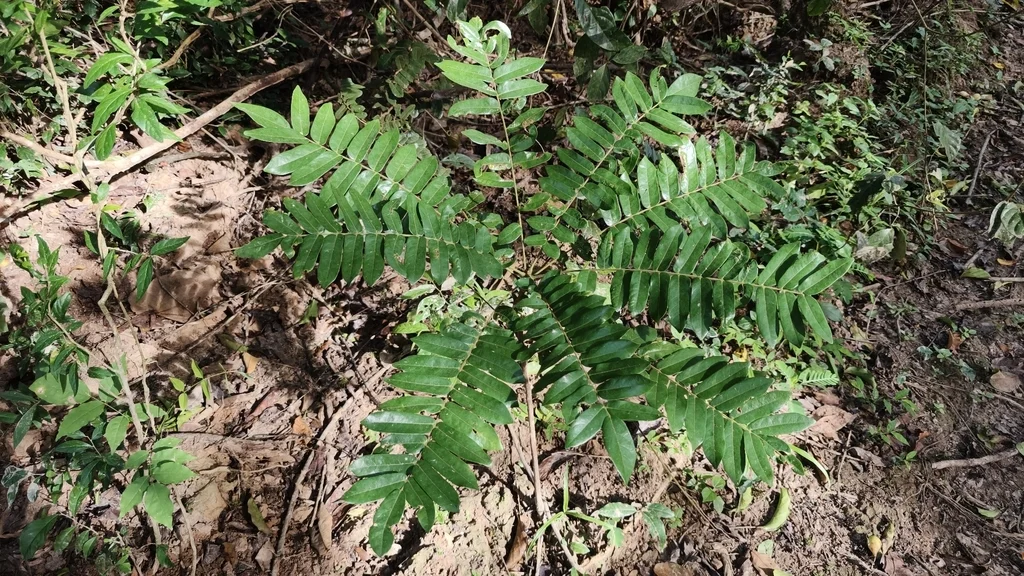
Leaves: The compound, even-pinnate leaves can reach up to 1 meter in length, featuring reddish-brown petioles. Each leaf comprises 13 to 41 leaflets arranged in pairs, which are lanceolate to obovate-lanceolate, measuring 5 to 20 centimeters in length, and displaying a significantly paler green shade on their undersides.
Flowers: This species is dioecious, meaning male and female flowers are borne on separate trees. The flowers are arranged in large, loose, axillary panicles up to 60 centimeters long, covered in fine, glandular trichomes. The small petals are purple-crimson and pubescent.
Fruits: The fruit is a hard, ovoid drupe measuring 1 to 2 centimeters long. It is yellowish-brown when young and matures into a dark brownish-red color.
Roots: The root system is deep and sturdy, featuring a smooth bark that ranges from yellowish-white to light brown, and is famous for its extreme bitterness.
Flowering season
The main flowering period occurs during the summer months, specifically from June to July.
Jan
Feb
Mar
Apr
May
Jun
Jul
Aug
Sep
Oct
Name
Dec
Applications
The primary value of Eurycoma longifolia lies in its extensive history in Southeast Asian traditional medicine, where almost every part of the plant has been utilized. The roots are traditionally boiled in water to produce a bitter tonic consumed to alleviate malaria, persistent fevers, jaundice, and digestive disorders like dysentery and diarrhea. In Malaysia, local communities also apply a paste made from the plant topically to treat stomachaches and headaches.
In modern times, the species has gained global recognition, particularly in the fitness and wellness industries. Some key contemporary applications include:
Dietary Supplements: Root extracts are widely sold in capsules and powders, favored by athletes and bodybuilders who believe the herb increases testosterone levels, enhances muscle hypertrophy, and boosts physical stamina.
Functional Beverages: Powdered extracts are frequently added as a key ingredient in specialty coffees and non-alcoholic energy drinks throughout Asia and Western markets.
Male Fertility: Extracts are researched for their potential to improve sperm count, mobility, and overall reproductive health.
Interesting facts
Due to its popularity and wild harvest, Eurycoma longifolia is surrounded by interesting cultural and ecological facts:
The Bitter Charm: The Malay name "penawar pahit" literally translates as "bitter charm" or "bitter medicine," highlighting the plant's legendary bitterness. This extreme taste is caused by quassinoids, particularly quassin, which is considered one of the most bitter substances in nature.
Color Classification: Local harvesters distinguish between different varieties based on root color. The yellow or whitish roots of Eurycoma longifolia are called "tongkat ali putih" (white) or "kuning" (yellow), contrasting with the darker roots of Polyalthia bullata, known as "tongkat ali hitam" (black). A rare red variety, "tongkat ali merah," also exists in Indonesia.
Extinction Threat: Because the roots are the most valuable part, the entire tree must be uprooted during harvest. This practice has prompted strict conservation laws in Malaysia, where export of raw roots is prohibited to prevent the species from disappearing in the wild.