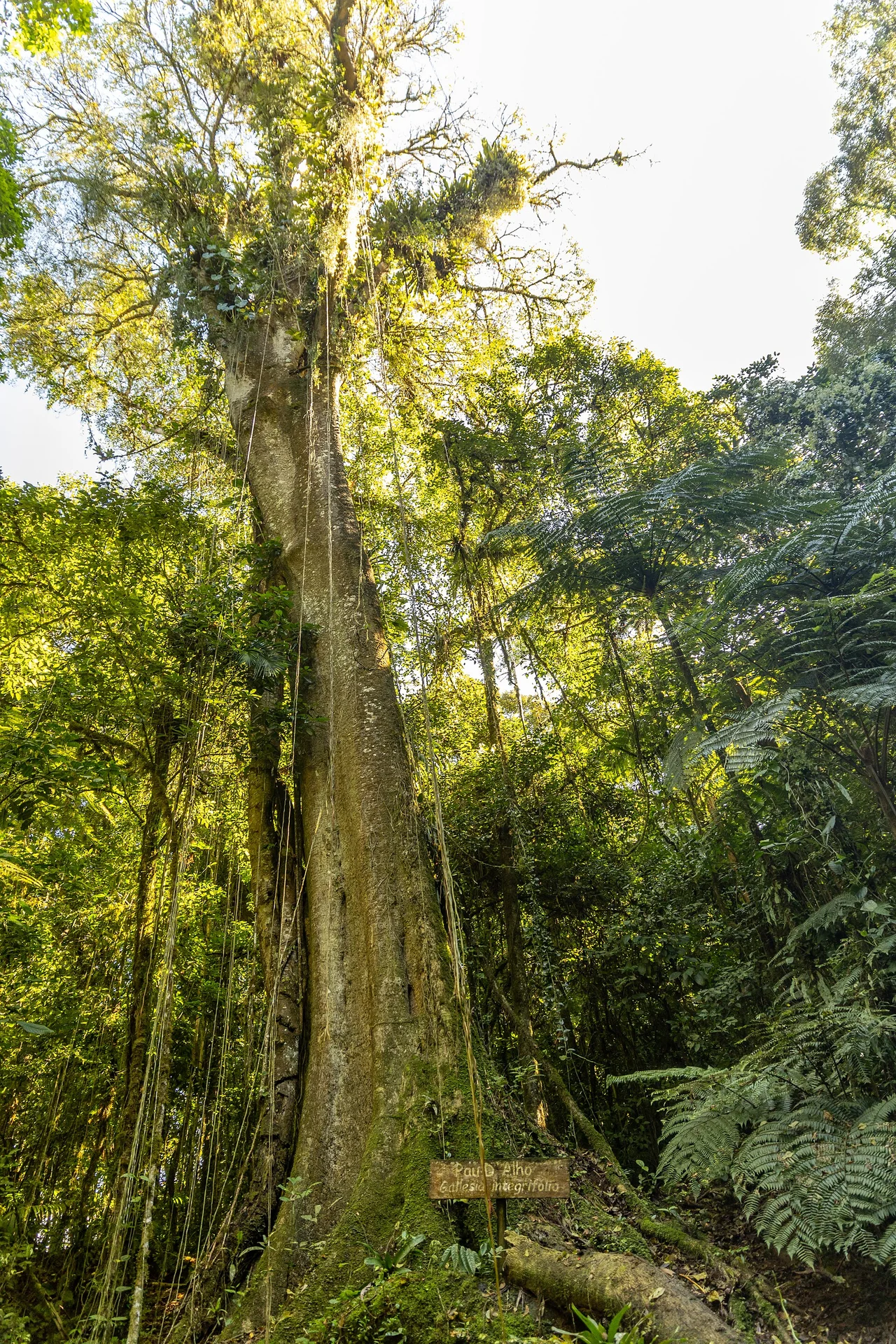
Gallesia integrifolia (Pau-d'alho): Botanical Characteristics and Habitat
Towering over the canopy of South American tropical forests, Gallesia integrifolia commands attention with its massive stature and unmistakable scent. Belonging to the family Petiveriaceae, this evergreen tree thrives across Brazil, Peru, Bolivia, and Ecuador. It is most famously known for the strong, pungent, garlic-like odor emitted by its wood, leaves, and flowers, which is directly reflected in its local vernacular names such as pau-d'alho.
This colossal tree can reach monumental heights of up to 35 meters in the dense forest canopy. The trunk is characterized by rough, grey bark in mature specimens, providing a sturdy foundation for its expansive crown.
The leaves of Gallesia integrifolia are alternate, simple, and typically elliptic to ovate, measuring between 6 and 14 centimeters in length. During its reproductive phase, the tree produces dense inflorescences of small, white to cream-colored flowers that also exude the characteristic alliaceous scent.
Applications
In its native range, the robust wood of Gallesia integrifolia has been utilized in rustic construction and for making localized furniture pieces, although its strong odor can occasionally limit indoor use. The plant also holds a prominent place in regional traditional practices, where various parts of the tree have been explored for their unique phytochemical compounds.
Interesting facts
The striking garlic-like scent of Gallesia integrifolia is so powerful that it can be easily detected from a significant distance in the forest, especially on warm, humid days or when the plant tissues are bruised.
Several of its local names, such as guararema, originate directly from the indigenous Tupi language phrase gwra'rema, which literally translates to 'malodorous wood'.