
Toothed Andean Berry
Jaltomata dentata
A wild Andean shrub in the nightshade family native to the high mountain slopes of …
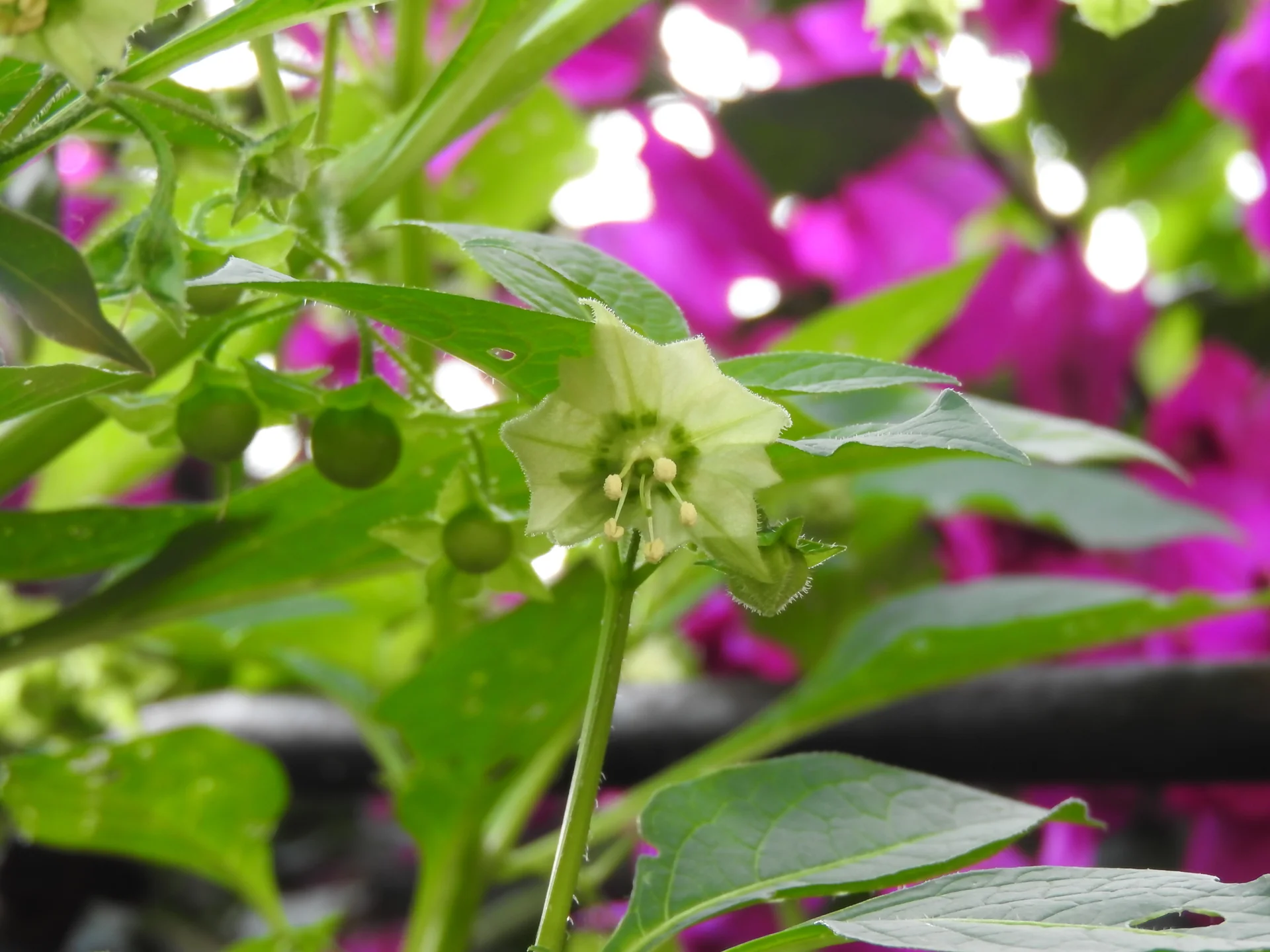
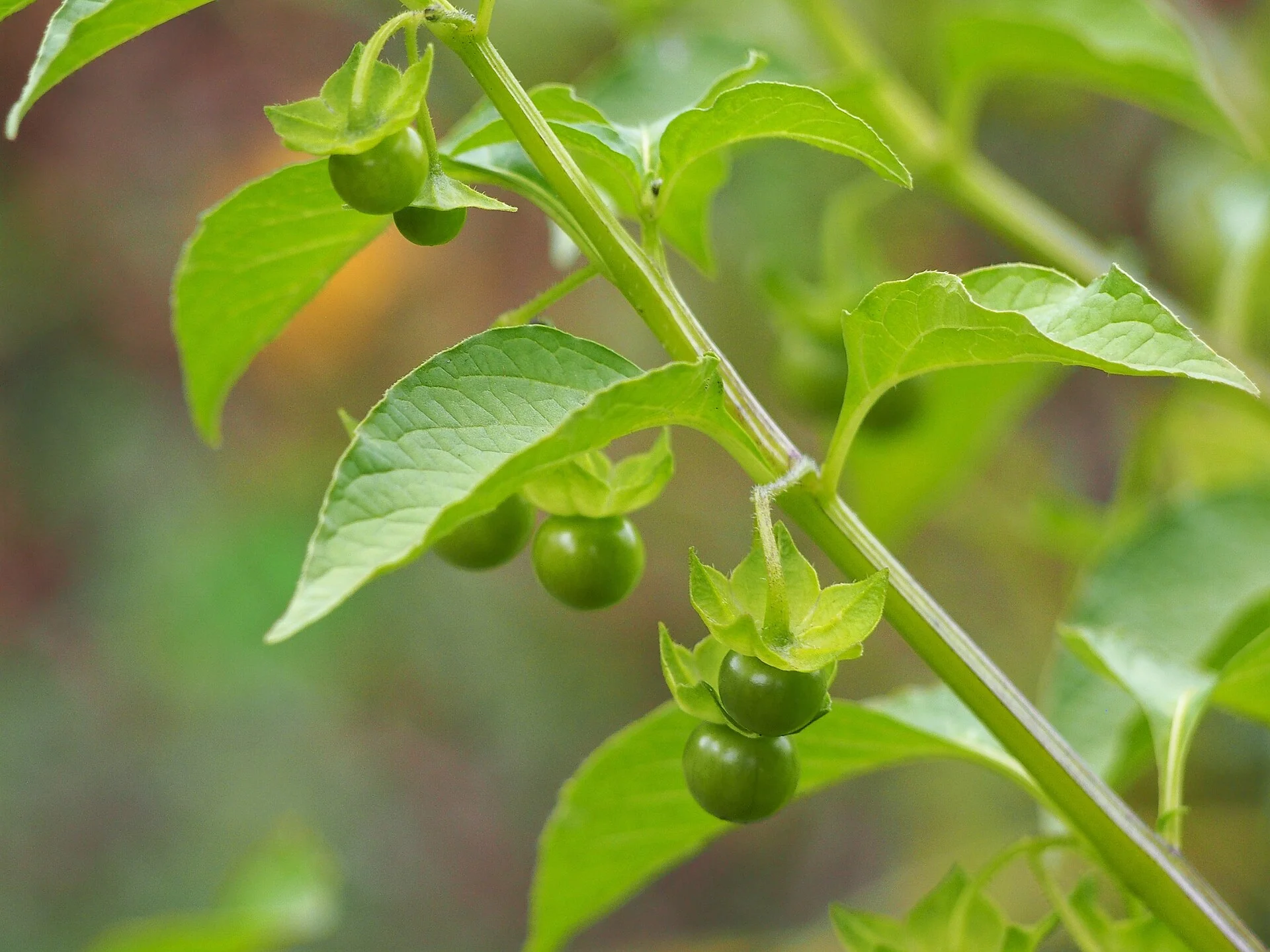
Jaltomata procumbens, commonly known as creeping false holly or jaltomate, is a sprawling or ascending herbaceous plant native to a broad range stretching from Arizona and Mexico through Central America to the Andes. Its Latin epithet procumbens refers to its trailing, low-spreading stems that send up multiple shoots from a single root system and produce wheel-shaped pale greenish-yellow flowers followed by dark purple, grape-scented berries.
A member of the nightshade family (Solanaceae), the species was originally described in 1791 by the Spanish taxonomist Antonio José Cavanilles under the name Atropa procumbens, and later circulated in horticultural literature as Saracha edulis. In 1973, American botanist Johnnie Lee Gentry transferred it to its modern accepted name, Jaltomata procumbens.
Depending on soil moisture and support, the plant grows as a trailing or ascending herb reaching 30 to 90 centimeters in height, and occasionally up to 2 meters in sheltered tropical thickets. The hollow, angled stems are bright green and range from nearly smooth to softly pubescent, with fine trichomes (plant hairs) that turn white as they dry.
The umbellate inflorescences carry clusters of nodding flowers on slender, unbranched stalks up to 4 centimeters long. The wheel-shaped (rotate) corolla measures 10 to 15 millimeters across and displays pale yellow-green petals marked with darker green spots near the center.
Blooms from summer through early autumn in temperate and subtropical zones, and nearly year-round during wet seasons in the tropics.
Full sun to light partial shade; bright exposure encourages compact branching and abundant fruit ripening.
Moderate, regular watering to keep the root zone evenly moist without waterlogging.
Warm-season plant thriving at 18–28 °C; sensitive to frost and grown as an annual in temperate climates.
Adaptable to moderate ambient humidity (40–70%) in well-ventilated outdoor beds.
Unripe green berries and foliage contain steroidal glycoalkaloids such as solanine and can cause gastrointestinal distress if eaten raw; only fully ripe, black-purple berries are safe for moderate consumption.
Across Mexico and Central America, the fully ripe, dark purple berries—known locally as jaltomates or xaltomatl in Nahuatl—are harvested as a fresh fruit prized for their sweet taste and pronounced grape-like aroma. They are eaten fresh out of hand, blended into traditional sauces, or cooked with sugar into preserves, while tender young shoots and leaves are boiled as pot-herbs (quelites) in parts of rural Mexico and used in local folk remedies.
In temperate regions, specialty gardeners cultivate Jaltomata procumbens as a warm-season annual curiosity in kitchen gardens. Seeds are started indoors in early spring or sown directly after the last frost in fertile, well-drained sandy loam, with excess nitrogen avoided so the plant channels energy into fruit production rather than lush foliage.
In the Sierra Madre Occidental of northwestern Mexico, indigenous Tarahumara (Rarámuri) and Mountain Pima farmers practice a subtle form of partnership with Jaltomata procumbens. Although the plant sprouts spontaneously as a volunteer weed in tilled corn and bean fields, farmers deliberately spare its seedlings during weeding and protect the fruiting stems until harvest.
Ethnobotanists and crop historians view this relationship as a living window into the early stages of plant domestication. By selectively tending non-shattering, sweet-fruited plants that thrive in disturbed agricultural soil, human communities gradually shape a wild nightshade into a semi-domesticated crop without ever enclosing it in a separate orchard.
Each flower coordinates its reproductive parts with clockwork precision across a 48-hour window to balance cross-pollination with reproductive assurance.
Taxon Synonyms: Saracha edulis, Bellinia biflora, Saracha procumbens var. pilosula, Saracha conspersa, Saracha sessilis, Physalis solanacea, Witheringia conspersa, Saracha procumbens, Witheringia jaltomata, Witheringia diffusa, Witheringia glabrata, Witheringia alata, Witheringia laxa, Bellinia procumbens, Witheringia candollei, Witheringia procumbens, Witheringia allogona, Atropa procumbens, Saracha probescens, Saracha microsperma, Saracha alata, Saracha allogona, Saracha caracasana, Saracha miersii, Saracha laxa, Saracha glabrata, Saracha jaltomata
Jaltomata dentata
A wild Andean shrub in the nightshade family native to the high mountain slopes of …

Jaltomata viridiflora
A high-Andean herb or scrambling shrub with velvety leaves, tubular pale green flowers, and flattened …

Jaltomata umbellata
A low Peruvian shrub native to coastal fog deserts, bearing umbel-like clusters of cream to …

Jaltomata aspera
A wild Peruvian shrub of the nightshade family featuring solitary nodding greenish-yellow flowers filled with …