Ledenbergia Genus: Characteristics, Species and Distribution
Spanning a native range from Mexico down to southern tropical America, the genus Ledenbergia consists of woody plants classified under the family Petiveriaceae. These plants are primarily found in tropical dry forests and moist lowland forests across Central and South America.
Established in 1849 by the botanist Moquin-Tandon, the genus was named in honor of Johann Philipp von Ladenberg, a Prussian lawyer and administrator. The genus is distinguished by its dioecious reproductive system, where male and female flowers develop on separate individuals.
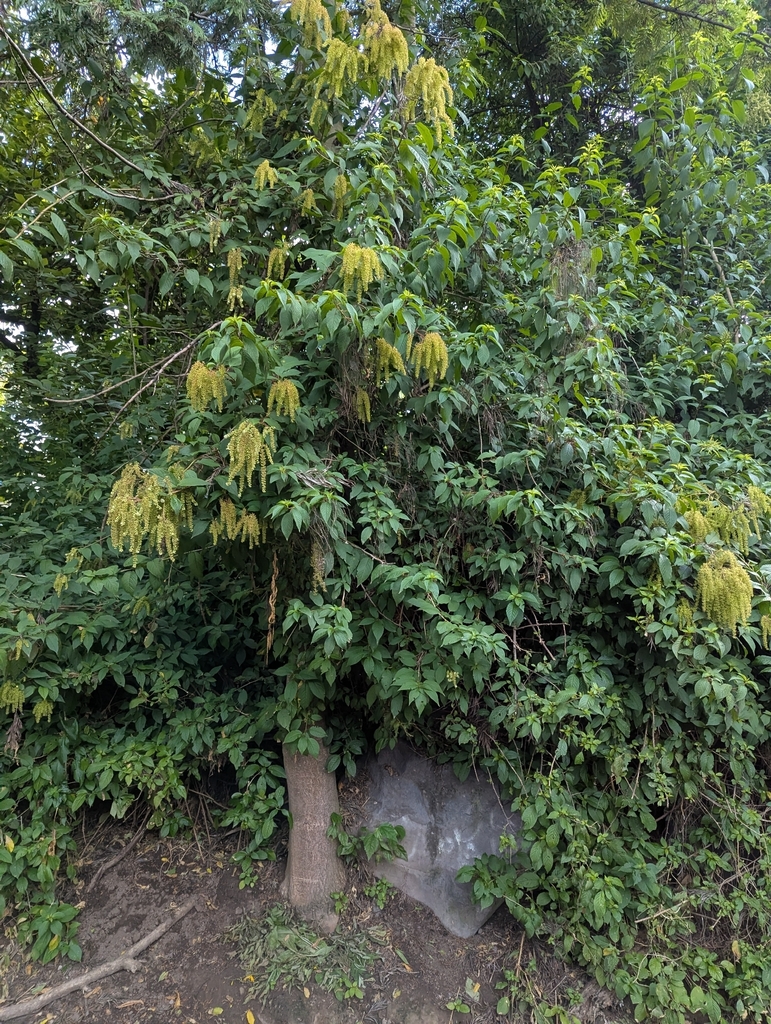
Species of Ledenbergia grow as trees or large shrubs, sometimes reaching heights of up to 25 meters. They feature alternate, petiolate, ovate to elliptic leaves with acuminated apices and obtuse to rounded bases.
The inflorescences are elongated, drooping racemes ranging from 10 to 25 centimeters in length, carrying small green, apetalous flowers. Staminate flowers typically contain 24 stamens, while pistillate flowers bear 6–11 staminodes and larger sepals that grow during fruiting. The superior ovary is unilocular, developing into a dry, single-seeded utricle fruit.
Applications
Due to their size and robust growth form, Ledenbergia trees contribute significantly to the forest canopy structure and help control soil erosion in their native habitats. Their wood is sometimes used locally for fuel or basic construction in rural areas where the trees are abundant.
Some species, such as Ledenbergia seguierioides, are studied in botanical collections and arboretums for their taxonomic significance and unusual floral morphology.
Interesting facts
The genus is strictly dioecious, requiring both male and female trees in proximity to achieve successful pollination and seed production.
Its name commemorates Johann Philipp von Ladenberg, who founded an educational institute for the sons of underprivileged forest officials in Prussia.
The sepals of the female flowers show significant post-floral growth, doubling in size to help enclose and protect the developing utricle fruit.