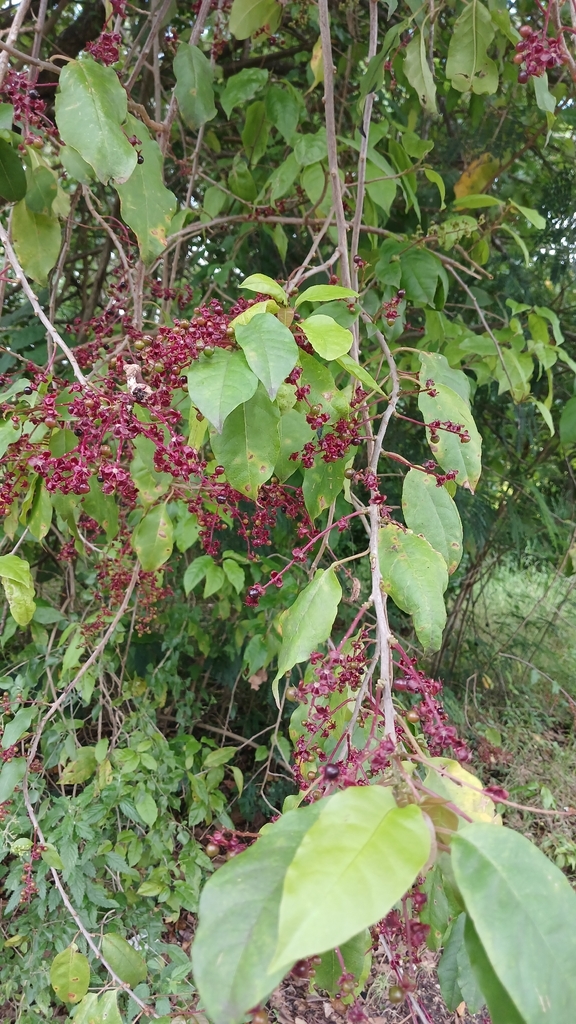
Hoopvine (Trichostigma)

Bejuco de canastas Guacomaya GuaniquΓ­

Trichostigma Genus: Tropical Hoopvines & Wild Lianas

Draped over the canopy of Caribbean and South American rainforests, these resilient woody climbers play a vital role in their tropical ecosystems. The flexible, robust stems of these plants have long been gathered by forest-dwelling communities to weave durable traditional baskets and frames.

As members of the Petiveriaceae family, representatives of the Trichostigma genus typically grow as scrambling shrubs or woody vines. They colonize forest edges and disturbed areas, adapting remarkably well to varying levels of tropical sunlight.

Taxonomy

  • ∟ царство Plantae
  • ∟ division Tracheophytes
  • ∟ subdivision Spermatophytes (Seed plants)
  • ∟ Angiosperms
  • ∟ eudicots
  • ∟ Superasterids
  • ∟ order Caryophyllales
  • ∟ family Petiveriaceae
  • ∟ genus Trichostigma (Hoopvine)

Morphology

Members of the Trichostigma genus exhibit a variety of distinctive vegetative and reproductive features that set them apart in tropical habitats:

  • Growth Habit: They are perennial scrambling shrubs or woody lianas that climb over neighboring vegetation using their flexible, sprawling branches.
  • Leaves: The leaves are arranged alternately along the stems, featuring distinct petioles and entire margins with prominent venation.
  • Inflorescence: They produce slender axillary or terminal racemes, each bearing between 5 and 30 small, delicate flowers.
  • Floral Structure: The flowers possess four sepals and a variable number of stamens, typically ranging from eight to many, surrounding a single superior ovary.

Applications

The stems and foliage of various Trichostigma species serve several practical and traditional purposes in their native regions:

  • Traditional Crafts: The strong, flexible woody vines of species like Trichostigma octandrum are used to make hoops, baskets, and rustic barrel ribs.
  • Ethnobotany: Local healers in the Caribbean and Central America use decoctions of the leaves in traditional medicine to address respiratory conditions and skin ailments.

Interesting facts

Exploring the history and ecology of Trichostigma reveals fascinating connections and scientific classifications:

  • Taxonomic Shifts: The genus was historically placed within the Phytolaccaceae family but has since been reassigned to Petiveriaceae based on modern molecular analyses.
  • Ecological Utility: By forming dense thickets along forest borders, these plants provide essential nesting sites and food sources for tropical birds and insects.
  • First Description: The genus was formally established in 1845 by the French botanist Achille Richard during his extensive studies of the flora of Cuba.

Geography of distribution

  • Cuba
  • Peru
  • Brazil
  • Colombia

Natural varieties

Technical Information

External Databases: GBIF, POWO, Tropicos