Pigeonberry
Rouge plant
Bloodberry
Baby pepper
Ojo de ratón
#3F7831
#0F2E07
#235D11
#5E9A4D
#7CAF78
Plant palette
Rivina: Pigeonberry and Coralberry Genus of Petiveriaceae
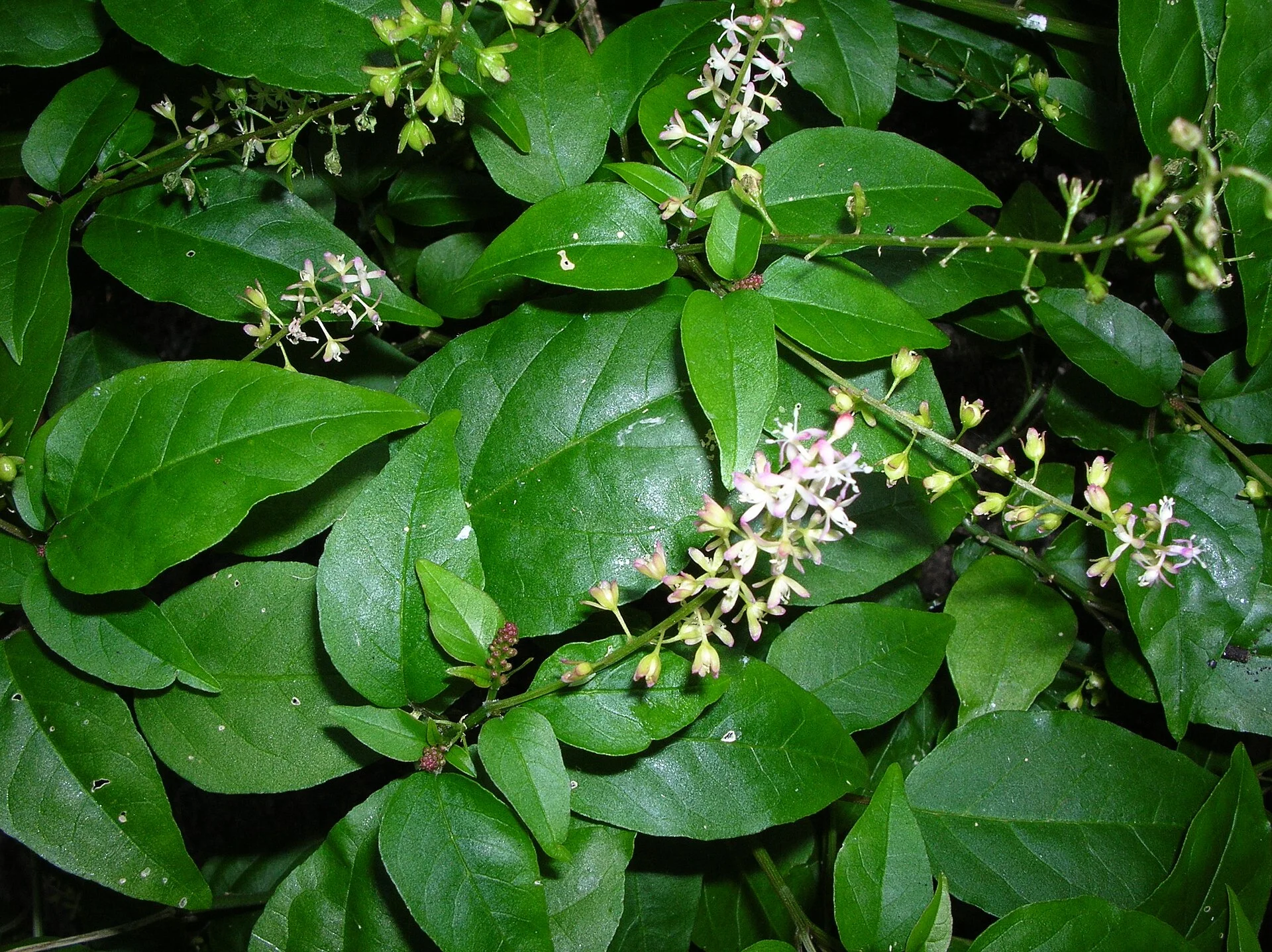
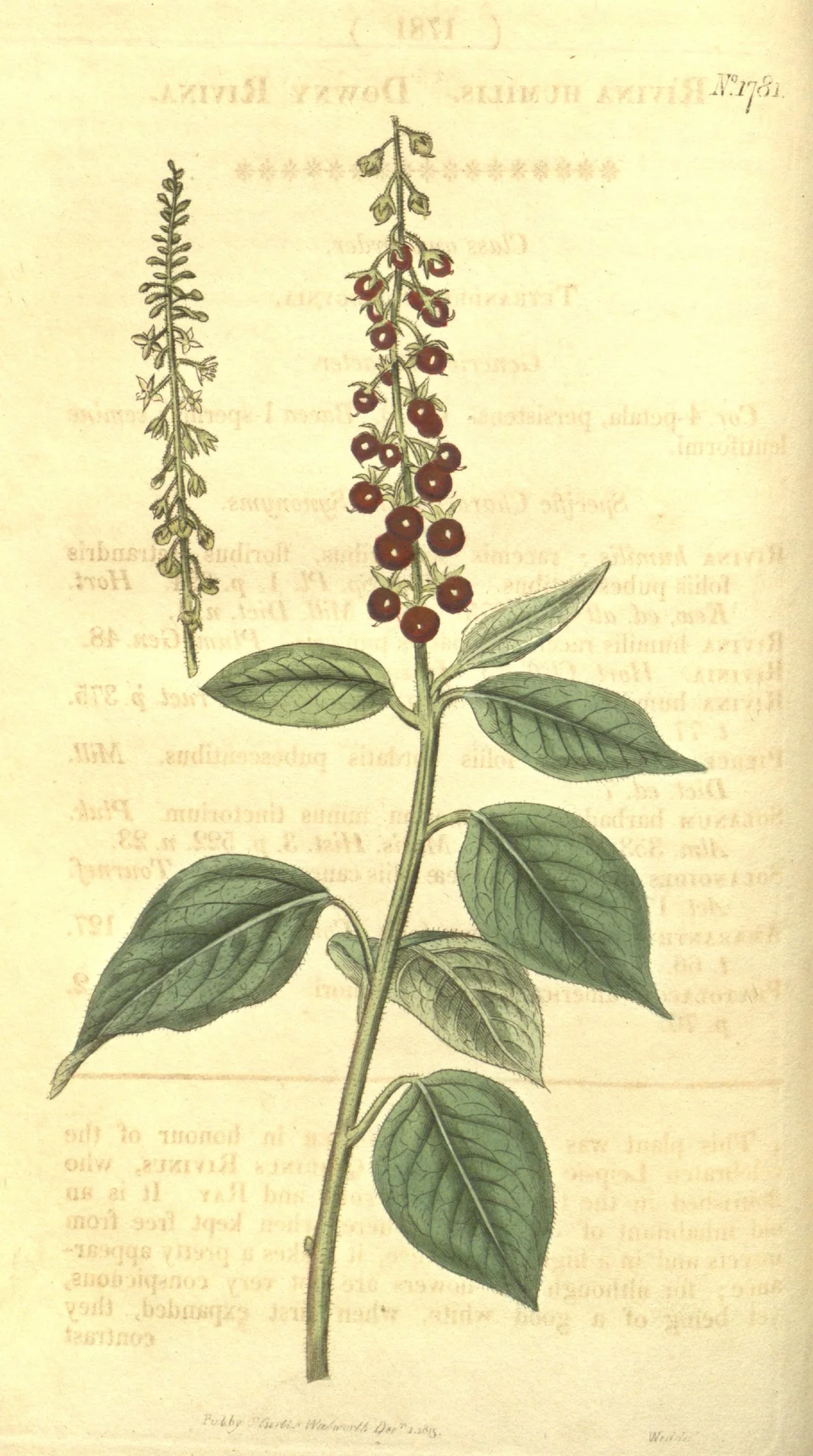
Native to the warm tropical and subtropical regions of the Americas, Rivina comprises erect herbaceous perennials that can become woody at the base. These plants are widely recognized for their glossy, bright red berries that cluster densely along elongated stems.
Named in honor of the German botanist Augustus Quirinus Rivinus, this genus has spread to various tropical zones worldwide. The plants serve as an important food source for birds, though the berries are considered toxic to humans.
Plants in this genus typically grow as erect herbs or subshrubs, reaching heights of up to 1 meter. The alternate, ovate leaves are 4 to 17 centimeters long and 2 to 8.5 centimeters wide, featuring acuminate tips and obtuse or truncated bases.
The inflorescences are arranged in slender racemes measuring 2.5 to 12 centimeters in length. Each flower is bisexual, lacking true petals but possessing four petal-like sepals that range from white to pinkish-green.
The ovary is superior and single-celled, producing a small, globose, bright red drupe. These eye-catching fruits contain a single seed and persist on the plant alongside new blossoms.
Flowering season
Year-round in tropical climates, peaking in summer and autumn
Jan
Feb
Mar
Apr
May
Jun
Jul
Aug
Sep
Oct
Name
Dec
Applications
In tropical landscaping, Rivina is occasionally planted as a shade-tolerant groundcover or border plant. The juice from the highly pigmented red berries has historically been used as a dye and ink source.
Interesting facts
Despite their appealing appearance, the berries contain saponins and are toxic to humans and mammals. However, birds consume them readily without harm, aiding in seed dispersal across their native range.