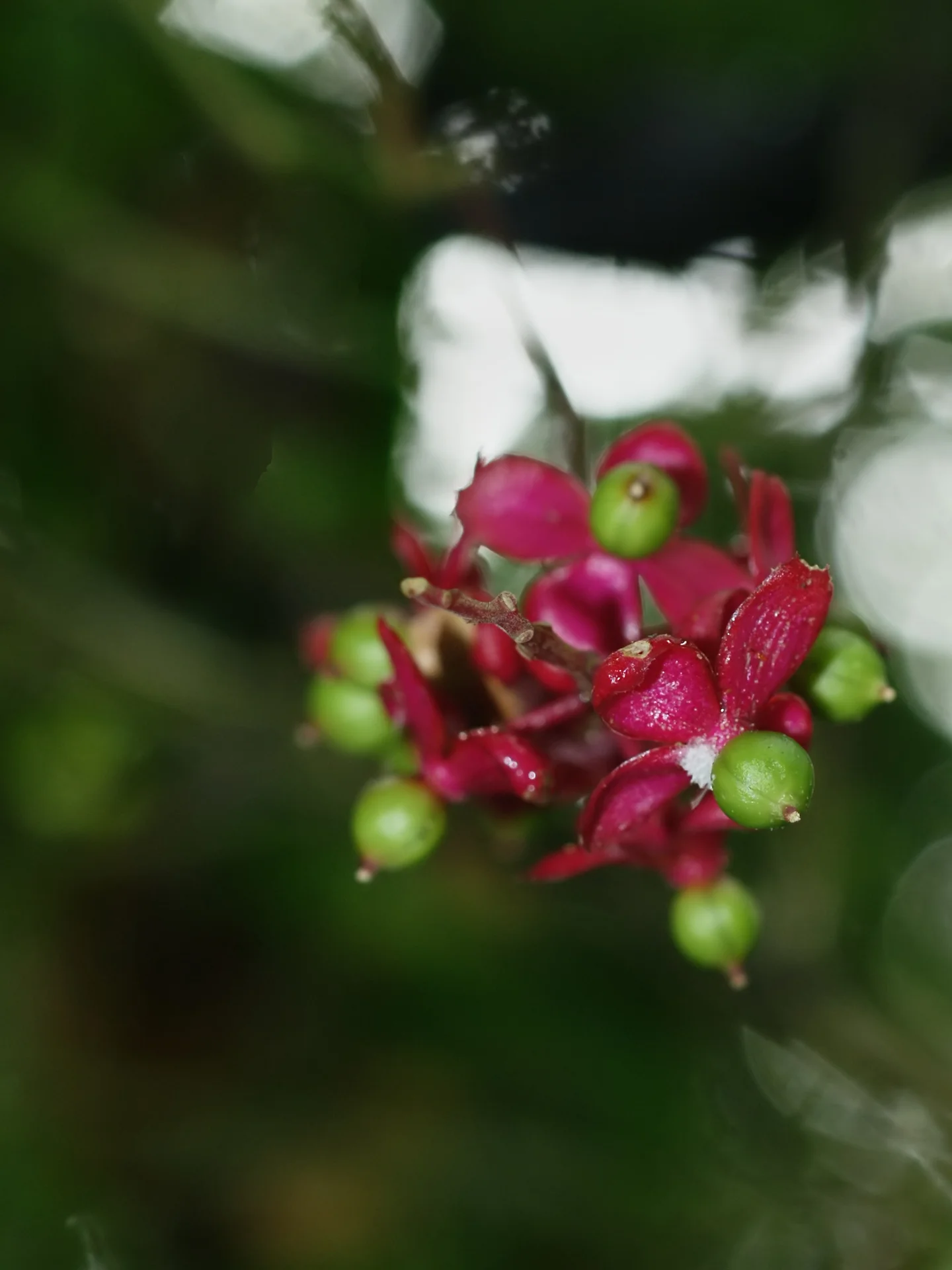
Trichostigma polyandrum: Taxonomy, Morphology, and Native Range
Thriving in the dense neotropical forests of Central and South America, Trichostigma polyandrum grows primarily as a versatile climbing shrub or liana. Classified within the family Petiveriaceae, this species frequently integrates into diverse forest ecosystems across Colombia, Nicaragua, Costa Rica, and Panama. It typically flourishes in the understory and along forest margins, utilizing surrounding vegetation for vital structural support to reach sunlight.
The vegetative structure of Trichostigma polyandrum is heavily adapted for a climbing growth habit, featuring flexible, elongated stems that allow it to navigate through the complex forest canopy. The leaves are generally simple, arranged alternately, and exhibit a distinct venation pattern typical of the genus.
Its inflorescences emerge as elongated racemes that bear numerous small flowers. These blooms are characterized by multiple stamens—a specific morphological trait directly referenced by its botanical epithet, polyandrum.
Interesting facts
The species was first officially described in 1896 by the German botanist Ludwig Eduard Loesener under the name Rivina polyandra.
In 1909, the taxon was transferred to the genus Trichostigma following molecular and morphological studies by Hans Walter.
In various classification systems, the plant is assigned either to the family Phytolaccaceae or to the separate family Petiveriaceae split from it.