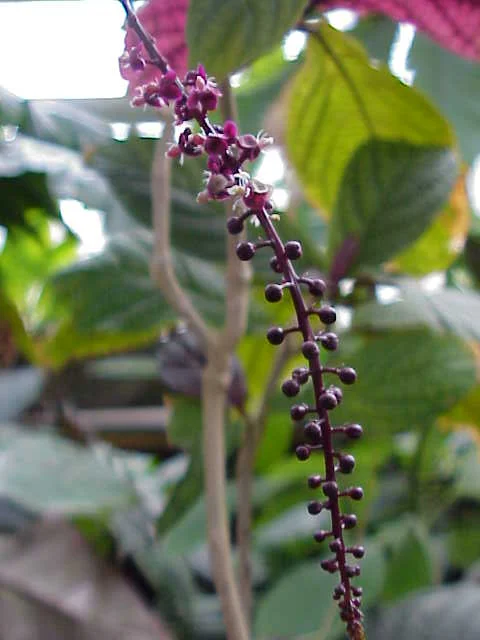
Trichostigma peruvianum: Botanical Overview and Distribution
Trichostigma peruvianum thrives natively in the diverse ecological landscapes of South America. Botanists have documented its presence primarily in the countries of Colombia, Ecuador, and Peru, where it grows in the wild.
Historically classified under the family Phytolaccaceae, modern phylogenetic studies have repositioned this species into the family Petiveriaceae. The plant contributes to the floristic richness of its native habitats.
Members of the genus Trichostigma are characterized by a woody or semi-woody growth habit, forming shrubby growth forms or long climbing shoots. The leaves are alternate, simple, with an entire margin, often featuring prominent pinnate venation. Inflorescences are typically racemes, developing in leaf axils or at the tips of young shoots.
The flowers are small, actinomorphic, with a simple perianth consisting of sepals, while true petals are absent. The fruit is a small fleshy or semi-dry berry containing a single seed.
Interesting facts
Taxonomic revisions have seen Trichostigma peruvianum moved from the Phytolaccaceae family to Petiveriaceae, reflecting advancements in botanical understanding.
Botanists have officially proposed to conserve the genus name Trichostigma against the older historical nomenclature Villamillia.