Lycoris sanguinea var. sanguinea - Taxon Overview and Botanical Characteristics
Sprouting vibrant orange-red blooms from bare summer soil, Lycoris sanguinea var. sanguinea commands attention in its native East Asian habitats. This deciduous bulbous geophyte produces lush foliage during the spring, which completely withers away before the striking flower stalks emerge in late summer.
Known in Japan as Kitsune-no-kamisori, or fox's razor, it carries deep cultural significance and is frequently seen along forest edges and roadsides. Its dramatic growth cycle and vivid coloration make it a notable subject for botanical study.
The subterranean structure consists of a tunicate bulb measuring up to 3 cm in diameter, which stores nutrients for the dormant phases. In spring, linear green leaves emerge, growing to about 30 to 40 cm in length before senescing completely by early summer.
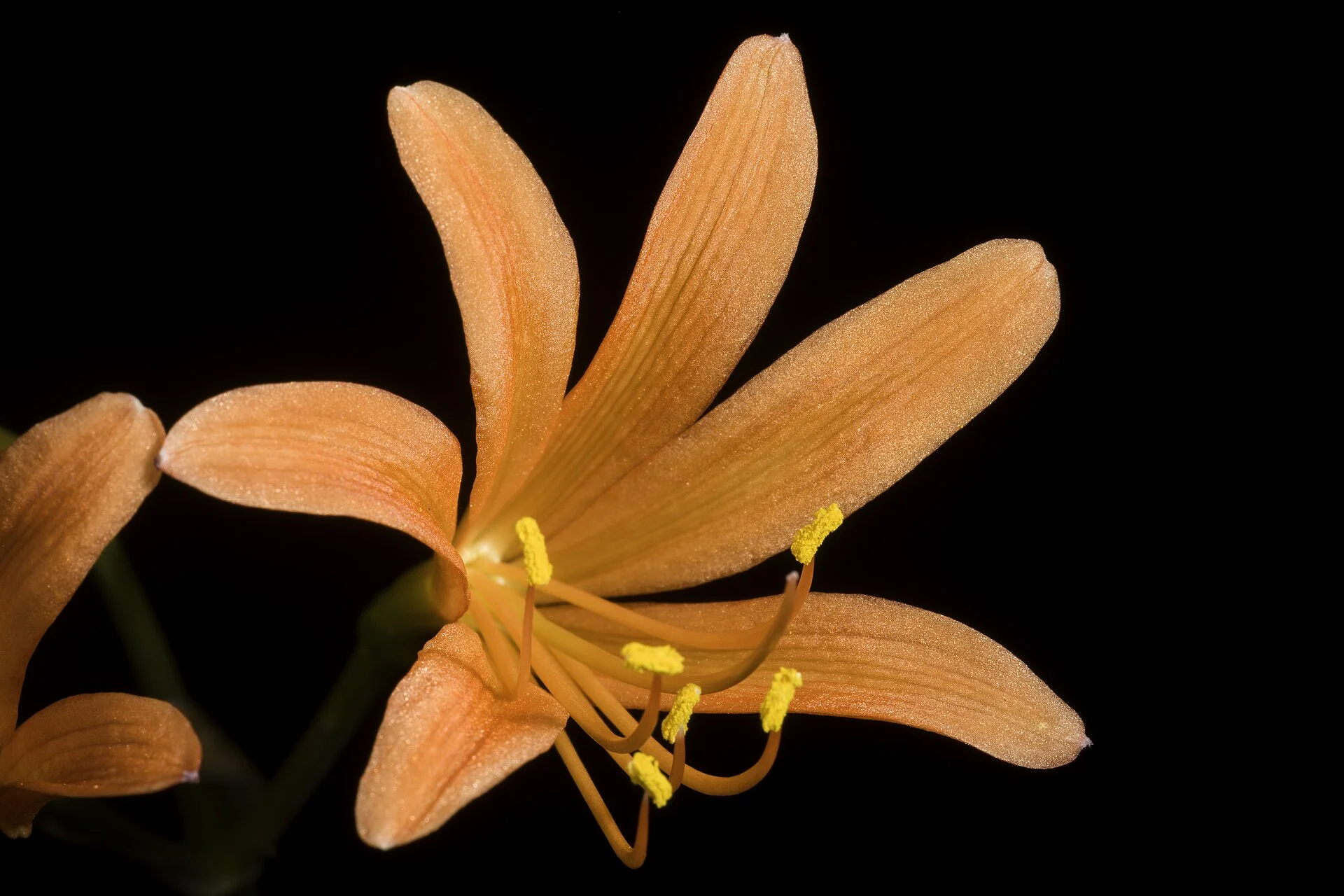
During late summer, erect, leafless flower scapes rise rapidly to a height of 30 to 50 cm. Each scape bears a terminal umbel containing 3 to 6 trumpet-shaped, upright flowers of a bright orange-red or brick-red hue, featuring six tepals and protruding stamens.
Flowering season
Late summer, typically blooming in July and August
Jan
Feb
Mar
Apr
May
Jun
Jul
Aug
Sep
Oct
Name
Dec
Applications
While primarily appreciated for its aesthetic value in wild gardens and naturalized landscapes, this variety serves ecological roles by attracting late-season pollinators. Its toxic properties have historically been utilized in traditional pest control around agricultural fields.
Interesting facts
The common Japanese name Kitsune-no-kamisori translates to 'fox's razor', referencing the sharp shape of its spring leaves.
Like other members of the genus Lycoris, the flowers and leaves are never seen together, earning them the poetic classification of 'surprise lilies'.
The entire plant contains toxic alkaloids such as lycorine, which serve as a natural defense mechanism against herbivores and pests.