Maclura cochinchinensis: Cockspur Thorn Shrub and Fruit Guide
Growing in the tropical monsoon forests of East Asia and Australia, Maclura cochinchinensis attracts attention due to its edible yellow fruits and sharp thorns. This resilient scrambling shrub climbs into the forest canopy using woody spines. Indigenous communities have long utilized the plant for both nutrition and crafts.
The sweet, globular fruits were a traditional food source for Aboriginal Australians. In parts of Southeast Asia, the yellow heartwood is harvested to produce high-quality natural dyes. Its ecological presence helps support local biodiversity by providing cover for native wildlife.
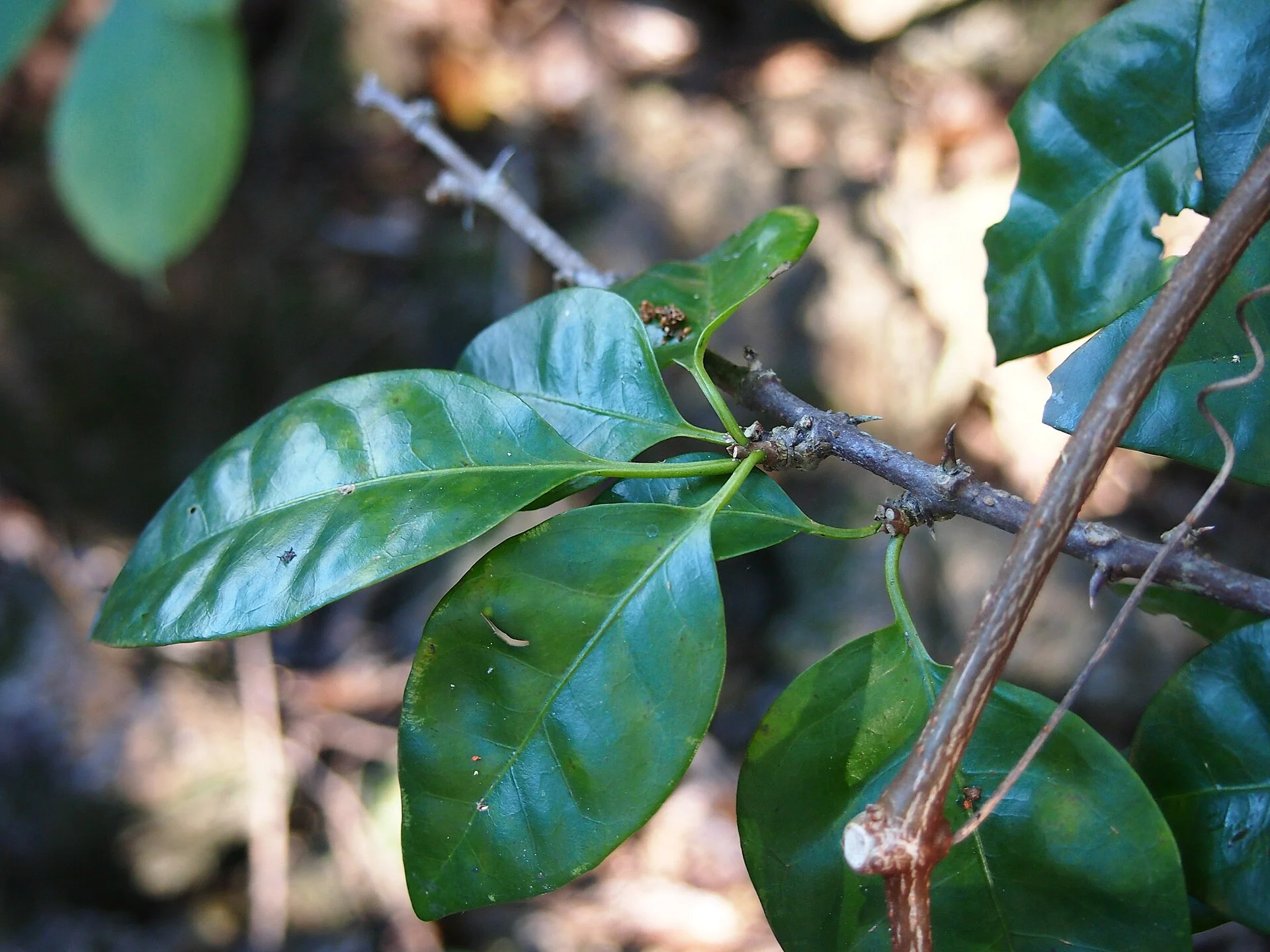
The physical structure of this species is characterized by its sprawling growth habit, developing as either an erect shrub or a climber. Glabrous branches are armed with strong, curved or straight spines measuring up to 2 centimeters. The coriaceous leaves are arranged alternately along the stems, featuring elliptic-lanceolate to oblong shapes.
As a dioecious plant, it bears unisexual flowers on separate individuals. The male flowers form compact, globose heads measuring about 6 to 10 millimeters in diameter. Following pollination, the female inflorescences develop into fleshy, globose aggregate fruits that mature from yellow to orange-red.
Flowering season
April to May
Jan
Feb
Mar
Apr
May
Jun
Jul
Aug
Sep
Oct
Name
Dec
Applications
The primary economic value of this species lies in its vibrant yellow heartwood, which is boiled to extract natural dye for textiles and mats. In traditional Thai medicine, extracts from the wood are used to treat fever and inflammatory ailments. The sweet, ripe fruits are consumed fresh by local populations and forest animals.
Interesting facts
Natural Batik Dye: Indonesian artisans historically utilized the heartwood extracts to create stable yellow hues for traditional batik fabrics.
Wildlife Shield: The dense network of sharp thorns serves as a protective nesting habitat for small forest birds.
Ancient Food Source: The sweet aggregate fruit represents one of the historical wild foods harvested by indigenous peoples in northern Australia.