
Osage Orange
Maclura pomifera
The Osage orange (Maclura pomifera) is a resilient, thorny tree famous for its heavy rot-resistant …
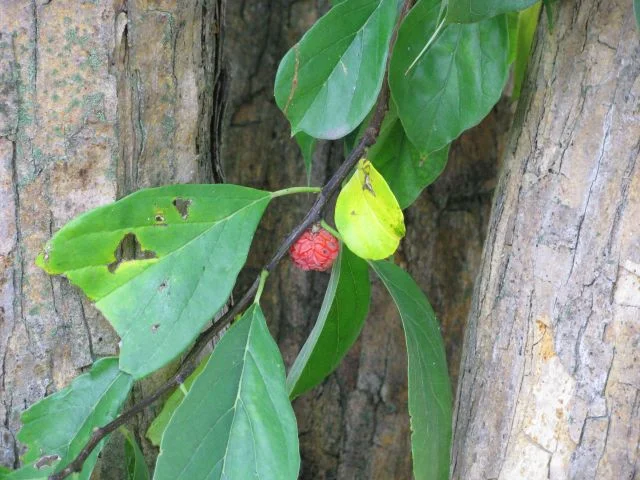
Deep within the mountainous regions of East Asia, Maclura tricuspidata thrives, bearing unique, aggregate red fruits that surprise the palate with a sweet watermelon flavor. This hardy, deciduous tree has a long history of cultivation, particularly in China where its leaves served as an alternative food source for silkworms.
Commonly referred to as the mandarin melon berry or cudrang, it typically grows as a thorny shrub or a small tree. Today, Maclura tricuspidata is valued not only for its edible fruits but also for its durable wood and medicinal bark.
Maclura tricuspidata displays a highly adaptable growth form, typically developing as a deciduous shrub or small dioecious tree reaching heights of 6 to 7 meters. Its branches are armed with sharp, slender thorns measuring 0.5 to 2 centimeters, which gradually disappear as the wood matures.
The foliage and reproductive structures of the species exhibit several key features:
Flowers typically bloom in late spring to early summer, from May to June.
The versatile Maclura tricuspidata has been integrated into various traditional and practical uses across East Asia:
Taxon Synonyms: Cudrania triloba, Cudrania tricuspidata
Maclura pomifera
The Osage orange (Maclura pomifera) is a resilient, thorny tree famous for its heavy rot-resistant …

Maclura tinctoria
A medium to large neotropical tree famed for producing fustic, a natural yellow dye historically …

Maclura africana
A woody, thorny scrambler native to southeastern Africa and Madagascar, producing small yellow-orange fruits and …

Maclura cochinchinensis
A thorny scrambling shrub or climber native to East Asia and Australia, known for its …