Mock orange
Horse apple
Hedge apple
Bodark
Bodock
Bois d'arc
IUCN: Вызывает наименьшие опасения
#61644B
#9EA182
#CCE3EC
#343625
#D6EBE4
Plant palette
Osage Orange (Maclura pomifera) Guide: History & Uses
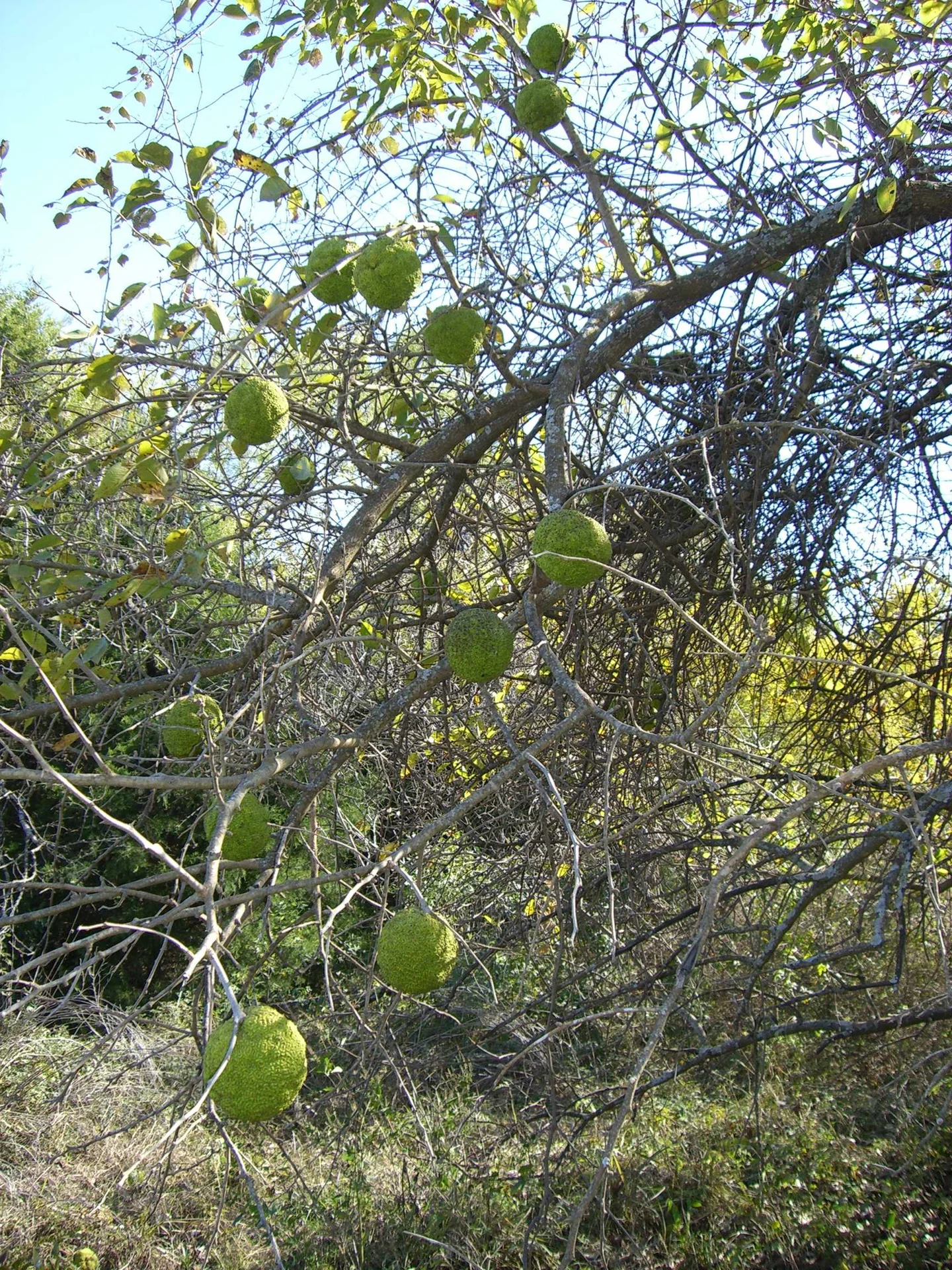
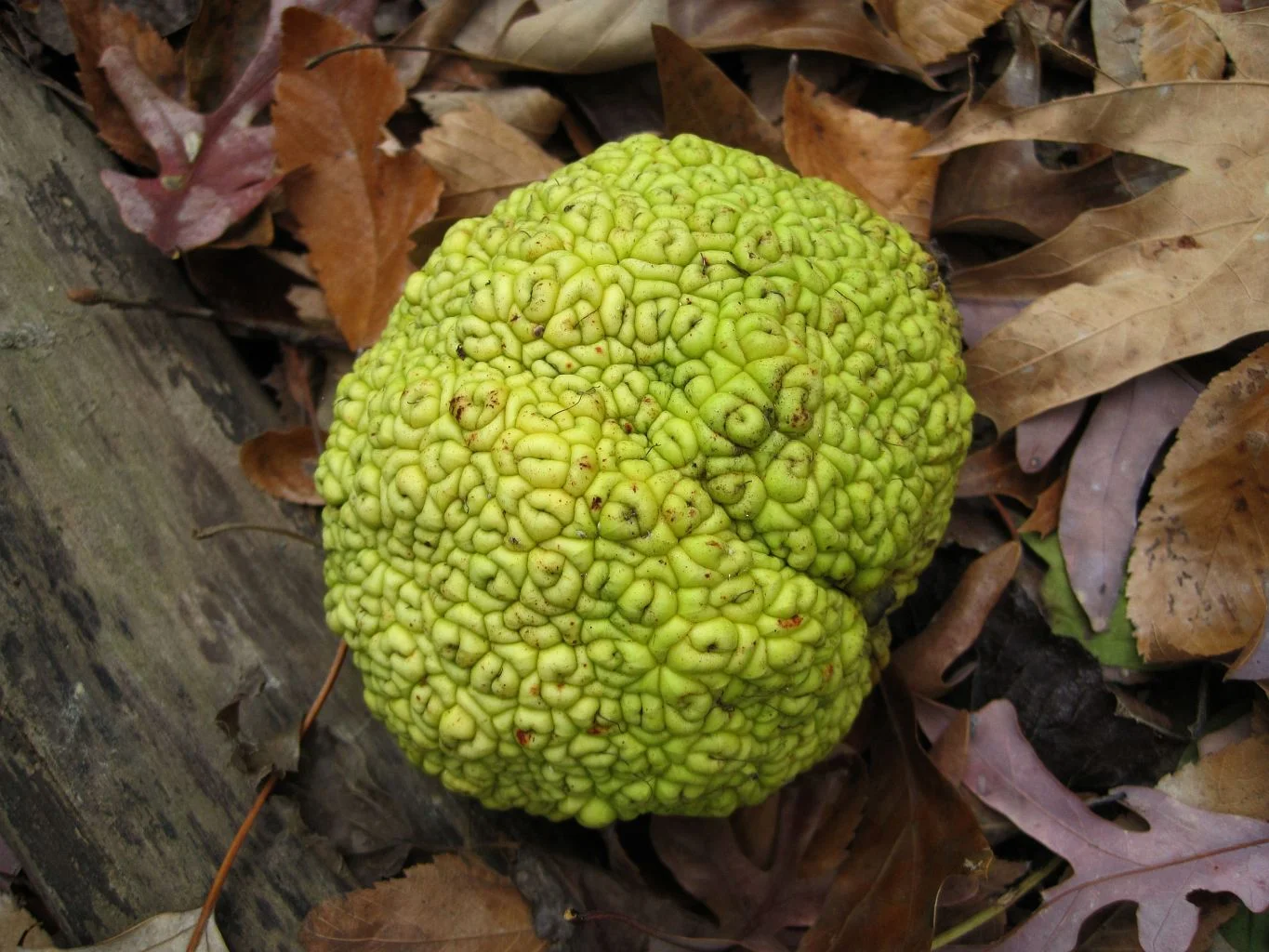
Long before the invention of barbed wire, early American pioneers planted dense, thorny barriers across the Great Plains using a remarkable native tree. This tree, known as Maclura pomifera or the Osage orange, is famous for its bright yellow-green, bumpy fruits that resemble large wrinkled citruses.
Valued for its exceptionally hard and decay-resistant wood, the species was historically prized by Native Americans for crafting powerful hunting bows. Today, Maclura pomifera is still cultivated for its windbreak capabilities, soil erosion control, and unique ornamental appeal.
Its massive fruits, while generally inedible to humans, represent a fascinating evolutionary relic once dispersed by extinct ice-age megafauna. With its deep root system and formidable thorns, the plant thrives in challenging soils and resists most common pests.
Maclura pomifera is a medium-sized deciduous tree or large shrub that typically reaches heights of 8 to 15 meters, occasionally growing up to 20 meters. The tree develops a short, stout trunk and a dense, rounded, irregular canopy supported by deep, fleshy roots covered in bright orange bark. Its shiny mature bark is dark orange-brown, deeply furrowed, and scaly.
The twigs and branchlets exhibit a distinct growth pattern and are armed with formidable spines:
Branches: Young branchlets are bright green and hairy, turning orange-brown and eventually pale gray-brown as they mature.
Spines: Axillary spines are straight, sharp, and grow up to 2.5 centimeters long, though they may be absent on shaded branches.
Pith: The inner wood features a prominent yellow pith characteristic of the species.
The leaves are arranged alternately along the slender growing shoots. They are simple, ovate-lanceolate, and measure 8 to 13 centimeters long and 5 to 8 centimeters wide. The upper leaf surface is dark green and lustrous, while the lower side is paler and slightly pubescent, turning golden yellow in autumn.
This species is dioecious, meaning male and female flowers develop on separate trees:
Male flowers: Light green and inconspicuous, they are arranged in drooping racemes that develop from the axils of the previous year's growth.
Female flowers: Borne in dense, spherical heads on short, stout peduncles, containing ovaries with long styles covered in stigmatic hairs.
The fruit of Maclura pomifera is a large, bumpy, globose multiple-accessory fruit measuring 10 to 15 centimeters in diameter. It is technically a syncarp of numerous small drupes fused together, secreting a sticky white latex when damaged. Isolated female trees can produce these fruits without pollination, though they will lack the oblong cream-colored seeds.
Flowering season
Late spring to early summer, typically from April to June.
Jan
Feb
Mar
Apr
May
Jun
Jul
Aug
Sep
Oct
Name
Dec
Applications
Maclura pomifera has a rich history of utility, spanning traditional craftsmanship, agriculture, and medicinal research. Its exceptionally dense, rot-resistant wood is highly valued for diverse purposes:
Woodworking and Archery: The strong and flexible yellow-orange wood was historically used by Native Americans, such as the Osage and Comanche, to craft exceptional hunting bows. Today, it remains highly prized for traditional bow-making, tool handles, fence posts, and fine furniture.
Fuelwood: When dried, the wood has the highest heating value of any commonly available North American wood, burning long and hot.
Natural Dyes: A yellow-orange dye can be extracted from both the wood and roots, serving as a historic substitute for fustic and aniline dyes.
In agriculture and landscaping, the species served as the ultimate natural barrier before the invention of barbed wire in 1874. Under regular pruning, the closely planted trees formed impenetrable, thorny hedges that could successfully contain livestock. The species was also heavily utilized in President Franklin D. Roosevelt's Great Plains Shelterbelt project to prevent soil erosion and modify local climates.
The tree also has notable applications in medicine and domestic use:
Traditional Medicine: The Comanche historically used a decoction of the roots to treat sore eyes. In Eastern European folk medicine, the milky latex and fruit extracts are used topically to treat skin conditions like eczema, wounds, and rheumatic pain.
Pharmacological Research: Modern science studies the fruit's isoflavones, particularly pomiferin and osajin, for their powerful antioxidant, cardioprotective, and antibacterial properties.
Sericulture and Decoration: The leaves are occasionally used in Japan as alternative food for silkworms, while florists utilize the large, aromatic fruits for decorative arrangements.
Interesting facts
The history and ecology of Maclura pomifera are filled with remarkable facts and cultural significance:
Evolutionary Anachronism: Many scientists believe the oversized fruits are an evolutionary relic designed to be eaten and dispersed by extinct Pleistocene megafauna, such as mammoths and giant ground sloths. Today, only squirrels and a few birds split the fruit to eat the seeds, leaving the rest to rot where it falls.
The Bow Wood Trade: French settlers named the tree "bois d'arc" (meaning bow-wood), which local dialects corrupted into "bodark" or "bodock". A high-quality bow made of this wood was so highly valued by Native Americans that in 19th-century Arkansas, it could be traded for a horse and a blanket.
FDR's Green Wall: During the Dust Bowl era, millions of these trees were planted as part of the Great Plains Shelterbelt project, creating over 18,000 miles of windbreaks to combat soil erosion.
Natural Hardness: The wood is twice as hard and strong as white oak, boasting a Janka hardness of 11.64 kN, which makes it virtually immune to rot and wood-boring insects.
Insect Repellent Myth: While folklore holds that placing the fruits in basements repels cockroaches and spiders, scientific tests show the natural concentrations of active compounds are too low to be effective, leading the EPA to ban such advertising claims.
The National Champion: The largest recorded specimen stands at the Patrick Henry National Memorial in Virginia, estimated to be nearly 350 years old.