
Osage Orange
Maclura pomifera
The Osage orange (Maclura pomifera) is a resilient, thorny tree famous for its heavy rot-resistant …
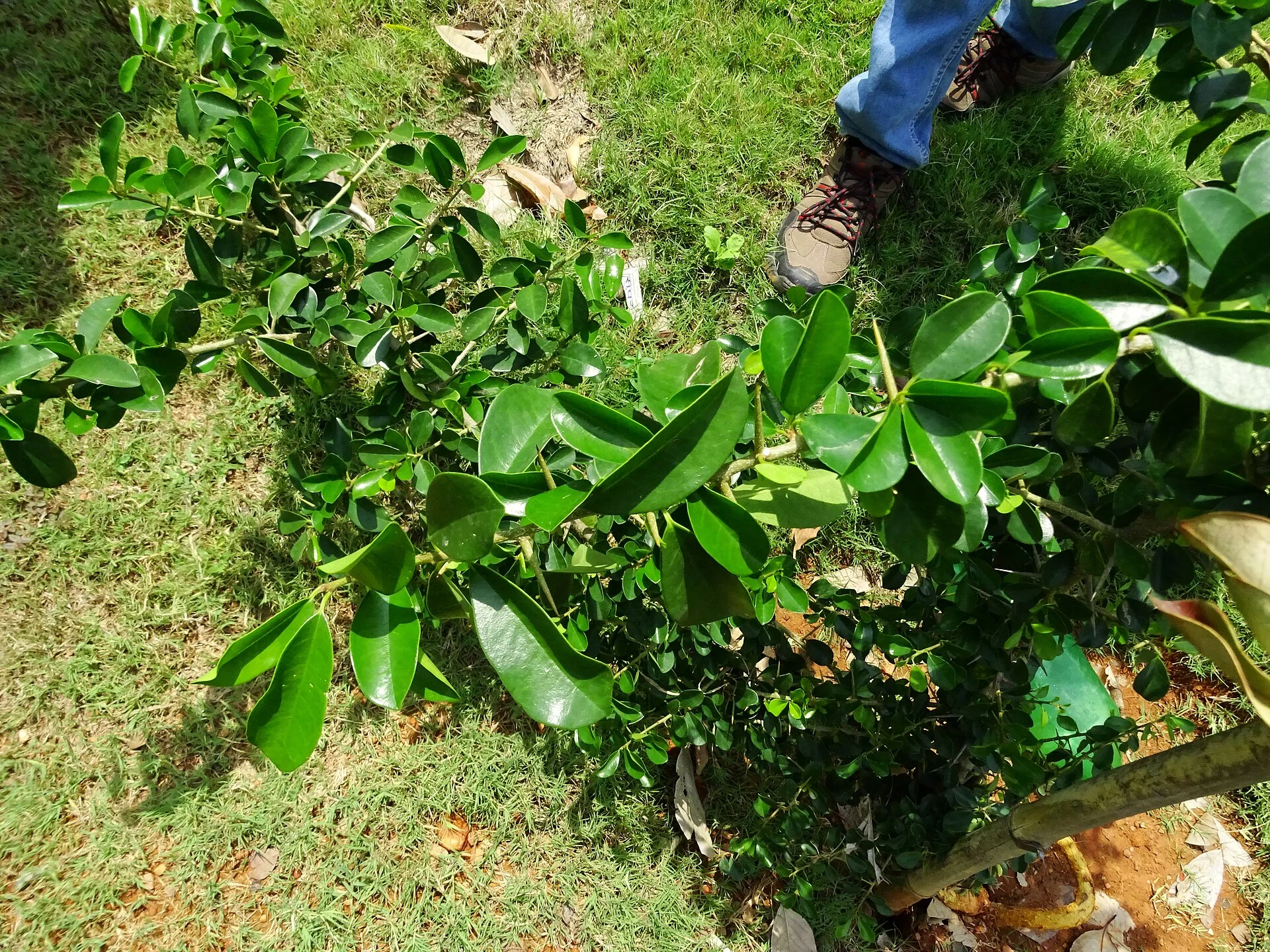
Bearing formidable sharp thorns along its sprawling woody branches, Maclura spinosa grows in the dry forest regions of India and Sri Lanka. The plant belongs to the mulberry family, Moraceae, and frequently forms dense thickets. These thorny hedges provide crucial nesting sites and protection for various local bird species.
Historically known under the synonym Plecospermum spinosum, the taxon was reclassified in 1986 by C. C. Berg. It is well-adapted to survive seasonal droughts typical of dry deciduous scrublands.
Maclura spinosa is a woody scrambling shrub or climber that grows several meters tall, armed with sharp axillary spines. The alternate, simple leaves are elliptic to obovate in shape, displaying entire margins and a glabrous surface. When the stems or leaves are punctured, the plant exudes a thick, white latex.
The reproductive structures are dioecious, with male and female flowers occurring on separate plants. The flowers are aggregated into dense, peduncled, globose capitula. The female inflorescences eventually develop into small, fleshy, globose syncarps containing embedded seeds.
The thorny branches of Maclura spinosa make it highly suitable for live fencing, helping farmers protect agricultural fields from grazing livestock. Additionally, the wood has been used in traditional dyeing processes due to the presence of yellow pigments, which is a characteristic shared with other members of the genus Maclura.
The plant was once considered the sole member of its own genus, Plecospermum, before modern molecular and morphological studies placed it in Maclura. Its spines serve as a potent evolutionary defense against large herbivores in dry tropical habitats.
Maclura pomifera
The Osage orange (Maclura pomifera) is a resilient, thorny tree famous for its heavy rot-resistant …

Maclura tricuspidata
A deciduous tree native to East Asia, Maclura tricuspidata is known for its sweet, melon-flavored …

Maclura tinctoria
A medium to large neotropical tree famed for producing fustic, a natural yellow dye historically …

Maclura africana
A woody, thorny scrambler native to southeastern Africa and Madagascar, producing small yellow-orange fruits and …