
Sacred lotus
Nelumbo nucifera
Nelumbo nucifera, also known as the sacred lotus, is an iconic aquatic perennial famous for …
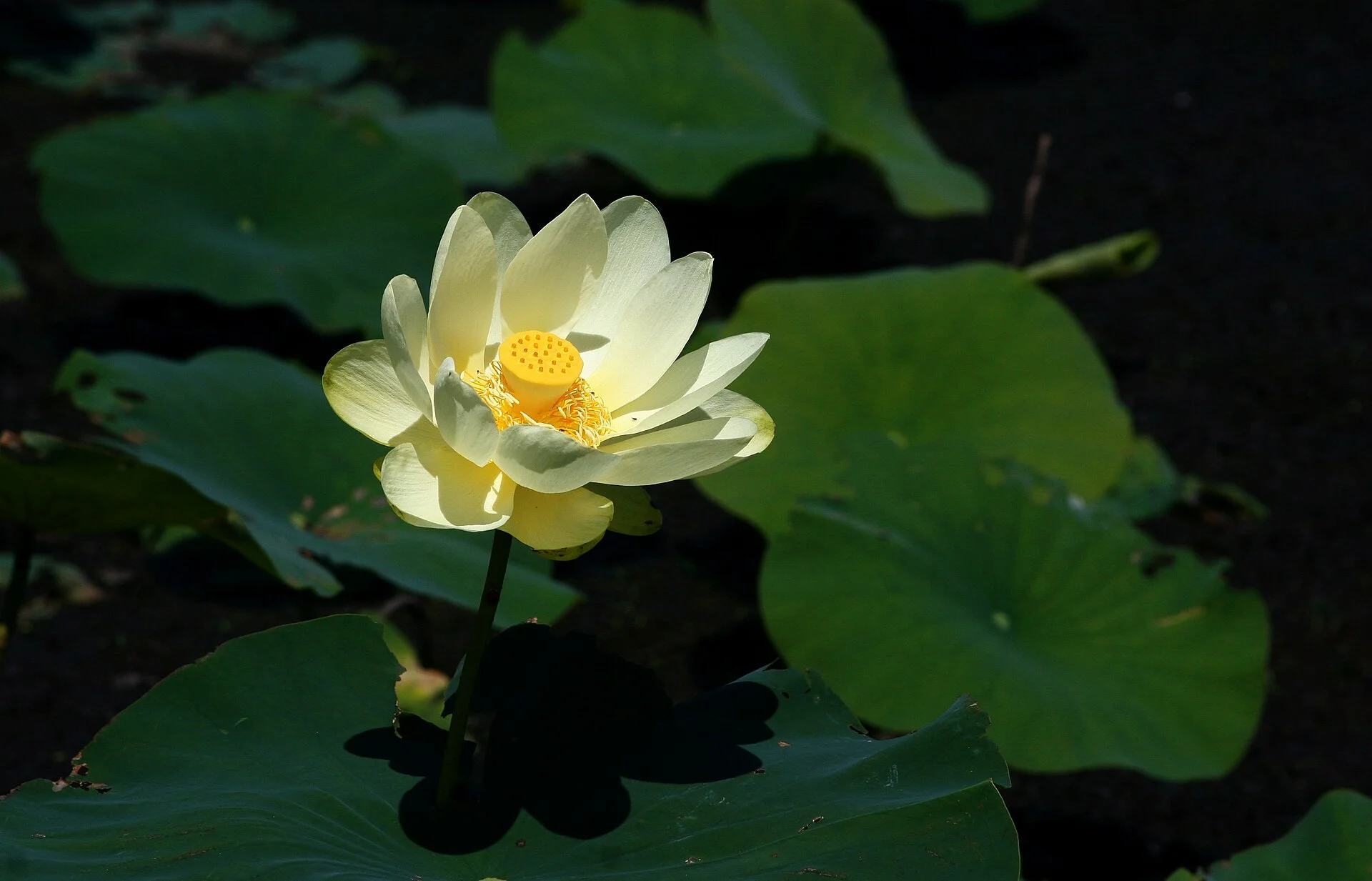
Across the shallow, sun-drenched wetlands of North America, massive circular leaves rise above the water's surface to frame pale, pineapple-scented blossoms. These striking yellow flowers belong to Nelumbo lutea, a resilient aquatic perennial that anchors itself deep in the muddy beds of quiet lakes and floodplains.
For centuries, indigenous communities valued Nelumbo lutea as a vital food source, cultivating and spreading the plant along ancient trade routes. Today, these plants continue to dominate freshwater ecosystems, providing essential shade and shelter for diverse aquatic wildlife.
The physical structure of Nelumbo lutea is perfectly adapted to its aquatic lifestyle, characterized by thick, tuberous creeping rhizomes that anchor the plant securely in deep mud. From these submerged stems, long, smooth petioles measuring up to 2 meters in length extend upward to support the leaves and flowers.
Each peltate, circular leaf blade reaches an impressive diameter of 30 to 80 centimeters, featuring a waxy surface that repels water and a slightly wavy margin. The pale yellow or cream-colored flowers grow up to 28 centimeters in diameter and consist of 22 to 25 delicate, concave petals surrounding numerous stamens.
The fruiting structure resembles a distinctive, flat-topped showerhead containing up to 20 nut-like seeds. These hard, brown, round fruits are deeply embedded in the spongy receptacle, allowing them to remain secure even after fully maturing.
Blooms from late spring through summer, typically from June to September.
Historically and culturally, Nelumbo lutea served as an invaluable food source for indigenous North American tribes. The large tuberous rhizomes, rich in starch, were baked or boiled, while the seeds, colloquially known as "alligator corn," were eaten roasted or ground into meal.
In modern horticultural design, the species is widely cultivated in ponds and water gardens for its dramatic foliage and beautiful pale yellow blossoms. Additionally, breeders have successfully hybridized this plant with its Asian relative, Nelumbo nucifera, to produce highly ornamental garden cultivars.
The distribution of Nelumbo lutea across North America was heavily influenced by indigenous peoples who carried and planted it along their migration routes as a reliable crop. During periods of scarcity, the Wyandot people mixed the starchy tubers with acorns to survive famines, while the Meskwaki tribe dried the terminal shoots for winter storage.
From an ecological standpoint, the plant acts as the exclusive host for the larvae of the American lotus borer moth. The caterpillars of this insect hatch on the leaf surface and burrow into the long petioles to complete their development in safety.
In modern popular culture, the iconic green and yellow gown worn by Disney Princess Tiana was designed to mimic the elegant layers and colors of the blooming yellow lotus flower.
Taxon Synonyms: Nelumbium luteum, Nelumbium pentapetalum
Nelumbo nucifera
Nelumbo nucifera, also known as the sacred lotus, is an iconic aquatic perennial famous for …

Picrasma
A genus of deciduous trees and shrubs known for their extremely bitter bark and medicinal …

Araucaria humboldtensis
A small, critically endangered coniferous tree native strictly to the high-altitude mountain peaks of southern …

Araucaria sect. Araucaria
Araucaria sect. Araucaria is a botanical section of evergreen conifers native to South America. It …