Nelumbo (Lotus) - Botanical Profiles and Cultural Symbols
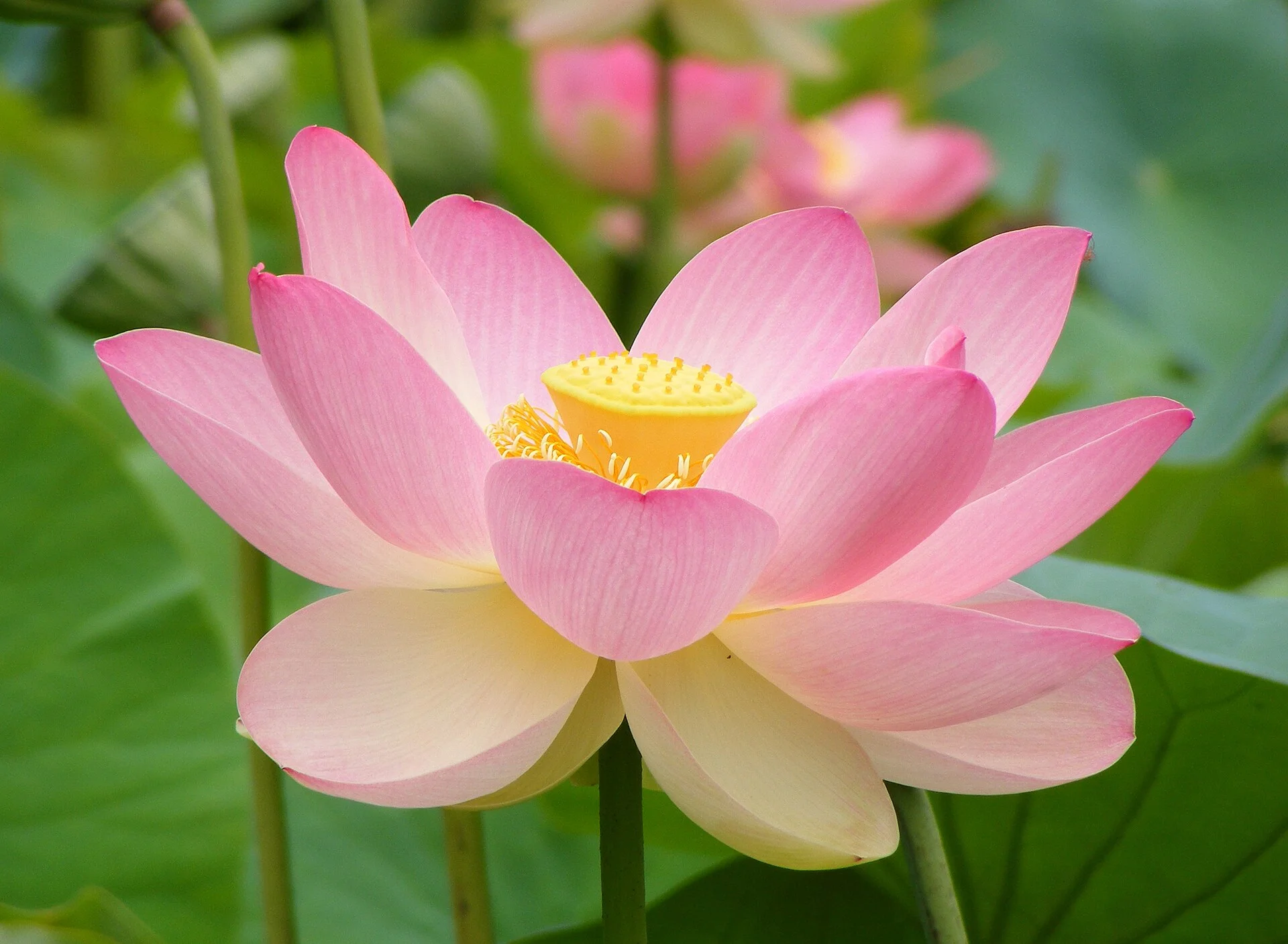
Rising above the muddy depths of quiet lakes and slow-moving rivers, the legendary lotus transforms murky wetlands into breathtaking sanctuaries of pristine beauty. Members of the genus Nelumbo are celebrated worldwide for their large, fragrant flowers that seem to float effortlessly above the water's surface.
Though these plants closely resemble water lilies, they belong to an ancient evolutionary lineage that is actually very distant from them. These botanical wonders have survived since the Early Cretaceous period, leaving behind fossil records that span millions of years.
Today, only two living species of Nelumbo remain, native to different hemispheres but sharing the same extraordinary adaptations. Cultivated for both spiritual rituals and daily sustenance, these plants continue to capture human imagination across the globe.
The growth form of Nelumbo is characterized by thick, fleshy rhizomes that creep deep within the underwater mud. These underground stems are divided into distinct nodes and internodes, with the terminal parts thickening into starch-rich storage organs resembling bananas during winter.
Unlike water lilies, the large circular leaves of Nelumbo are peltate, with long, spiny petioles attached directly to the center of the blade. The leaf surfaces are coated with dense microscopic papillae and waxy tubules, creating an ultra-hydrophobic surface known as the lotus effect that keeps the stomata clean and functional.
The prominent reproductive structures include large, solitary, bisexual flowers that can reach up to 30 centimeters in diameter. Each flower features numerous spiral petals ranging from pink to yellow, surrounding hundreds of stamens and a distinctive flat-topped, spongy receptacle.
After pollination, the receptacle woody-hardens into a cone-like seedpod where hard-shelled nutlets develop within individual cavities. These seeds exhibit extreme longevity, capable of germinating successfully even after remaining dormant in sediment for thousands of years.
A remarkable physiological feature of the flower is its ability to generate heat through cyanide-resistant alternative oxidase pathway. This thermogenesis maintains temperatures above 30 degrees Celsius, attracting insect pollinators and providing them with a warm shelter.
Flowering season
Blooms during the summer season, typically opening from early morning until mid-afternoon.
Jan
Feb
Mar
Apr
May
Jun
Jul
Aug
Sep
Oct
Name
Dec
Applications
Every part of the Nelumbo plant finds a purpose in traditional culinary practices, particularly across East and South Asia. The starch-rich rhizomes are sliced and prepared as a crispy vegetable delicacy, while the nutritious seeds are consumed raw, boiled, or ground into sweet flour for traditional pastries.
Beyond cuisine, the plant holds significant value in the textile and pharmaceutical industries. Fine fibers extracted from the leaf stalks are painstakingly spun into rare, high-quality lotus silk, and active compounds like nelumbine are utilized in traditional herbal medicine to treat insomnia and fever.
In ornamental horticulture, these plants are widely cultivated to beautify ponds, lakes, and botanical gardens. The dried, cone-shaped seedheads are also highly sought after by florists for dry floral arrangements and decorative calligraphic brushes.
Interesting facts
The cultural and historical footprint of Nelumbo spans civilizations, serving as a profound symbol of spiritual purity. Because it emerges pristine from murky mud, the flower is revered in Buddhism and Hinduism as an emblem of enlightenment and detachment from worldly suffering.
Botanical records and physical properties of the genus have led to several fascinating discoveries and applications:
Extreme Seed Longevity: Viable seeds discovered in ancient Japanese lakebeds successfully germinated and bloomed after being dormant for over two thousand years.
National Icon: The sacred species is officially recognized as the national flower of both India and Vietnam, appearing on various state flags and emblems.
Scientific Inspiration: The self-cleaning mechanism of the leaves has inspired material scientists to develop modern dirt- and water-repellent coatings for clothing and buildings.
Ancient Confusion: In historical texts, the term lotus was also applied to North African shrubs described by Theophrastus, whose fruit fed the mythical Lotophagi of Homer's Odyssey.