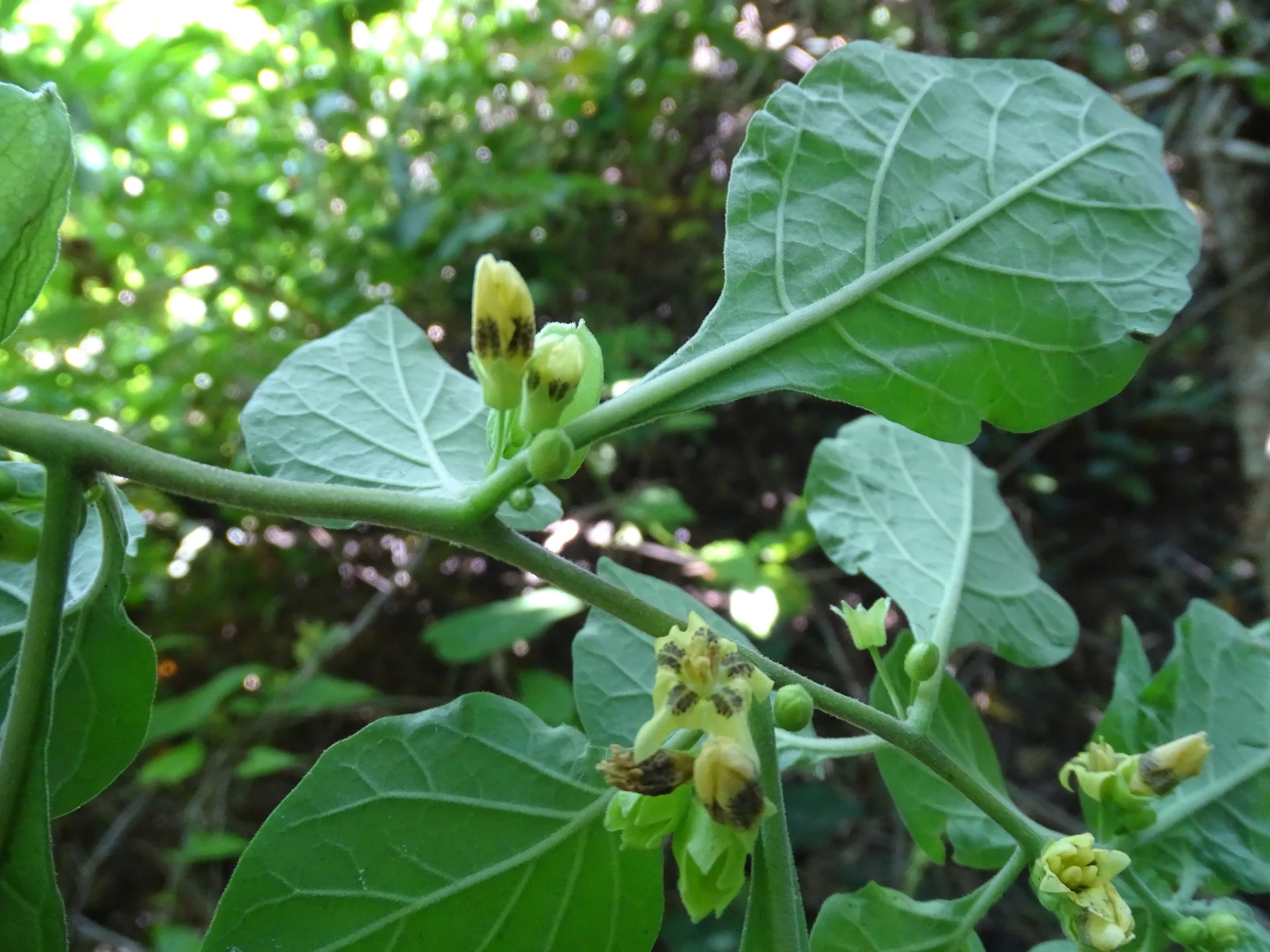
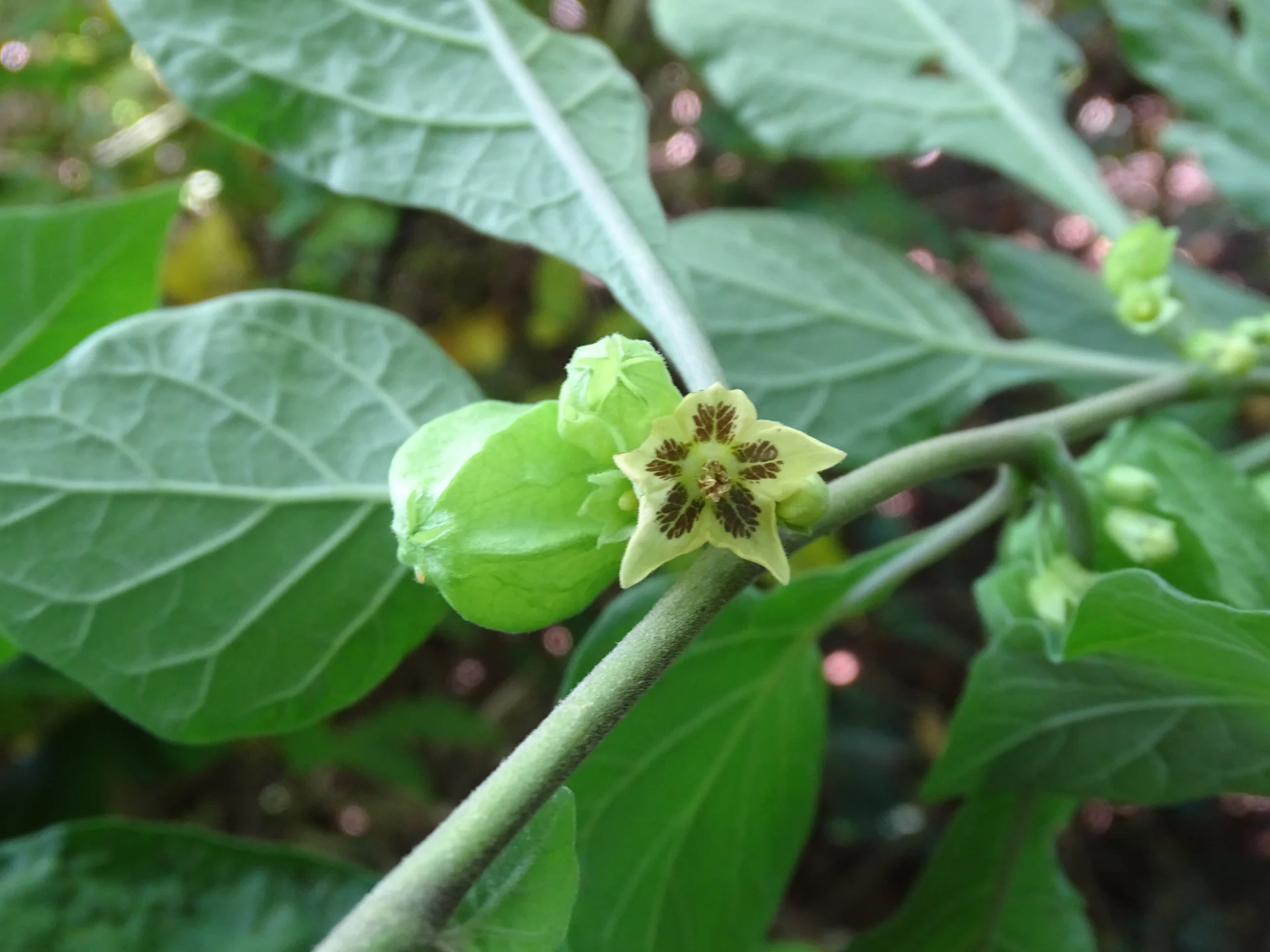
Physalis melanocystis is a branching, woody-based shrublet native to the tropical and subtropical forests of Mexico and Central America, distinguished by clusters of axillary blossoms and spherical berries wrapped in dark, inflated husks. Its specific epithet melanocystis combines the Greek words melas (black or dark) and kystis (bladder), referring directly to the papery fruiting calyx that turns dark as it dries.
A member of the nightshade family (Solanaceae), the species was initially described in 1891 by Benjamin Lincoln Robinson as Withania melanocystis before German botanist Friedrich August Georg Bitter transferred it to the genus Physalis in 1924.
Unlike many herbaceous annual groundcherries, Physalis melanocystis develops a woody, branching framework clothed in short, unbranched trichomes—fine epidermal hairs that either spread outward or lie flat pointing toward the shoot tips. Its diploid chromosome number is 2n = 24.
Leaves and floral clusters
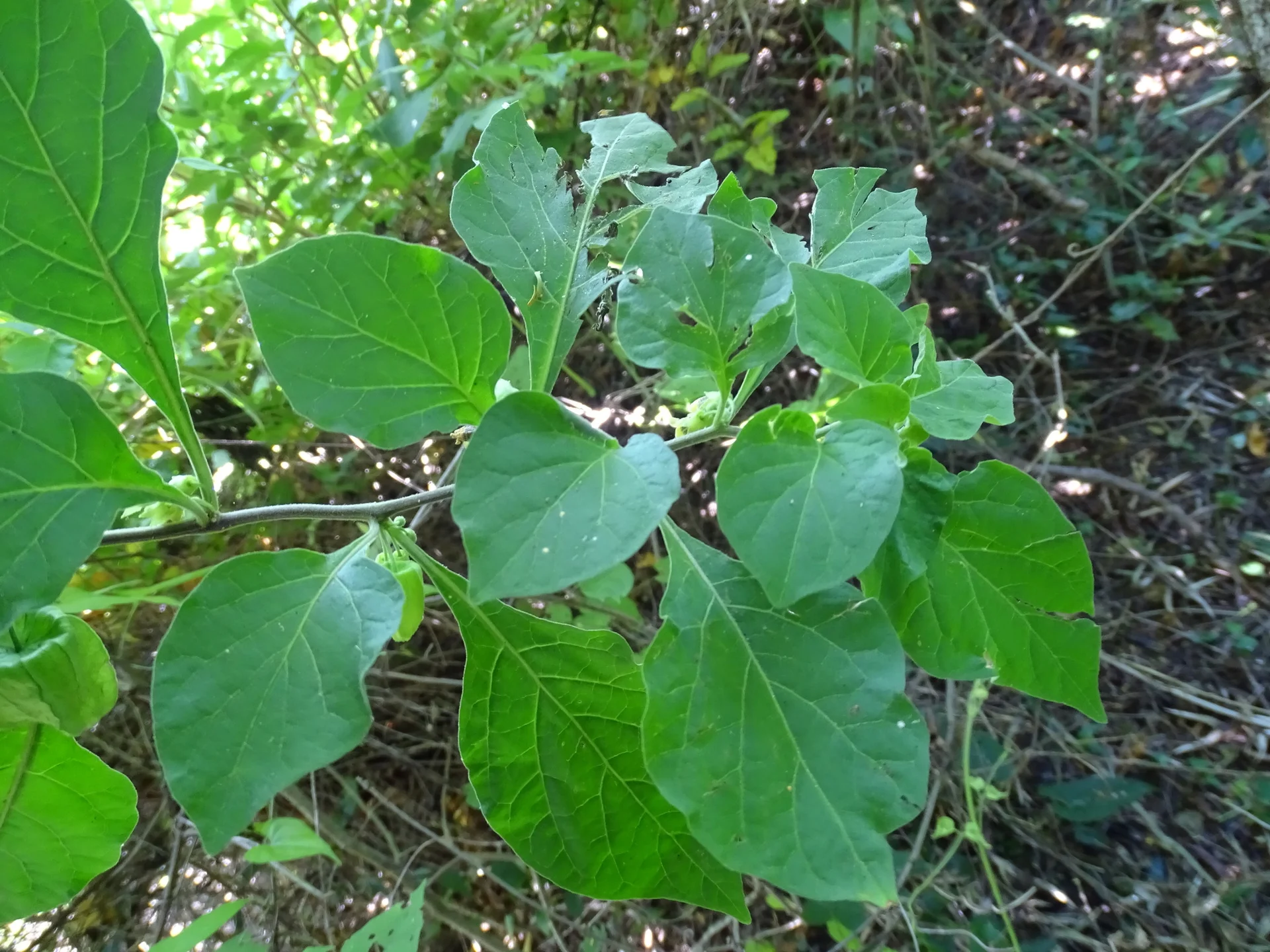
Foliage dimensions: The larger leaf blades are lanceolate to ovate-lanceolate or rhombic-lanceolate, measuring 4 to 10 centimeters long and 1.5 to 5 centimeters wide, supported by slender leaf stalks.
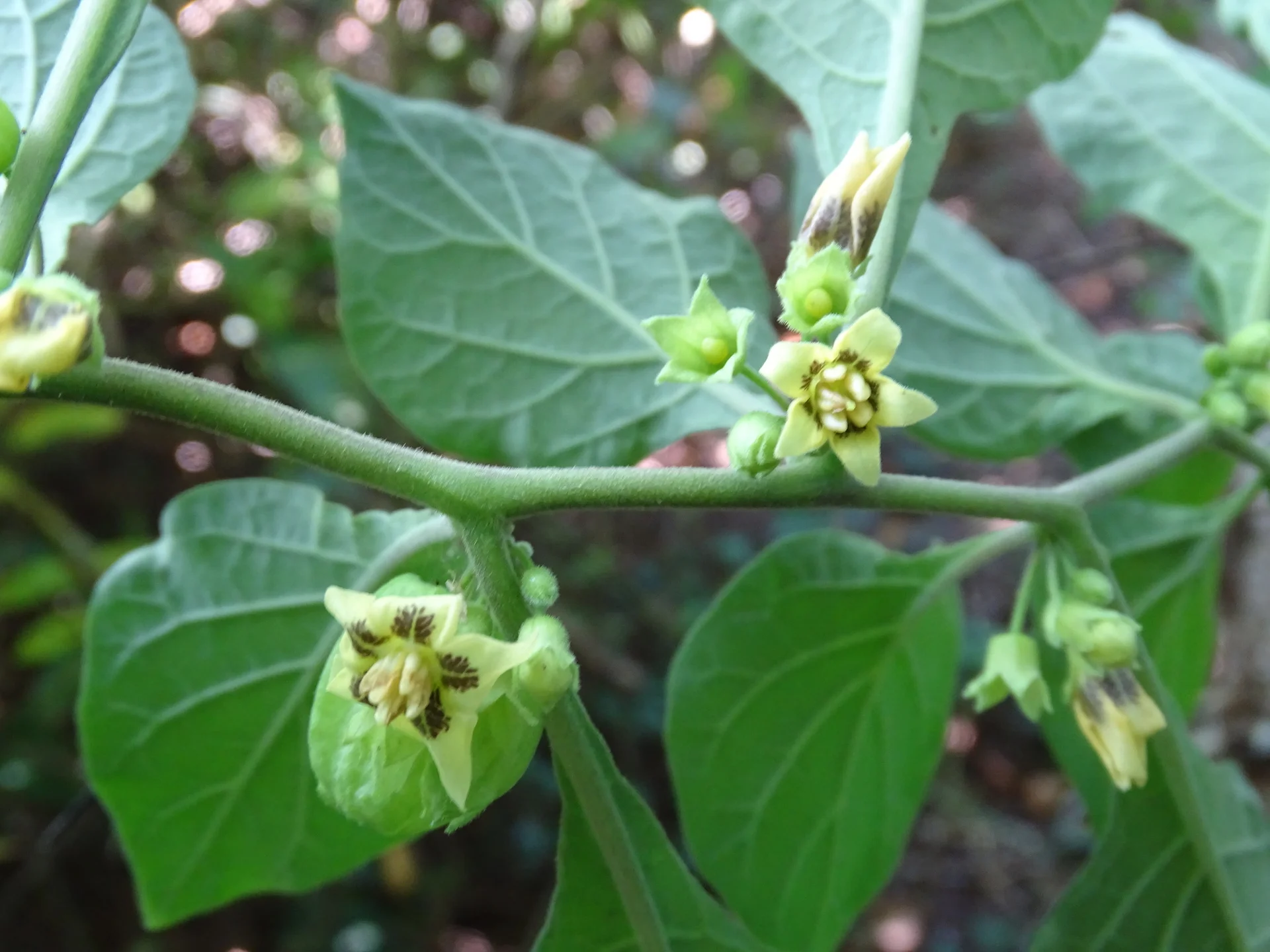
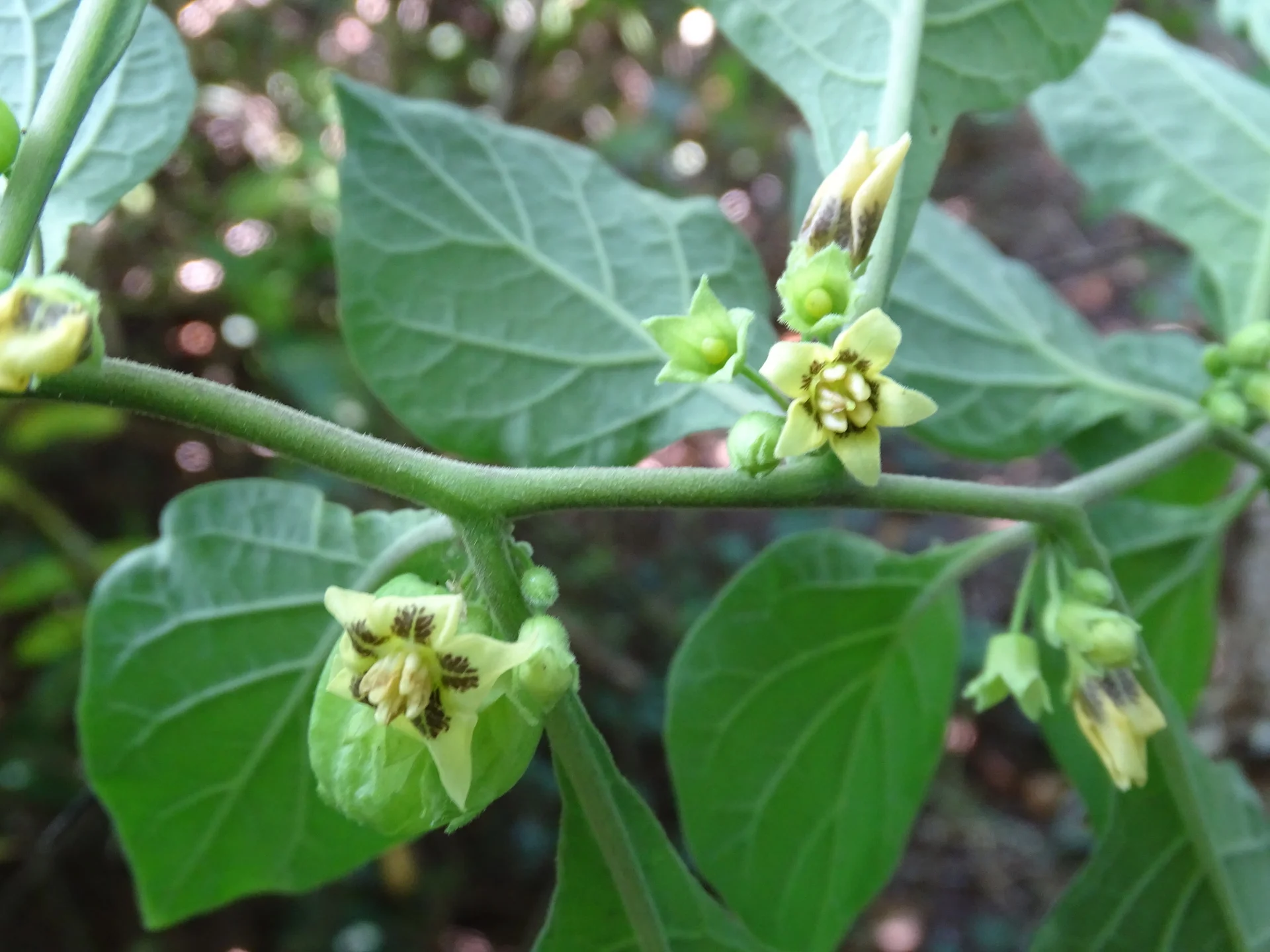
Axillary fascicles: Whereas most species in the genus bear solitary flowers in their branch forks, this plant produces clusters (fascicles) of 3 to 6 flowers—rarely single—on short stalks (pedicels) measuring 4 to 10 millimeters.
Corolla and stamens: The wheel-shaped (rotate) or slightly reflexed corolla measures 8 to 10 millimeters long and 12 to 18 millimeters across, divided into triangular-ovate lobes 3 to 6 millimeters long with faint throat markings and yellow anthers (3 to 4 millimeters long) on short filaments (1 to 2 millimeters).
Fruiting calyx and berry
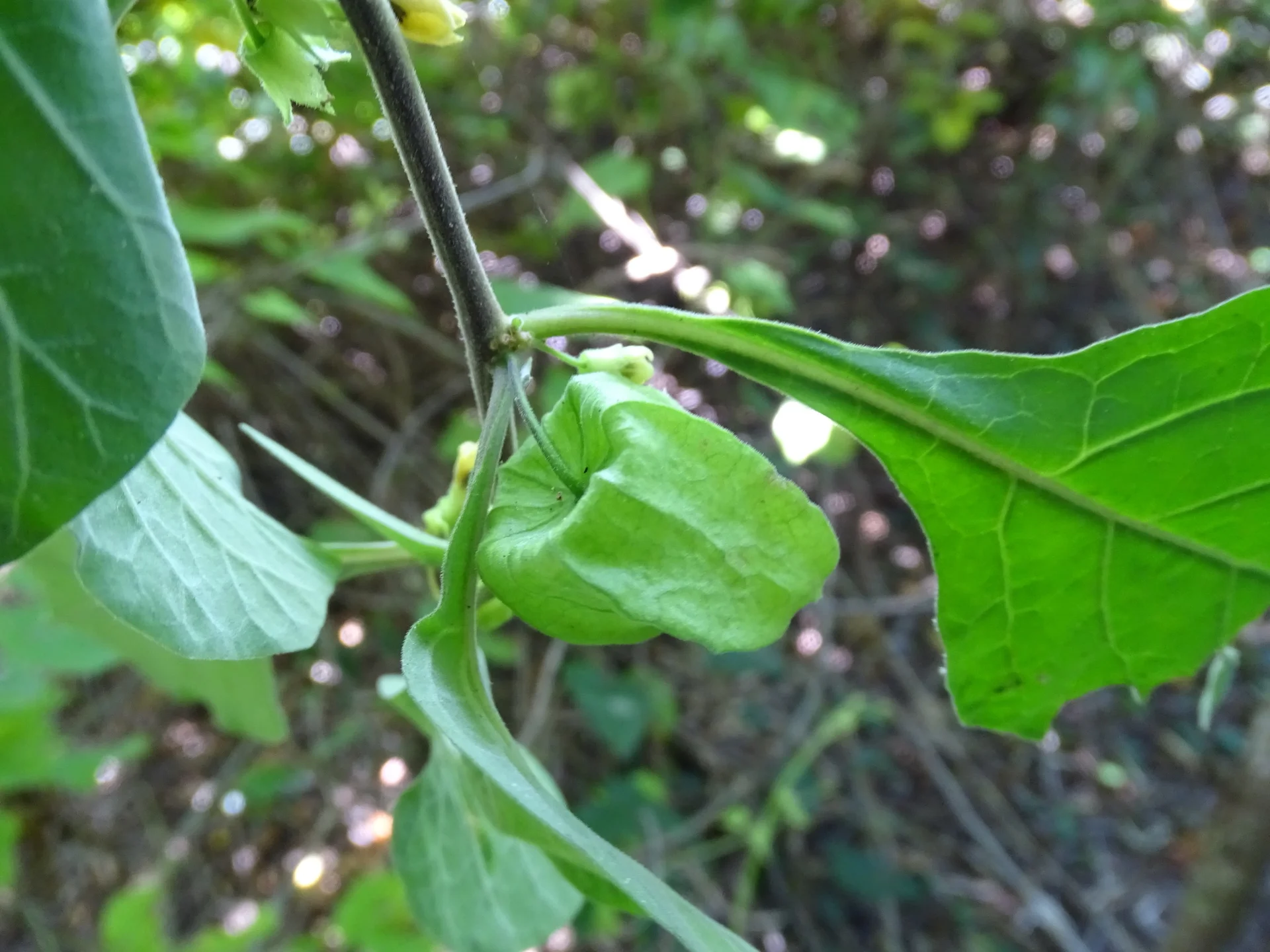
As the fruit matures, the flower stalks elongate to 10–15 millimeters while the sepals fuse and inflate into an accrescent calyx—a protective papery lantern measuring 17 to 25 millimeters long and 15 to 18 millimeters wide. Inside this bladder sits a smooth, spherical berry measuring 10 to 13 millimeters in diameter.
Interesting facts
Within its genus, Physalis melanocystis stands out for how its floral grouping and post-pollination calyx growth work together in humid Mesoamerican forest margins.
Clustered flowering and the dark bladder
Its early placement in the genus Withania by Benjamin Lincoln Robinson was no accident: by grouping three to six flowers together in each leaf axil rather than spacing them singly, the plant creates a concentrated visual and nectar target for forest-understory bees. Once pollination is complete, the short flower stalks lengthen by up to fifty percent to give the swelling husks room to expand without crowding one another.
Microclimate control inside the husk
Structural shielding: The inflated accrescent calyx forms a physical barrier around the developing 10–13 millimeter berry, keeping small sap-sucking insects and fungal spores at bay.
Thermal and moisture balance: As the husk matures and darkens—the trait immortalized in the name melanocystis—its pigmented walls absorb filtered forest sunlight, helping warm the ripening seed chamber and evaporate excess surface moisture after tropical rains.
Geography of distribution
Mexico
Guatemala
Honduras
Costa Rica
Sources
Waterfall, U.T. (1967). Physalis in Mexico, Central America and the West Indies. Rhodora 69(777): 82–120.
Plants of the World Online (POWO). Royal Botanic Gardens, Kew: Physalis melanocystis (B.L.Rob.) Bitter.
World Flora Online (WFO) & Tropicos: Physalis melanocystis taxonomic records.